
What Is the Irohazaka Winding Road?
The Irohazaka winding road is one of the most iconic mountain passes in all of Japan, located in the Nikko National Park area of Tochigi Prefecture. Consisting of two separate one-way roads — the first Irohazaka (downhill) and the second Irohazaka (uphill) — this legendary route features a combined total of 48 hairpin turns, each named after a character from the classical Japanese Iroha poem. The pass connects the town of Nikko at roughly 600 meters elevation to the shores of Lake Chuzenji at approximately 1,270 meters, climbing over 600 meters in a dramatic series of switchbacks carved into a densely forested mountainside.
For JDM car enthusiasts, touge drivers, and fans of Japanese automotive culture, the Irohazaka winding road represents the ultimate fusion of breathtaking natural scenery and world-class driving roads. It has appeared in video games, anime references, and countless automotive media features, cementing its status as a bucket-list destination for anyone passionate about Japanese car culture and mountain driving.
History and Origin of the Irohazaka Pass
The original Irohazaka road dates back centuries and was historically used by pilgrims and monks traveling to the sacred shrines and temples around Lake Chuzenji and Mount Nantai. The narrow, treacherous path was once passable only on foot or horseback, making the journey to the higher elevations a physically demanding spiritual undertaking.
The modern paved version of the road was constructed in the early 20th century, initially as a single two-way route with extremely tight hairpin bends. As traffic volume increased — particularly with the rise of automobile tourism — the road became dangerously congested. To solve this problem, authorities built the second Irohazaka in 1965, creating the current system: the original first Irohazaka serves exclusively as the downhill route, while the newer second Irohazaka handles all uphill traffic. This separation not only improved safety dramatically but also created one of the most enjoyable one-way driving experiences anywhere in the world.
The 48 Hairpin Turns: Why Irohazaka Is a Touge Legend
What makes the Irohazaka winding road truly special among Japan's mountain passes is its extraordinary concentration of hairpin turns. The second Irohazaka (uphill) features 20 curves, while the first Irohazaka (downhill) has 28 curves. Each turn is marked with a signpost bearing a single character from the Iroha poem, an ancient Japanese pangram that uses every character in the traditional kana syllabary exactly once.
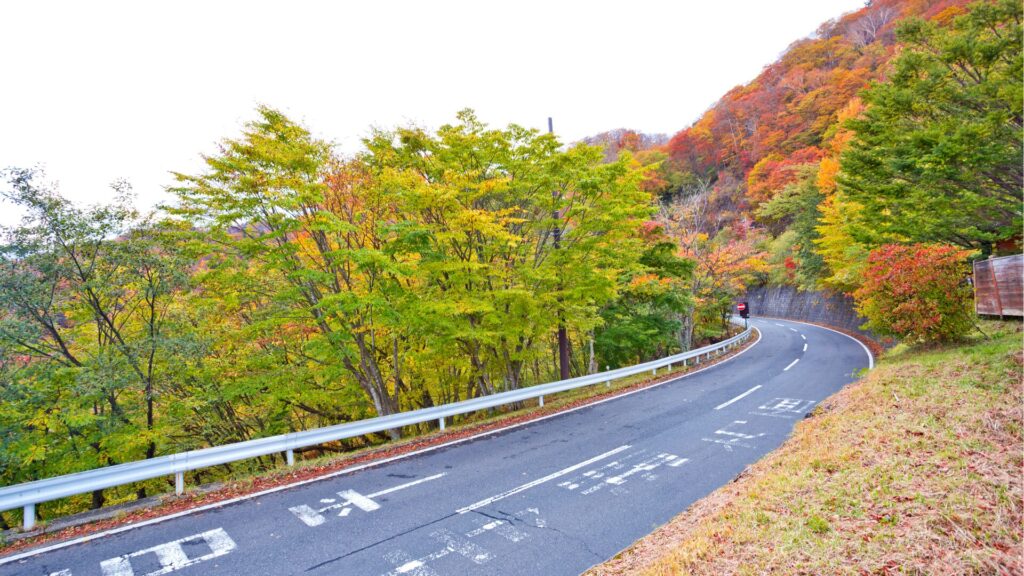
The road surface is well-maintained asphalt, and the gradient is consistent enough to allow a rhythmic driving experience. Unlike some touge roads that mix straight sections with sudden tight corners, Irohazaka delivers a relentless, flowing sequence of switchbacks that demand constant engagement from the driver. The turns vary in radius, and the elevation change between each hairpin provides a roller-coaster-like sensation that is difficult to replicate on any other public road.
Second Irohazaka (Uphill): The Climb to Lake Chuzenji
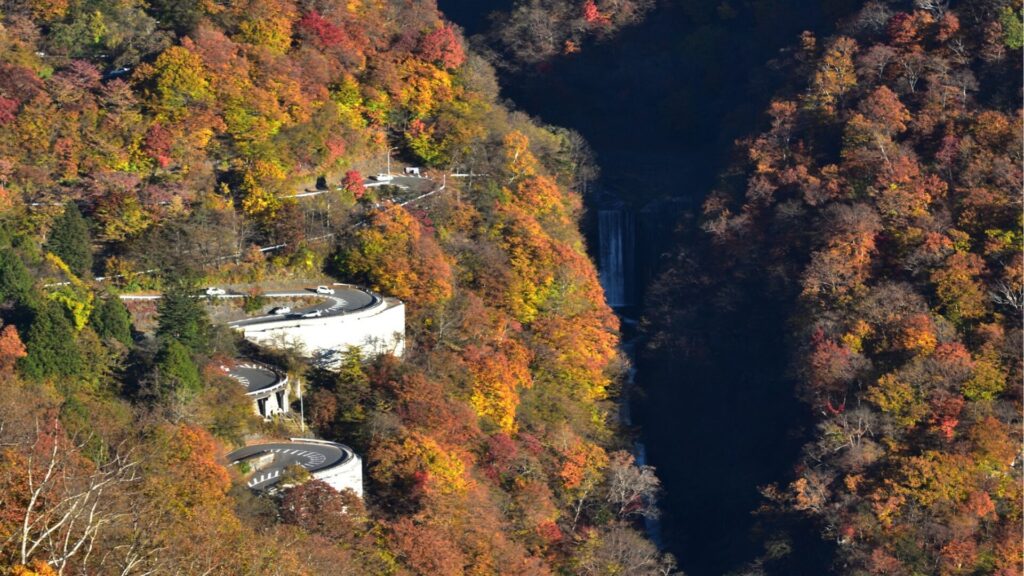
The second Irohazaka is the route you will drive when heading uphill toward Lake Chuzenji and the Kegon Falls area. This road is two lanes wide, one-way, and features 20 named hairpins. The road climbs steeply through dense forest, and in autumn, the surrounding trees explode into vivid shades of red, orange, and gold. There are several pull-off areas and viewpoints along the way, including the famous Akechidaira Ropeway station, where you can park your car and take a cable car to an observation platform offering panoramic views of the Kegon Falls and the entire Irohazaka road system below.
First Irohazaka (Downhill): The Descent Back to Nikko
The first Irohazaka is the original road and serves as the one-way downhill route. With 28 hairpin turns — eight more than the uphill route — the first Irohazaka is tighter, narrower, and arguably more technical. The road winds through older-growth forest and has a more raw, unpolished character compared to the newer second Irohazaka. For driving enthusiasts, the downhill section demands careful brake management and precise steering inputs, making it an exhilarating test of vehicle control.
-

-
Mt. Akagi Touge Guide: Best Time to Drive, Etiquette, and Route Overview
What Is Mt. Akagi Touge and Why Is It So Famous? Mt. Akagi touge — the legendary mountain pass that winds its way up and around Mount Akagi in Gunma Prefecture — is one of the most iconic driving roads in all of Japan. For fans of Japanese car culture, anime, and motorsport history, the name "Akagi" carries an almost mythical weight. This is the road that inspired countless downhill battles in the beloved manga and anime series Initial D, and it remains a pilgrimage destination for JDM enthusiasts from around the world. The word "touge" (峠) translates to "mountain ...
続きを見る

How to Get to Irohazaka from Tokyo by Car
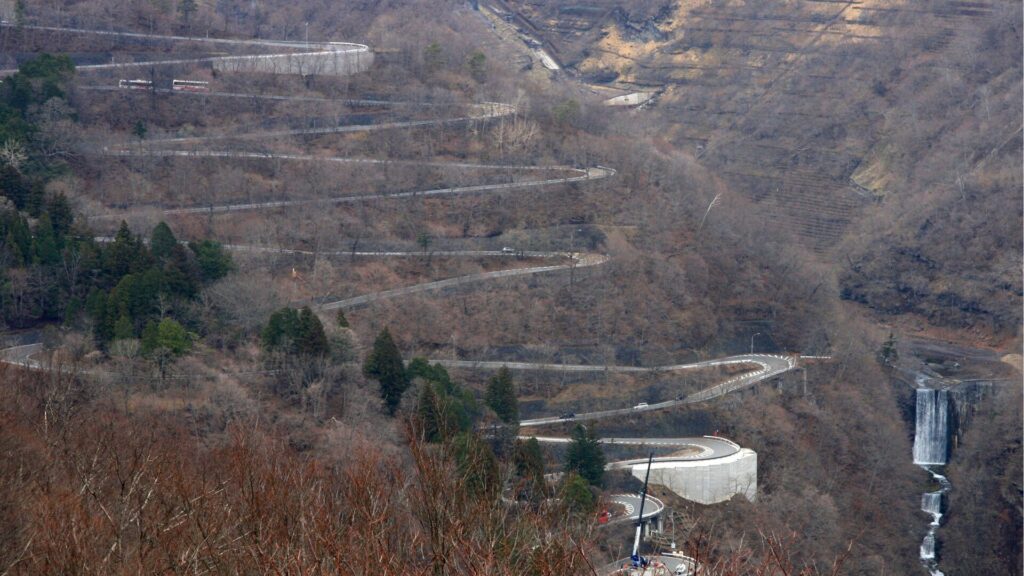
The Irohazaka winding road is located approximately 150 kilometers north of central Tokyo, and the drive takes roughly 2 to 2.5 hours depending on traffic and your starting point. The most common route is via the Tohoku Expressway, exiting at the Utsunomiya IC, and then following the Nikko-Utsunomiya Expressway to the Nikko area. From there, National Route 120 leads directly to the base of the Irohazaka pass.
If you are combining Irohazaka with a broader Nikko sightseeing trip — which is highly recommended — you can visit the UNESCO World Heritage Toshogu Shrine complex in the morning before driving the pass in the afternoon. Alternatively, many visitors choose to drive Irohazaka first, spend time at Lake Chuzenji and Kegon Falls, and then descend via the first Irohazaka before heading back to Nikko town.
-
-
Tokyo to Nikko Onsen by Car: The Complete 2025 Driving Guide for Overseas Visitors
Nikko is one of Japan’s most rewarding road trips from Tokyo—mixing UNESCO World Heritage shrines, atmospheric onsen towns like Kinugawa and Chuzenji, and spectacular mountain drives through cedar-lined roads and highland passes. This guide explains the best routes, exact travel times and costs to expect, parking and toll tips, seasonal advice, and a ready-to-use 1–2 day itinerary designed for drivers. It’s written for first-time visitors renting a car in Japan who want a smooth, efficient, and deeply relaxing hot‑spring escape. Why Choose Nikko Onsen as a Self‑Drive from Tokyo World-class mix: Toshogu Shrine’s ornate architecture, Lake Chuzenji’s alpine scenery, and ...
続きを見る
Toll Costs and Road Fees
The Irohazaka winding road itself is toll-free. However, the expressways from Tokyo to Nikko involve toll charges. Using the Tohoku Expressway and Nikko-Utsunomiya Expressway, expect to pay approximately 3,500 to 4,500 yen one way depending on your vehicle class and whether you use an ETC card (Japan's electronic toll collection system, which offers discounts). If you rent a car in Tokyo, most rental agencies can provide an ETC card for a small additional fee.
Best Time to Drive the Irohazaka Winding Road
While the Irohazaka winding road is open and enjoyable throughout much of the year, certain seasons transform the experience from merely impressive to truly unforgettable.
Autumn (Mid-October to Early November)
This is unquestionably the most popular and visually stunning time to drive Irohazaka. The koyo (autumn foliage) season paints the mountainside in fiery shades of red, orange, and yellow. The elevation change along the route means you can witness different stages of autumn color on a single drive. Peak foliage at the top of the pass (near Lake Chuzenji) typically arrives in mid-October, while the lower sections near Nikko town peak in late October to early November. Be warned that traffic during peak autumn weekends can be extremely heavy, with waits of several hours not uncommon. Weekday visits or very early morning departures from Tokyo are strongly recommended.
Summer (June to September)
Summer offers lush green scenery and significantly lighter traffic compared to autumn. The higher elevation around Lake Chuzenji provides a welcome escape from Tokyo's oppressive summer heat, with temperatures often 10 degrees Celsius cooler. This is arguably the best season for driving enthusiasts who want to enjoy the road itself without the distraction of stop-and-go traffic.
Spring (April to May)
Spring brings fresh greenery and occasional mountain cherry blossoms to the Irohazaka area. Snow may still linger at higher elevations in early April, and some years the road has temporary closures. By late April and into May, the road is fully open and conditions are excellent.
Winter (December to March)
Winter driving on Irohazaka requires extreme caution. The road is not closed in winter, but chains or winter tires are mandatory during snowy conditions. Ice can form on the shaded hairpin turns, making the route hazardous for inexperienced drivers. If you are not comfortable with winter mountain driving, it is best to visit during another season.
Irohazaka and JDM Car Culture: The Touge Connection
Japan's touge culture — the art and thrill of spirited mountain pass driving — is one of the most celebrated aspects of JDM (Japanese Domestic Market) automotive culture. While passes like Mount Akagi, Mount Haruna, and the Hakone Turnpike are perhaps more frequently referenced in popular media, the Irohazaka winding road holds a unique place in the touge pantheon due to its sheer number of hairpin turns and its dramatic elevation profile.
The road has been featured in various racing games and simulation titles, and it regularly appears on lists of the best driving roads in Japan compiled by automotive journalists and enthusiasts worldwide. The one-way traffic flow eliminates the risk of head-on encounters that plague many other touge roads, allowing drivers to focus entirely on the rhythm of the corners.
For visitors who come to Japan specifically for JDM car culture, combining a visit to Irohazaka with other car-centric experiences creates an unforgettable itinerary. Many of our tour guests pair the Irohazaka drive with a night at Daikoku Parking Area, creating a two-day adventure that covers both mountain driving and Tokyo's legendary car meet scene.
-
-
Daikoku Parking Area (Daikoku PA): The Ultimate Visitor Guide to Japan’s Legendary JDM Meet
Daikoku Parking Area—often written as Daikoku PA or Daikokufutō—is the most famous place in Japan to spot tuned cars gathering organically. It’s a real expressway parking/service area in Yokohama, not a ticketed tourist attraction and not an officially organized event. That “unofficial” nature is exactly why Daikoku feels special: the lineup is never the same twice, and the culture is authentic. At the same time, Daikoku is one of the easiest places for first-time visitors to misunderstand. It’s located inside the Shuto Expressway network and cannot be accessed from ordinary roads or on foot, which is why so many travelers ...
続きを見る
-
-
Mount Akagi (Mt. Akagi) Travel Guide: Best Views, Access, and Things to Do
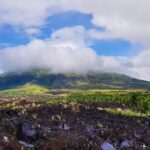
Mount Akagi — The Sacred Mountain of JDM Culture and Initial D Mount Akagi (赤城山, Akagi-yama) is one of the most iconic landmarks in Japanese car culture. Rising to 1,828 meters in Gunma Prefecture, this dormant volcano is far more than a scenic hiking destination — it is a place of pilgrimage for JDM enthusiasts, drift fans, and anyone who grew up watching or reading Initial D. The winding touge (mountain pass) roads of Mount Akagi served as the home course of protagonist Takumi Fujiwara, making it arguably the most famous driving road in all of anime and manga history. ...
続きを見る
What to See and Do Near Irohazaka
The Irohazaka winding road is not just a destination in itself — it serves as the gateway to an entire highland region filled with natural attractions and cultural sites.
Kegon Falls
One of Japan's three most famous waterfalls, Kegon Falls plunges 97 meters from the outlet of Lake Chuzenji. An elevator takes visitors down to an observation platform at the base of the falls, providing a dramatic close-up view. The falls are particularly spectacular in autumn when framed by colorful foliage, and in winter when the surrounding cliffs are encased in ice.
Lake Chuzenji
Sitting at the top of the Irohazaka pass, Lake Chuzenji is a large, scenic crater lake formed by volcanic activity from Mount Nantai. The lake offers boat cruises, lakeside walking paths, and numerous restaurants serving local trout dishes. The shores of the lake are especially beautiful during autumn.
Akechidaira Ropeway
Located partway up the second Irohazaka, the Akechidaira Ropeway provides a three-minute cable car ride to an observation deck with breathtaking views of Kegon Falls, Lake Chuzenji, and the Irohazaka switchbacks far below. This is one of the best photo opportunities in all of Nikko.
Nikko Toshogu Shrine
Before or after your Irohazaka drive, the UNESCO World Heritage site of Nikko Toshogu is an absolute must-visit. This lavishly decorated shrine complex is the final resting place of Tokugawa Ieyasu, the founder of the Tokugawa shogunate, and features the famous "see no evil, speak no evil, hear no evil" three monkeys carving and the stunning Yomeimon Gate.
Nikko Onsen
The Nikko and Yumoto Onsen areas offer excellent hot spring facilities where you can soak away the fatigue of a full day of driving. Several ryokan (traditional Japanese inns) in the area provide outdoor baths with mountain views, making for the perfect end to an Irohazaka driving day.
Driving Tips for the Irohazaka Winding Road
Whether you are an experienced touge driver or a first-time visitor to Japan's mountain roads, these practical tips will help you get the most out of your Irohazaka experience.
- Understand the one-way system: The second Irohazaka is uphill only; the first Irohazaka is downhill only. You cannot turn around on either road. Plan your route accordingly.
- Check your brakes before descending: The first Irohazaka's 28 downhill hairpins demand heavy brake use. Engine braking (using a lower gear) is essential to prevent brake fade. If you are driving an automatic rental car, shift to "L" or "2" mode for the descent.
- Arrive early during autumn: Peak autumn weekends can see traffic jams lasting hours. Departing Tokyo by 5:00 AM or earlier on weekends is advisable. Weekday visits are vastly preferable.
- Use pull-off areas for photos: There are designated parking bays along both the uphill and downhill routes. Never stop on the road itself to take photos, as this creates dangerous situations for following traffic.
- Fill up on fuel in Nikko town: There are no gas stations on the Irohazaka road or at Lake Chuzenji. Make sure you have adequate fuel before beginning the ascent.
- Watch for motorcycles and cyclists: The Irohazaka winding road is popular with motorcyclists and serious road cyclists. Be vigilant at blind corners, especially on the tighter first Irohazaka descent.
- Carry winter equipment in cold months: From late November through March, road conditions can be unpredictable. Winter tires or chains may be required by local authorities.
Combining Irohazaka with a Daikoku PA Car Meet Tour
For JDM car culture enthusiasts visiting Japan, one of the most rewarding itinerary combinations is pairing a daytime drive of the Irohazaka winding road with an evening visit to Daikoku Parking Area in Yokohama. Daikoku PA is Japan's most famous car meet location, where hundreds of modified JDM cars — from Nissan GT-Rs and Toyota Supras to immaculately restored Skylines and rotary-powered Mazdas — gather on weekend nights.
Our company operates guided tours from central Tokyo to Daikoku PA, with hotel pickup service and English-speaking guides who are deeply embedded in the JDM car scene. By combining an Irohazaka drive earlier in the day with an evening Daikoku PA tour, you can experience the full spectrum of Japanese automotive culture: the solitary thrill of mountain touge driving and the electrifying social atmosphere of a late-night car meet.
-

-
Daikoku PA Hotel Pickup Tour: The Easiest, Legal Way to See Tokyo’s Iconic Car Meet
Discover the most convenient, stress‑free way to experience Japan’s legendary car culture. Our Daikoku PA hotel pickup tour delivers door‑to‑door transport, expert guidance, and a fully legal route to one of the world’s most photogenic car meets—no rental car or highway navigation required. What is Daikoku PA? Daikoku Parking Area (PA) is a major expressway service area in Yokohama where Japan’s JDM scene gathers—especially on weekend nights and public‑holiday eves. Expect a rolling showcase of GT‑Rs, Supras, RX‑7s, NSXs, Silvias, VIP sedans, and tastefully modified kei cars. When the venue is open and conditions are favorable, enthusiasts cruise in, park, ...
続きを見る
Irohazaka vs. Other Famous Touge Roads in Japan
Japan is home to dozens of legendary mountain passes, each with its own character and appeal. Here is how the Irohazaka winding road compares to some of the most well-known alternatives:
- Irohazaka vs. Mount Akagi: Mount Akagi, made famous by Initial D, features a faster and more flowing road layout with wider corners. Irohazaka is tighter, slower, and more technical, with a far greater number of hairpin turns. Akagi is located in nearby Gunma Prefecture and can be combined with Irohazaka in a multi-day driving trip.
- Irohazaka vs. Hakone Turnpike: The Hakone Turnpike is a toll road south of Tokyo known for its smooth surface and sweeping bends. It is faster and more suited to high-speed driving, while Irohazaka rewards precision and patience at lower speeds.
- Irohazaka vs. Mount Haruna: Another Initial D-famous location, Mount Haruna is also in Gunma and features a mix of tight hairpins and medium-speed corners. Irohazaka has more hairpins but less variety in corner types.
- Irohazaka vs. Izu Skyline: The Izu Skyline offers stunning ocean views and a fast, sweeping driving experience. Irohazaka is the polar opposite — mountain views, tight switchbacks, and a completely different driving rhythm.
Each of these roads offers a unique experience, and serious driving enthusiasts visiting Japan should aim to experience as many as possible. However, if you can only choose one road for the sheer concentration of hairpin turns and dramatic scenery, Irohazaka stands alone.
Renting a Car for the Irohazaka Drive
To drive the Irohazaka winding road, you will need either your own vehicle or a rental car. International visitors to Japan can rent cars with a valid International Driving Permit (IDP) issued under the 1949 Geneva Convention. Most major rental agencies are located near Tokyo Station, Shinjuku, and Haneda/Narita airports.
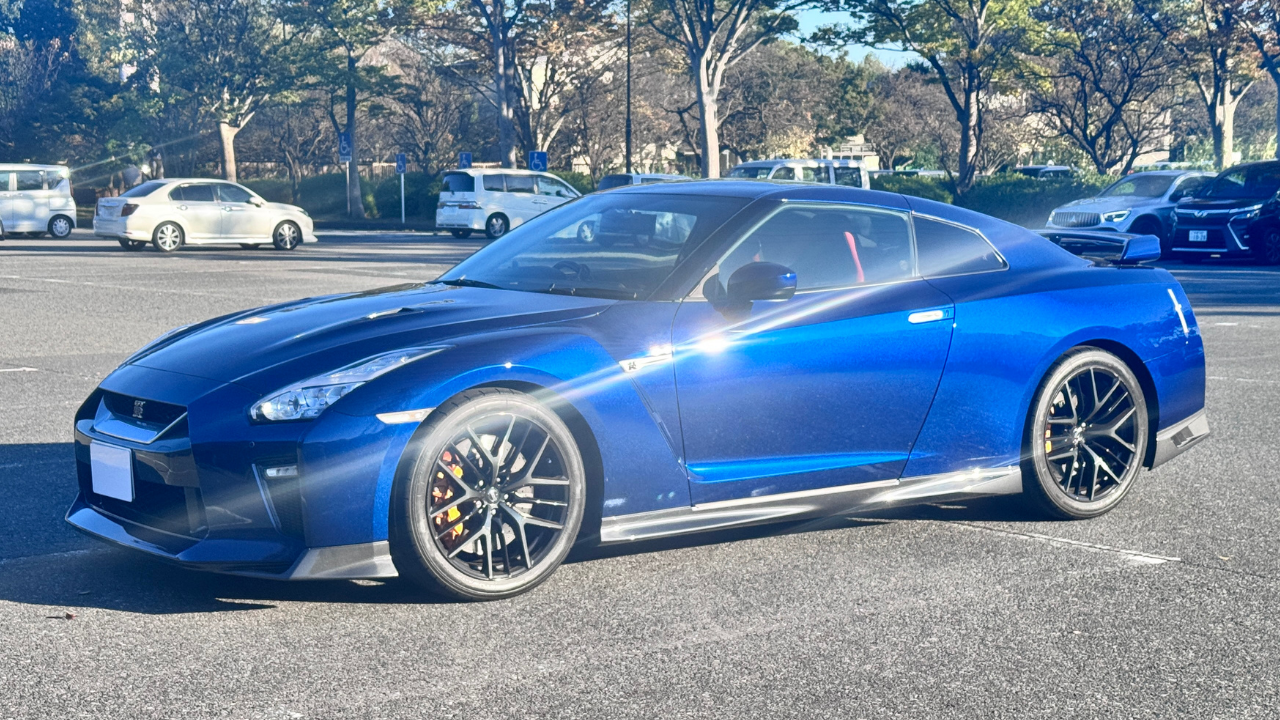
For the Irohazaka drive specifically, a compact car or a sporty hatchback is ideal. The tight hairpin turns favor smaller, more nimble vehicles over large SUVs. If you are a JDM enthusiast and want to drive the pass in something special, several agencies in Japan offer JDM sports car rentals, including models like the Honda Civic Type R, Mazda MX-5, and even the Nissan GT-R.
Keep in mind that Japan drives on the left side of the road. If you are not accustomed to left-hand traffic, the Irohazaka winding road's one-way system actually simplifies things considerably, as you will not need to worry about oncoming traffic on the pass itself.
-
-
JDM Car Rental in Japan: The Complete Guide for Overseas Enthusiasts
Japan is the spiritual home of JDM—where iconic nameplates like Skyline, Supra, RX‑7, and Silvia were born and bred. If you’re visiting and want to experience authentic Japanese roads behind the wheel of a well‑maintained, street‑legal performance car, renting locally is the most practical and legal way to do it. This guide explains how to rent a JDM car in Japan, what to expect on the road, and the best routes and meet‑ups to plan around your trip. Why Rent a JDM Car in Japan? Renting in Japan gives you access to cars in their natural environment—tight city streets, spotless ...
続きを見る
Practical Information: Irohazaka at a Glance
- Location: Nikko, Tochigi Prefecture, approximately 150 km north of Tokyo
- Total hairpin turns: 48 (20 uphill on the second Irohazaka, 28 downhill on the first Irohazaka)
- Elevation gain: Approximately 600 meters (from ~600m to ~1,270m)
- Road type: One-way separated routes; toll-free
- Driving time: Approximately 20–30 minutes per route under normal conditions
- Best season: Autumn (mid-October to early November) for foliage; summer for uncrowded driving
- Nearest major city: Utsunomiya (approximately 40 km); Tokyo (approximately 150 km)
- Parking: Available at Akechidaira (midway on uphill route), Lake Chuzenji, and Kegon Falls
- Winter conditions: Open year-round but winter tires/chains may be required December–March
If you're going to Daikoku PA, leave it to us

Experience an unforgettable JDM tour — ride in a legendary Japanese sports car and drive from Tokyo to Daikoku Parking Area, cruising Tokyo’s iconic roads along the way. Choose from favorites like the GT-R (R35 / R34 / R32), RX-7, Supra, and more.
We offer one of the highest-quality JDM driving experiences in the industry, at a fair and reasonable price.
Want to know more details or check availability?
Message us on WhatsApp for quick replies and easy booking.
Spots often sell out, so we recommend booking early.
Duration: about 3 hours
Meeting Point: Shibuya Station
Language: Beginner-level English & Japanese
Customer Reviews
Daikoku PA Video: What It’s Really Like
Important Information
- This is a drive tour where you drive your rental car, and our guide navigates from the seat.
- This is a self-drive tour where you drive your rental car, and our guide navigates from the passenger seat.
- The tour begins and ends at the same location (Shibuya).
- If the Daikoku Parking Area is closed, we will instead guide you to another car meet further away.
- The consultant is a cultural expert and navigator, not a taxi service.
