
Searching “gtr r35 rent” usually means one thing: you want the full Nissan GT‑R R35 experience in Japan—ideally in Tokyo—and you want to do it legally, safely, and without ruining your trip with paperwork surprises.
This guide explains what renting a GT‑R R35 in Japan typically requires, what the hidden friction points are (license rules, age limits, deposits, insurance, and expressway restrictions), and why the #1 destination for an R35 drive is Daikoku Parking Area (Daikoku PA)—the legendary car meet hub on the Tokyo–Yokohama bay routes.
Why the Nissan GT-R R35 Is the Ultimate Japan Rental
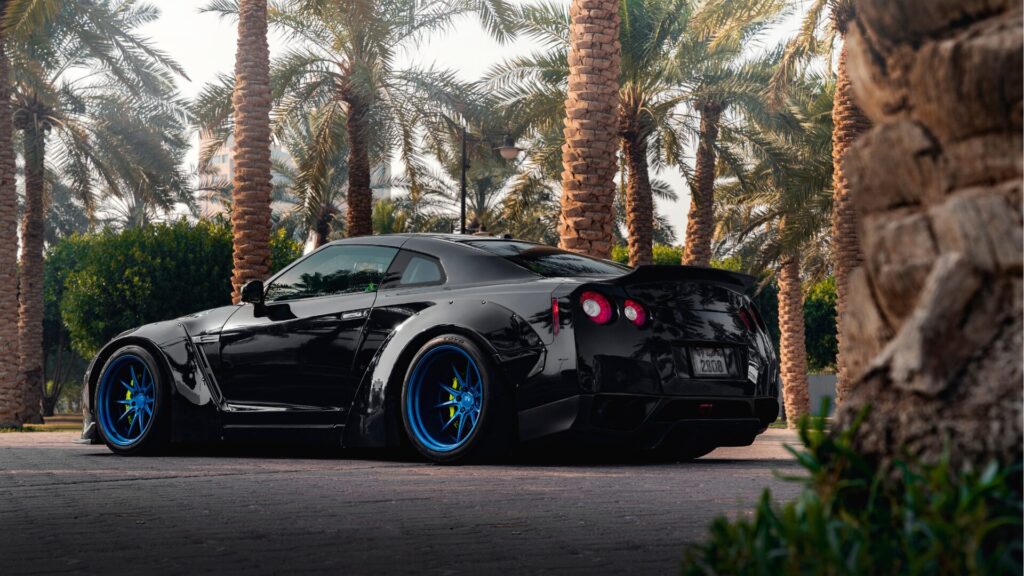
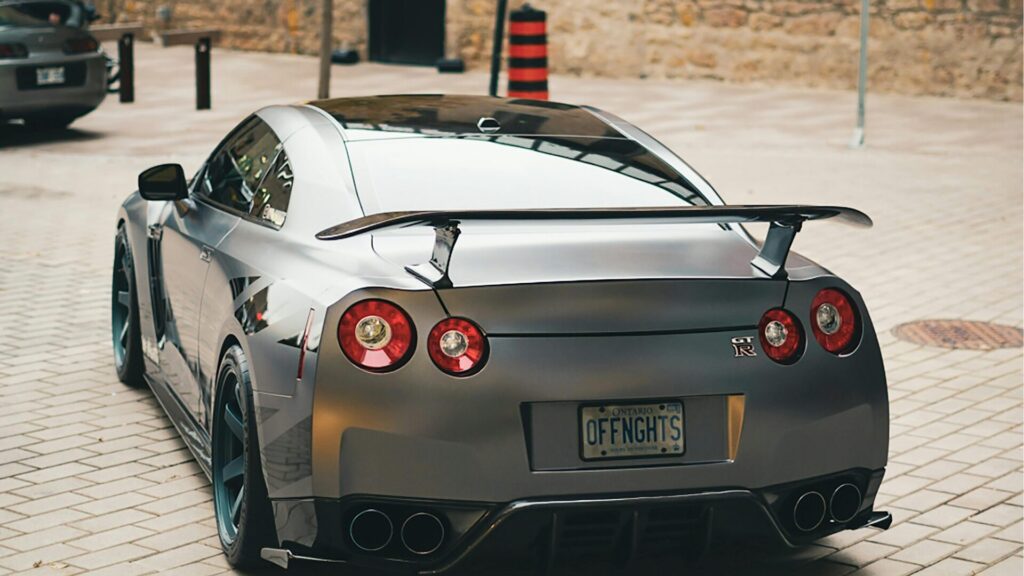
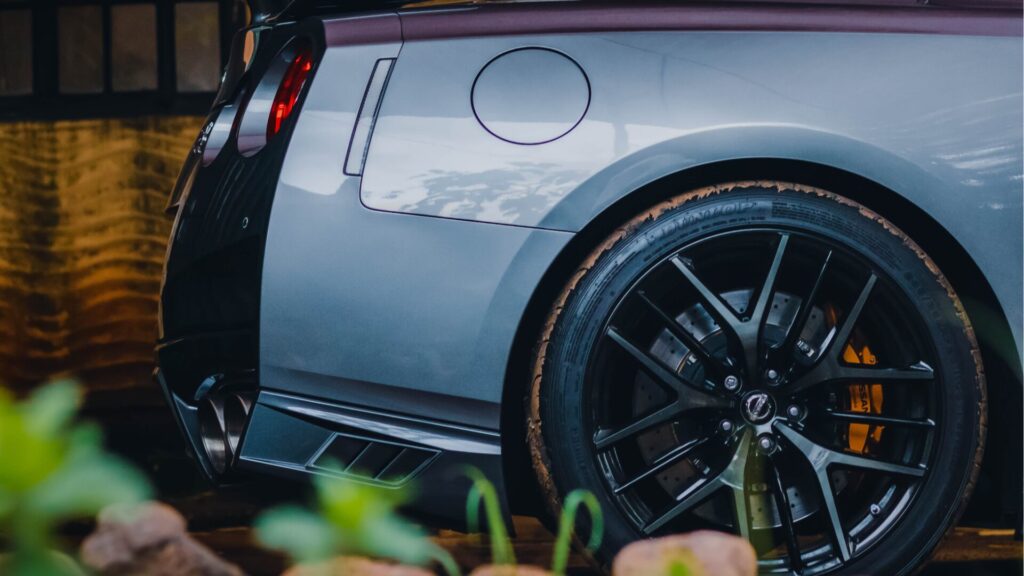
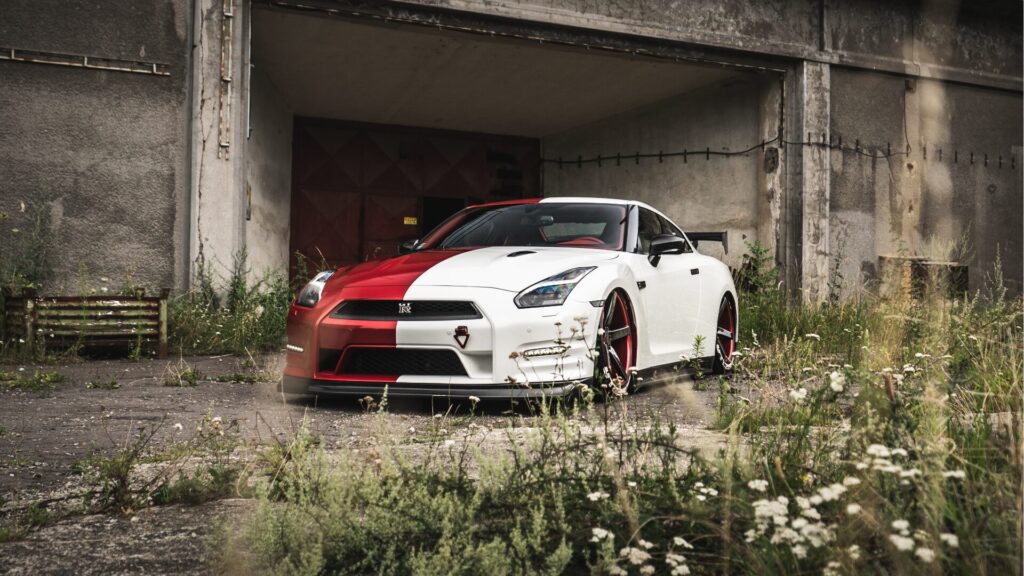
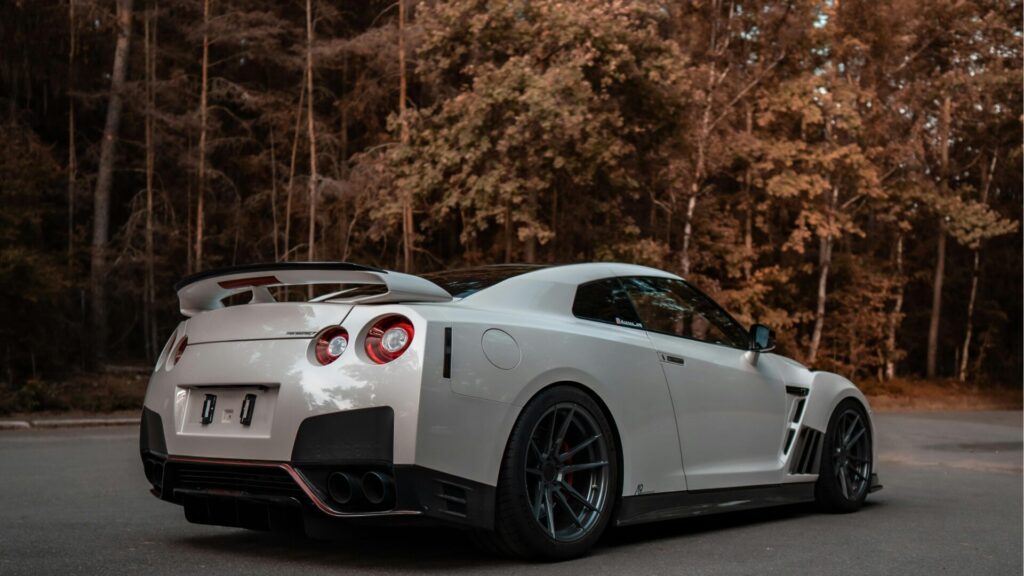
The R35 GT‑R earned its “Godzilla” nickname by delivering supercar performance with everyday usability. For many visitors, renting one in Japan feels like a once‑in‑a‑lifetime chance—especially now that R35 production has officially ended in Japan.
That reality has made “R35 rent” searches surge: if you want to drive an R35 in its home country, the rental/experience market is often the most practical route.
Can foreigners rent a Nissan GT-R R35 in Japan?
In most cases, yes—but only if you arrive with the correct driving documents and you meet the rental company’s conditions.
1) The license rule that trips up most travelers
Japan generally requires one of the following for visitors who want to drive:
- A valid International Driving Permit (IDP) based on the 1949 Geneva Convention, plus your passport, or
- In limited cases (country dependent), a valid domestic license plus an official Japanese translation.
Important: many “international licenses” sold online (or issued under other conventions) are not accepted in Japan.
2) Age limits are common for GT-R rentals
For specialty and supercar/JDM rental fleets, minimum age limits are often stricter than standard economy rentals. It is common to see requirements such as 26+ or even 28+ for an R35.
3) Expect a security deposit and stricter insurance terms
Performance cars bring higher risk. Many companies require a refundable security deposit and may have specific rules about insurance, liability, and what counts as misuse.
-

-
JDM Car Rental in Japan: The Complete Guide for Overseas Enthusiasts
Japan is the spiritual home of JDM—where iconic nameplates like Skyline, Supra, RX‑7, and Silvia were born and bred. If you’re visiting and want to experience authentic Japanese roads behind the wheel of a well‑maintained, street‑legal performance car, renting locally is the most practical and legal way to do it. This guide explains how to rent a JDM car in Japan, what to expect on the road, and the best routes and meet‑ups to plan around your trip. Why Rent a JDM Car in Japan? Renting in Japan gives you access to cars in their natural environment—tight city streets, spotless ...
続きを見る
GT-R R35 rental requirements checklist (Tokyo)
Use this as a practical pre‑trip checklist.
Documents you typically need
- Passport
- Valid driver’s license from your home country
- IDP (1949 Geneva format) OR (where accepted) Japanese translation of your license
- Credit card in the driver’s name
Common rental conditions for an R35
- Minimum age requirement (often 26+ or 28+)
- Security deposit (commonly substantial for performance cars)
- Agreement to specific usage rules (no racing, no reckless driving, no prohibited areas)
Recommended extras that save stress
- A data plan / eSIM for navigation and translation
- Familiarity with Japan’s expressway tolling (ETC, toll gates, and route planning)
- A plan for parking, fuel type, and return timing
What does it cost to rent a GT-R R35 in Tokyo?
Prices vary widely by:
- Rental type (hourly “experience,” half‑day, full day)
- R35 trim (standard vs. NISMO)
- Insurance level and deductible
- Deposit size
- Time of week and season
Deposits & insurance: the part people underestimate
It is normal for premium rental companies to request a refundable deposit (for example, some experiences list deposits around ¥100,000) and to require strict compliance with return conditions (damage‑free, no policy violations).
Tip: If you are comparing providers, treat “insurance included” as a starting point—not the full story. Carefully confirm:
- What the deductible is
- What damage types are excluded
- Whether underbody, wheels/tires, and interior damage are covered
- How “misuse” is defined (hard launches, drifting, aggressive behavior, etc.)
Where to rent a Nissan GT-R R35 in Tokyo (what to look for)
You’ll usually be choosing between:
1) “Experience” style rentals
- Shorter durations
- Often curated routes
- Sometimes a guide or lead car is included
- Good if you want the feel of an R35 without planning a full day
2) Full-day performance rentals
- Maximum flexibility
- Requires you to handle routing, tolls, parking, and timing
- Higher responsibility and higher risk if you’re not comfortable with Japan’s expressway system
3) A guided tour alternative (recommended for Daikoku PA)
If your real goal is Daikoku PA, the biggest problem is not “finding an R35.” It’s getting in and out of Daikoku smoothly, at the right time, without access mistakes.
A guided Daikoku PA tour removes the two most common failure points:
- Document/insurance stress and deposit risk
- Access logistics (entry/exit, timing, and closures)
Daikoku PA: the best place to enjoy a GT-R R35 in Japan
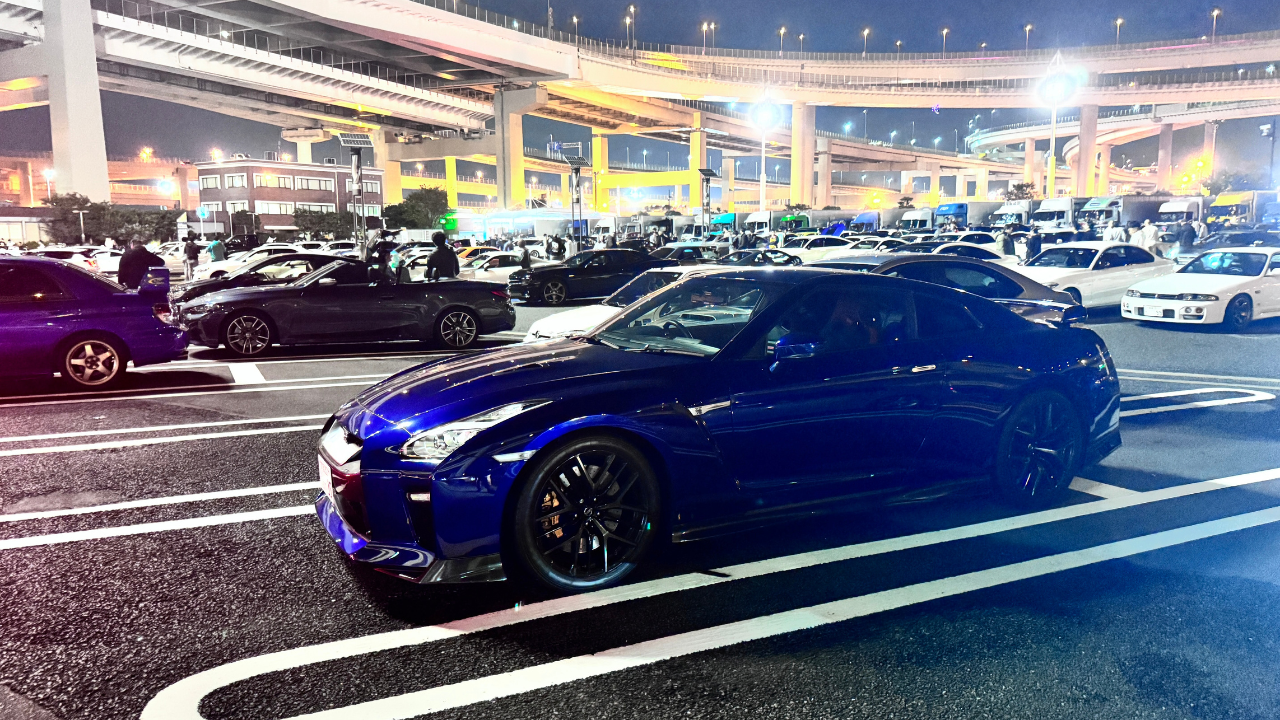
Daikoku Parking Area (Daikoku PA) is a famous expressway parking area in the Yokohama/Tokyo bay zone. When conditions align, it becomes a magnet for enthusiast cars—JDM icons, supercars, tuned builds, and rare imports.
For a GT‑R R35 driver, Daikoku is a perfect match because:
- The vibe is built around Japanese performance culture
- The location is tied to the bay routes and industrial night scenery
- You can experience the scene without any track‑only behavior
-

-
Daikoku Car Meet (Daikoku PA) Guide: How to Visit Japan’s Most Famous JDM Meet
Daikoku Parking Area (Daikoku PA) is the most iconic place in the Tokyo–Yokohama region to see Japanese performance cars, tuned builds, and rare classics gathering in one spot. If you’re searching for the Daikoku car meet, this guide explains what it is, what to expect, how to visit responsibly, and why a guided JDM tour is the most reliable way to experience it—especially if you don’t have your own car. What is Daikoku PA? Daikoku PA is a highway parking area on the Shuto Expressway network in Yokohama (Kanagawa), near Tokyo. Unlike a typical roadside rest area, Daikoku PA has ...
続きを見る
The Daikoku PA access rules every “R35 rent” search should know
This is where most tourists get stuck.
You can’t walk in
Daikoku PA is inside a major expressway junction and is not designed for pedestrians. The Metropolitan Expressway authority explicitly states that pedestrians, bicycles, and scooters are prohibited from entering Daikoku PA.
There is no taxi stand or bus stop inside Daikoku PA
Even if you manage to reach the general area by taxi, you cannot count on finding an easy return option from inside the parking area.
Usage restrictions can happen (especially on weekend late nights)
To discourage dangerous behavior, the expressway operator may restrict usage at certain parking areas—including Daikoku—during late‑night periods such as Saturday late night to Sunday early morning (and sometimes other high‑traffic holiday periods).
What this means for an R35 rental: you don’t want to spend your rental window fighting access issues or arriving during restricted hours.
-
-
How to Get to Daikoku PA from Tokyo (2026 Complete Access Guide)
Daikoku Parking Area (often called Daikoku PA or Daikokufuto) is the most iconic JDM car meet spot in Greater Tokyo. This guide explains every practical way to reach it from central Tokyo—legally, safely, and efficiently—plus pro tips to avoid closures and common mistakes. Planning a hassle-free visit with guaranteed transport? Our licensed JDM tour to Daikoku PA handles routing, tolls, parking, and police checks so you can focus on the scene. What is Daikoku PA? Daikoku PA is a large service/parking area on the Shuto (Metropolitan) Expressway network in Yokohama Bay. On many evenings—especially weekends—it becomes a magnet for JDM ...
続きを見る
-
-
Daikoku PA Today: A 2025, On-the-Ground Guide for First-Time Visitors
What is Daikoku PA? Daikoku Parking Area (commonly “Daikoku PA” or “Daikokufuto”) is a highway service area inside the Metropolitan (Shuto) Expressway network in Yokohama. By day it functions like a normal expressway rest stop; by night it transforms into Japan’s most photographed informal car‑meet hub. You’ll see everything from classic JDM icons and VIP builds to modern supercars and camera crews. Because it is a working service area—not an event venue—police can thin crowds or close entrances without prior notice when safety or congestion becomes an issue. Daikoku PA Today: What to Expect on a Weeknight Today (a typical ...
続きを見る

Driving etiquette at Daikoku PA (how to avoid trouble with a rental)
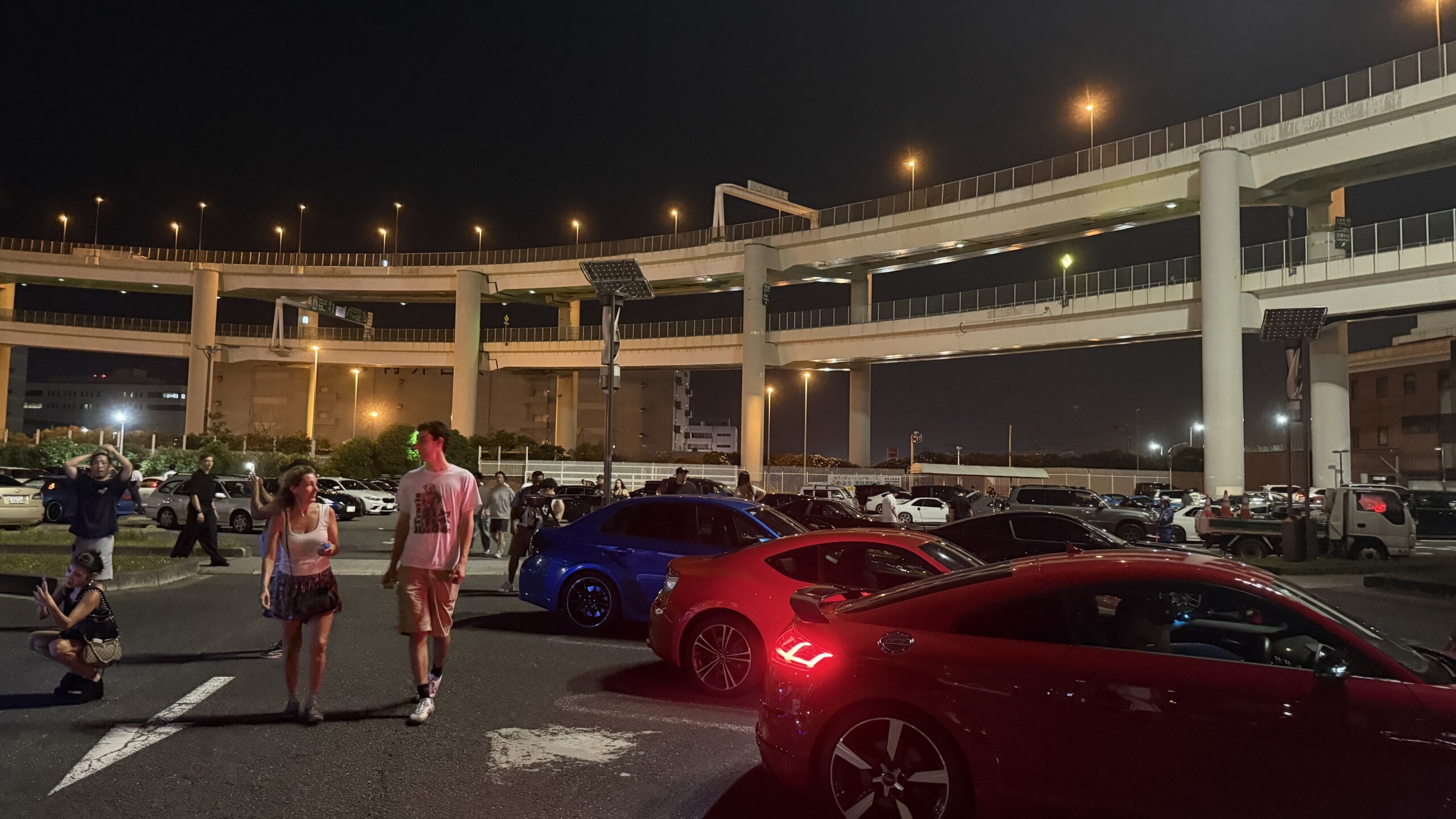
Daikoku is famous because it works—drivers show up, share space, and keep things respectful. As a visitor in a rented R35, following etiquette matters even more.
Do
- Keep engine noise and revving under control
- Park cleanly and avoid blocking lanes or entrances
- Ask before photographing close‑ups of people or license plates
- Leave calmly—no burnouts, no aggressive exits
Don’t
- Treat Daikoku like a track
- Street race, drift, or provoke enforcement
- Overstay if staff request movement or if restrictions begin
- Assume “it’s always open” for hanging out
For a first‑time visitor, the best “Daikoku strategy” is simple: arrive with a plan, stay respectful, and prioritize safety.
-

-
Daikoku Parking Area Rules (Daikoku Futo PA): How to Visit Legally, Respectfully, and Avoid Closures (2026)
Visiting Daikoku Parking Area (大黒PA)—often searched as Daikoku PA, Daikoku Parking Area (PA), or Daikoku Futo Parking Area—is a bucket-list moment for JDM fans. But Daikoku is not a theme park or an “event venue.” It’s a working expressway rest area on the Shuto Expressway network, and the rules are enforced. This guide covers the practical rules that matter most: legal access, what behavior gets people removed, and how to reduce the risk of sudden entry restrictions—so visitors can enjoy the scene without becoming the reason it gets shut down. The Golden Rule: You Can’t Walk to Daikoku Parking Area ...
続きを見る
The best way to combine an R35 dream with Daikoku PA reality
If your core goal is Daikoku PA, there are two common approaches:
Option A: Rent an R35 and manage everything yourself
Best for travelers who:
- Already have the correct IDP/translation in hand
- Are comfortable driving in Japan’s expressway system
- Accept the deposit/insurance responsibility
- Don’t mind that Daikoku access can be unpredictable
Option B: Join a Daikoku PA JDM tour (no rental stress)
Best for travelers who:
- Want guaranteed logistics and local guidance
- Prefer hotel pickup and a clear schedule
- Don’t want to risk deposits, insurance gray areas, or access mistakes
- Want the car culture experience more than the paperwork
A well‑run tour is especially valuable on nights when parking areas can face restrictions, or when you want to maximize your chances of arriving at the right time.
Rental self Drive Plan
| Duration | Rate (Incl. Tax) | Notes |
| 4 Hours | ¥80,000 | Short-term base plan |
| 24 Hours | ¥125,000 | Daily rate (Best value) |
| 48 Hours | ¥180,000 | 2-day package |
| Each Add'l 24H | +¥55,000 | Up to 5 days maximum |

FAQ: GT-R R35 rent + Daikoku PA
Do I need an International Driving Permit to rent a GT-R in Japan?
Most visitors do. In general, Japan requires an IDP under the 1949 Geneva Convention (or, for certain countries, a Japanese translation of the domestic license).
Can I go to Daikoku PA without a car?
Not practically—and not legally on foot. Daikoku PA is an expressway parking area with explicit restrictions on pedestrian entry.
Is Daikoku PA always open for car meets?
Daikoku is a real expressway facility first. The atmosphere depends on day/time, traffic, and whether usage restrictions are implemented.
What’s the biggest mistake first-time visitors make?
Planning the entire evening around “getting there somehow” without confirming access logistics. Daikoku PA is not a normal city parking lot—you need the right entry/exit plan.
Is it safe to take a rented R35 to Daikoku?
Yes, if you drive legally and respectfully. The risk comes from poor timing, access confusion, and behavior that violates rental agreements or expressway rules.
If you’re going to Daikoku PA, leave it to us
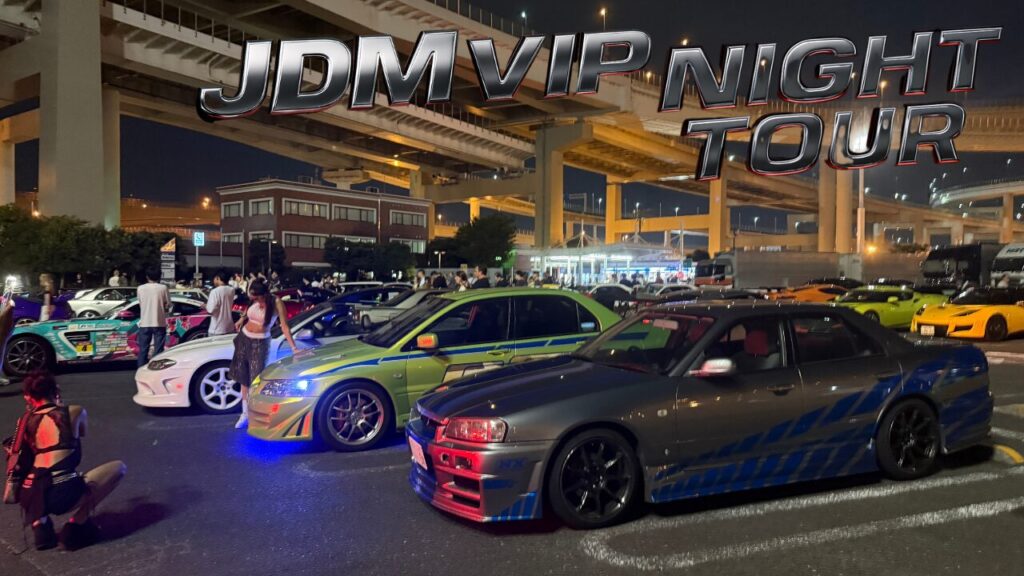
Experience an unforgettable JDM tour — ride in a legendary Japanese sports car and drive from Tokyo to Daikoku Parking Area, cruising Tokyo’s iconic roads along the way. Choose from favorites like the GT-R (R35 / R34 / R32), RX-7, Supra, and more.
We offer one of the highest-quality JDM driving experiences in the industry, at a fair and reasonable price.
Want to know more details or check availability?
Message us on WhatsApp for quick replies and easy booking.
Spots often sell out, so we recommend booking early.
Duration: about 3 hours
Meeting Point: Shibuya Station
Language: Beginner-level English & Japanese
Customer Reviews
Daikoku PA Video: What It’s Really Like
Important Information
- This is a drive tour where you drive your rental car, and our guide navigates from the seat.
- This is a self-drive tour where you drive your rental car, and our guide navigates from the passenger seat.
- The tour begins and ends at the same location (Shibuya).
- If the Daikoku Parking Area is closed, we will instead guide you to another car meet further away.
- The consultant is a cultural expert and navigator, not a taxi service.