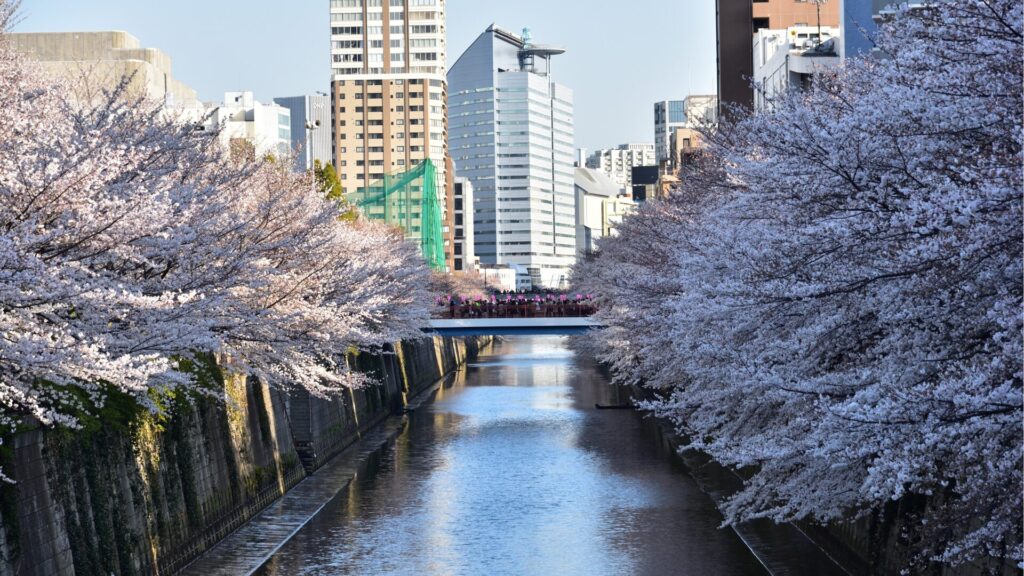
Tokyo’s cherry blossom season (sakura) is one of the most iconic travel moments in the world—parks turning pastel pink, rivers lined with blossoms, and nighttime illuminations that feel unreal. If you’re planning cherry blossom Tokyo as the centerpiece of your trip, you can make it even more memorable by pairing classic hanami (flower viewing) with a side of Tokyo’s world-famous car culture.
This guide covers the best places to see cherry blossoms in Tokyo, how to time your visit, where to enjoy yozakura (night blossoms), and how to plan a smooth itinerary that ends with an unforgettable night at Daikoku PA.
When Is Cherry Blossom Season in Tokyo?
Cherry blossoms in Tokyo usually peak from late March to early April, but timing changes every year depending on winter temperatures and early-spring weather patterns. If your schedule is flexible, aim for a trip that spans the last week of March through the first week of April to maximize your odds.
What to expect by timing
- Mid–late March: Early blooms begin in warm pockets of the city and with early-bloom varieties.
- Late March–early April: Peak bloom period for many popular spots.
- Early–mid April: Petals begin falling (still beautiful—often called “sakura snow”).
How long do cherry blossoms last?
The “full bloom” window is short—often around a week—but Tokyo has enough variety in microclimates and cultivars that you can still find great views even if you arrive slightly early or late.
Best Cherry Blossom Spots in Tokyo

Below are the most rewarding (and most photographed) sakura locations. If you’re chasing both beauty and convenience, consider combining one “big-name” spot with one quieter option each day.
Chidorigafuchi
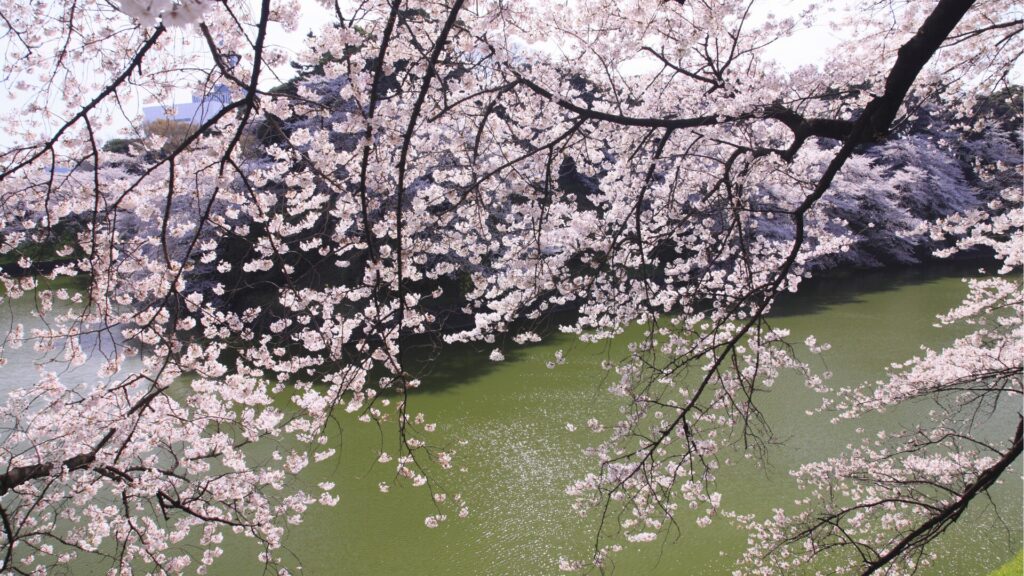
Chidorigafuchi is famous for its waterside blossoms near the Imperial Palace area. In peak season, the view of petals over the moat is one of Tokyo’s most classic sakura scenes.
Best for: Iconic skyline-meets-nature photos, romantic walks, evening illuminations.
Tips: Go early on weekdays for the calmest experience.
Ueno Park
Ueno Park is one of Tokyo’s biggest hanami hubs, with wide paths lined in blossoms and an energetic festival atmosphere.
Best for: Big “sakura crowd” energy, food stalls, a full-day area (museums + park).
Tips: Expect crowds at peak; plan a morning visit if you want cleaner photos.
Meguro River (Nakameguro)
If you’ve seen Tokyo cherry blossom photos on social media, there’s a strong chance they were taken along the Meguro River. When the trees are in full bloom, the river becomes a pink tunnel.
Best for: Scenic strolls, cafés, evening ambiance, “Tokyo spring” vibes.
Tips: Evenings are magical but crowded; mornings are calmer.
Shinjuku Gyoen
Shinjuku Gyoen is one of the best places in Tokyo for a slower, more spacious sakura experience. It’s a large garden with different varieties, which can extend the viewing window.
Best for: A relaxed hanami picnic, variety, photography without constant foot traffic.
Tips: Check rules and opening hours in advance; arrive soon after opening.
Sumida Park (Tokyo Skytree area)
For a Tokyo-only combination, Sumida Park gives you sakura along the river plus views of the city—often including Tokyo Skytree in the background.
Best for: River views, skyline photos, easy pairing with Asakusa sightseeing.
Tips: Sunset can produce great color in photos (but also increases crowds).
Yoyogi Park and Harajuku
Yoyogi Park isn’t as “headline-famous” as the locations above, but it’s excellent for a flexible itinerary because it connects naturally to Harajuku, Omotesando, and Shibuya.
Best for: Casual hanami energy, a spring walk that transitions into shopping and city exploring.
Tips: Great choice if you want sakura without committing to the busiest spots.
Cherry Blossom Night Views in Tokyo: Yozakura
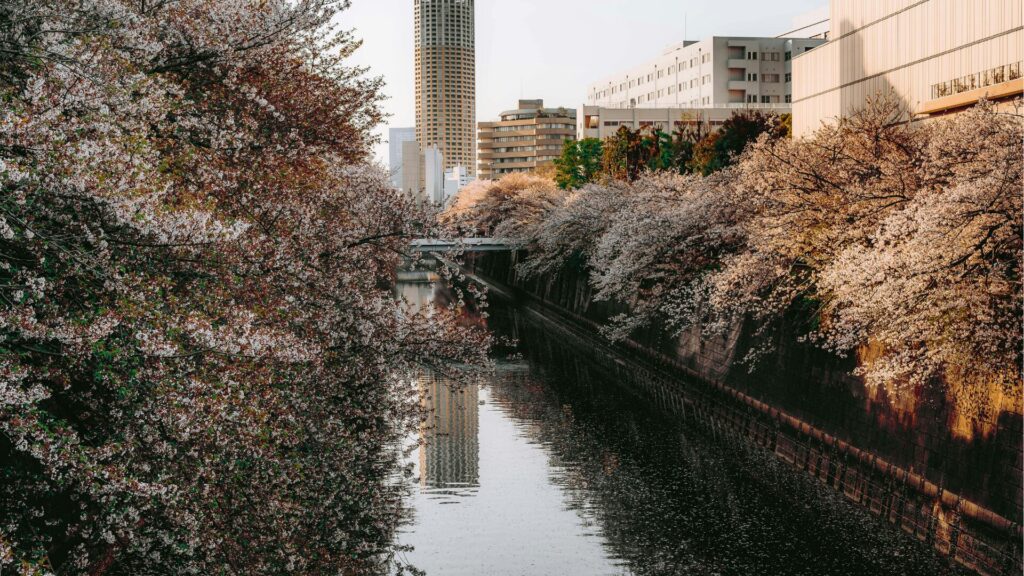
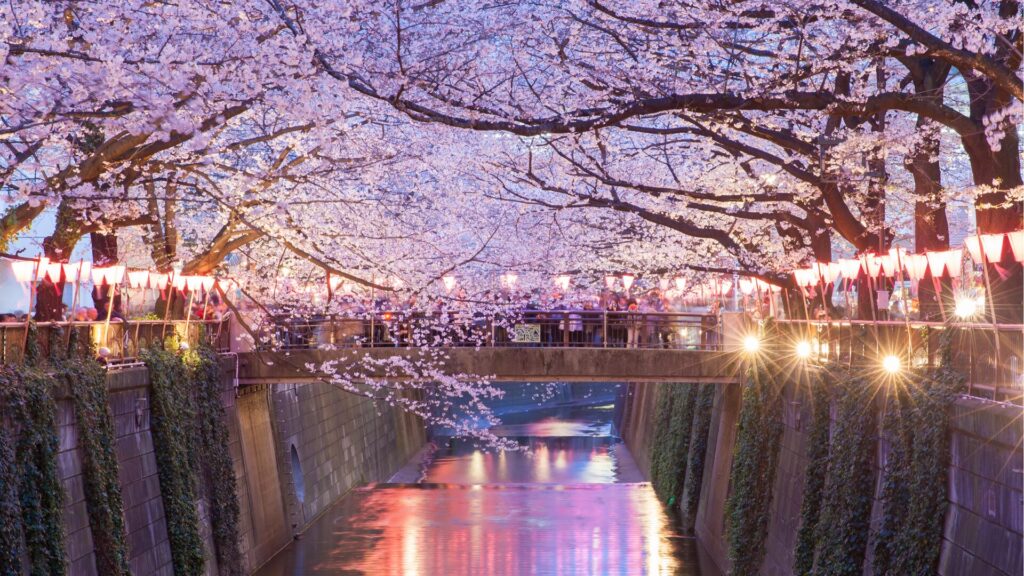
Sakura at night has a different kind of magic. Illuminations turn blossoms into glowing clouds, and the city feels more cinematic.
Where to see cherry blossoms at night
- Chidorigafuchi: One of the most famous evening illumination areas.
- Meguro River: Nighttime strolling with lanterns and riverside lights.
- Neighborhood-lined streets: Some residential areas quietly light trees without the heavy festival crowd.
How to make night viewing comfortable
- Dress warmer than you think—Tokyo evenings in spring can feel chilly.
- Bring a small towel or tissue pack (public restrooms can be busy).
- If you plan to take photos, a phone tripod or stabilized grip helps in low light.
A Cherry Blossom Tokyo Itinerary That Actually Works
Tokyo rewards travelers who plan by time blocks rather than by distance. Trains are fast, but crowds and photo stops can stretch your day.
Morning: Classic blossoms + the best light
Start your day at one major location (like Chidorigafuchi or Shinjuku Gyoen) while the light is soft and the walkways are manageable.
Midday: Hanami lunch and a second spot
Choose a midday location that pairs naturally with food:
- Ueno Park: Festival energy and nearby dining options.
- Asakusa + Sumida Park: River scenery plus historic sightseeing.
Late afternoon: Flexible city time
Use late afternoon for shopping, cafés, or a neighborhood you’ve wanted to see. This is also the best moment to reset before an evening experience.
Evening: Yozakura or Tokyo nightlife
If you want blossoms at night, choose Meguro River or an illumination-friendly area. If you prefer city nightlife, Shibuya is an easy choice.
-

-
Best Things to Do in Shibuya (2026 Insider Guide)
Looking for the best things to do in Shibuya? This practical, up‑to‑date guide covers essential sights, top experiences, food and nightlife picks, and smart itineraries—plus a seamless way to turn your Shibuya night into a once‑in‑a‑lifetime JDM car‑meet experience at Daikoku PA. What Is Shibuya? Shibuya is Tokyo’s youth‑culture capital and one of the city’s liveliest hubs, famous for neon‑lit streets, fashion‑forward shopping, and nonstop nightlife. Anchored by Shibuya Station and the world‑famous Scramble Crossing, the district radiates into micro‑neighborhoods—Center‑gai for street energy, Dogenzaka for late‑night venues, Cat Street for indie fashion, MIYASHITA PARK for rooftop green space, and Sakuragaokachō ...
続きを見る

Night: Finish the day with Daikoku PA
Cherry blossom season is peak Tokyo—so it’s the perfect time to add one more “only in Japan” experience: Daikoku PA, the legendary parking area where car enthusiasts gather.
The contrast is the point: sakura in the daytime, and the glow of tuned JDM machines at night.
How Cherry Blossom Season Pairs Perfectly With Tokyo’s JDM Car Culture
A lot of visitors assume cherry blossom trips are “all daytime.” But spring evenings in Tokyo are ideal for car culture:
- Temperatures are comfortable for being outside.
- Many travelers finish sightseeing by early evening, leaving room for a second experience.
- Sakura crowds are heavy in the daytime—so Daikoku becomes a memorable “nightcap” that feels completely different.
Daikoku PA isn’t a museum or a scripted show. It’s a real place where real enthusiasts meet—meaning the atmosphere changes by the day, the time, and the conditions.
-

-
Best Time to Visit Daikoku Parking Area (Daikoku PA) in 2026: The Real-World Guide
Daikoku Parking Area—usually shortened to Daikoku PA—is Japan’s most famous informal car-meet spot. There’s no official “car meet schedule,” but there are predictable patterns. Quick verdict: Most cars + best atmosphere: Friday or Saturday evening (7:30–10:30 PM) Calmest + easiest for photos: Sunday early morning (6:00–8:30 AM) Important context: Daikoku PA is an expressway parking area in Yokohama (near Tokyo), not a street-level parking lot. Access is controlled, and temporary closures can happen when it’s too crowded or when authorities intervene. Quick Answer: Best day and time to visit Daikoku PA If you can only choose one window, choose this: ...
続きを見る
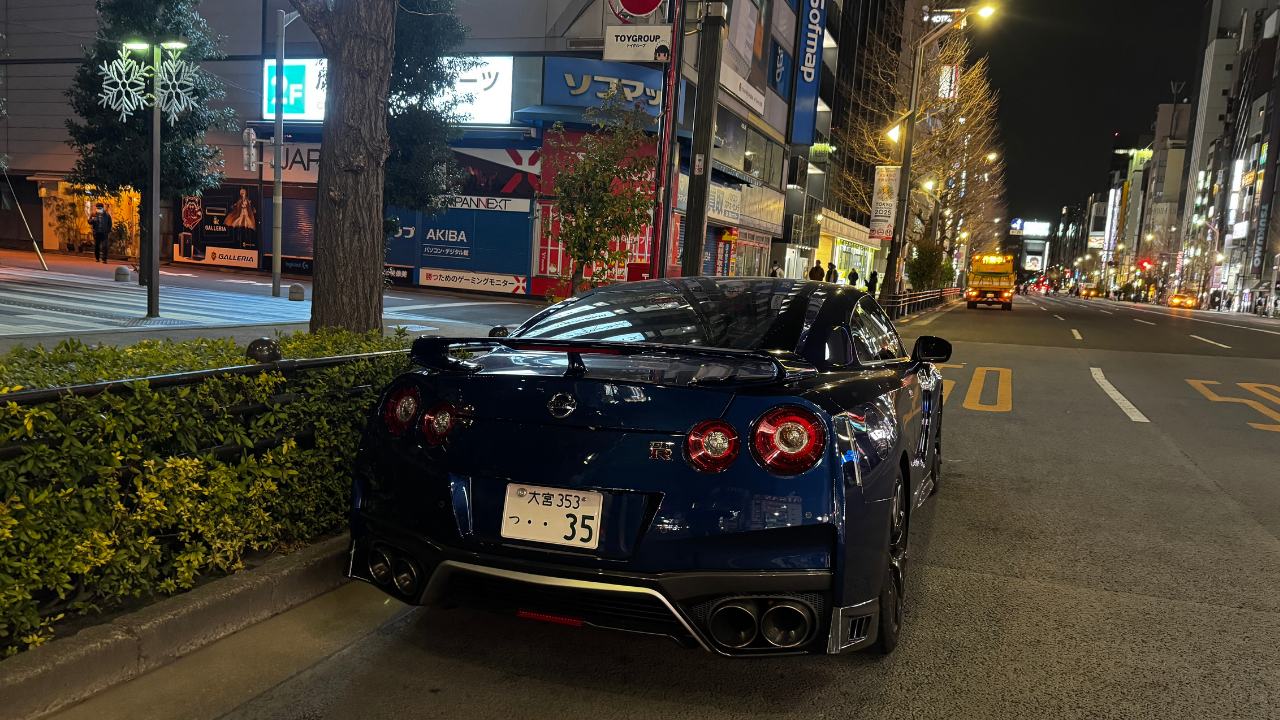
What Daikoku PA Is and Why Visitors Find It Difficult
Daikoku Parking Area (Daikoku PA) is famous worldwide as a gathering point for Japanese car culture. The challenge is that it sits on the expressway network, and access is not straightforward for most travelers.
Common visitor obstacles include:
- You can’t simply walk in from a nearby station.
- Taxis may refuse or be unreliable depending on time and route.
- Navigation is tricky if you don’t drive in Japan regularly.
- Conditions change (crowds, police presence, closures, event-like peaks).
If Daikoku PA is on your wishlist during cherry blossom season, planning it as part of a guided experience is the safest way to avoid wasting a night in transit.
-
-
How to Get to Daikoku PA from Tokyo (2026 Complete Access Guide)
Daikoku Parking Area (often called Daikoku PA or Daikokufuto) is the most iconic JDM car meet spot in Greater Tokyo. This guide explains every practical way to reach it from central Tokyo—legally, safely, and efficiently—plus pro tips to avoid closures and common mistakes. Planning a hassle-free visit with guaranteed transport? Our licensed JDM tour to Daikoku PA handles routing, tolls, parking, and police checks so you can focus on the scene. What is Daikoku PA? Daikoku PA is a large service/parking area on the Shuto (Metropolitan) Expressway network in Yokohama Bay. On many evenings—especially weekends—it becomes a magnet for JDM ...
続きを見る

Practical Tips for Cherry Blossom Tokyo Travel
Start earlier than you think
The most popular sakura spots can feel “full” by late morning at peak bloom. A 7:30–9:00 start time can completely change the quality of your day.
Keep your hanami kit lightweight
A comfortable sakura day usually comes down to small details:
- A compact picnic sheet or small foldable mat
- A light jacket for evenings
- Portable charger (photos drain batteries fast)
- Cash for food stalls and small purchases
Respect hanami etiquette
Tokyo hanami is welcoming, but etiquette matters:
- Take your trash with you (or follow local sorting rules).
- Don’t shake branches for petals.
- Stay aware of walking flow in crowded paths.
Plan your “photo moments”
If photos are a priority, decide in advance whether you want:
- Soft morning light (cleaner scenes, fewer people)
- Golden hour (warm glow, dramatic color)
- Night blossoms (cinematic, but needs steadier shooting)
Frequently Asked Questions About Cherry Blossom Tokyo
What is the best place to see cherry blossoms in Tokyo?
For first-time visitors, Chidorigafuchi, Ueno Park, and Meguro River are the top classics. If you want more space, Shinjuku Gyoen is an excellent choice.
What time of day is best for sakura viewing?
Early morning is the best balance of beauty and comfort. If you love city-night aesthetics, add yozakura in the evening.
Can I do cherry blossoms and Daikoku PA in the same day?
Yes—and it’s one of the best ways to build a “Tokyo-only” day: blossoms in the afternoon, a reset at your hotel, then Daikoku at night.
Is Daikoku PA guaranteed to have a car meet?
Daikoku’s atmosphere changes day by day. That’s why timing and local knowledge matter.
-
-
Tokyo Car Meet Locations: The Definitive 2026 Guide to Daikoku PA, Tatsumi, and More
Meta description: Planning a Tokyo car meet night? This definitive guide compares the most reliable Tokyo-area car meet locations—led by Daikoku Parking Area (Daikoku PA)—with clear access tips, etiquette, and pro itineraries. Book our JDM tour to see it all without stress. What Counts as a “Tokyo Car Meet” Today? While many gatherings happen within Tokyo’s 23 wards, the crown jewel is Daikoku Parking Area (Daikoku PA) in Yokohama—close enough to be a core stop on any Tokyo car culture trip. Around Tokyo Bay you’ll also find Tatsumi PA, Umihotaru PA on the Aqua-Line, and smaller spots like Shibaura PA. ...
続きを見る

If you’re going to Daikoku PA, leave it to us

Experience an unforgettable JDM tour — ride in a legendary Japanese sports car and drive from Tokyo to Daikoku Parking Area, cruising Tokyo’s iconic roads along the way. Choose from favorites like the GT-R (R35 / R34 / R32), RX-7, Supra, and more.
We offer one of the highest-quality JDM driving experiences in the industry, at a fair and reasonable price.
Want to know more details or check availability?
Message us on WhatsApp for quick replies and easy booking.
Spots often sell out, so we recommend booking early.
Duration: about 3 hours
Meeting Point: Shibuya Station
Language: Beginner-level English & Japanese
Customer Reviews
Daikoku PA Video: What It’s Really Like
Important Information
- This is a drive tour where you drive your rental car, and our guide navigates from the seat.
- This is a self-drive tour where you drive your rental car, and our guide navigates from the passenger seat.
- The tour begins and ends at the same location (Shibuya).
- If the Daikoku Parking Area is closed, we will instead guide you to another car meet further away.
- The consultant is a cultural expert and navigator, not a taxi service.
