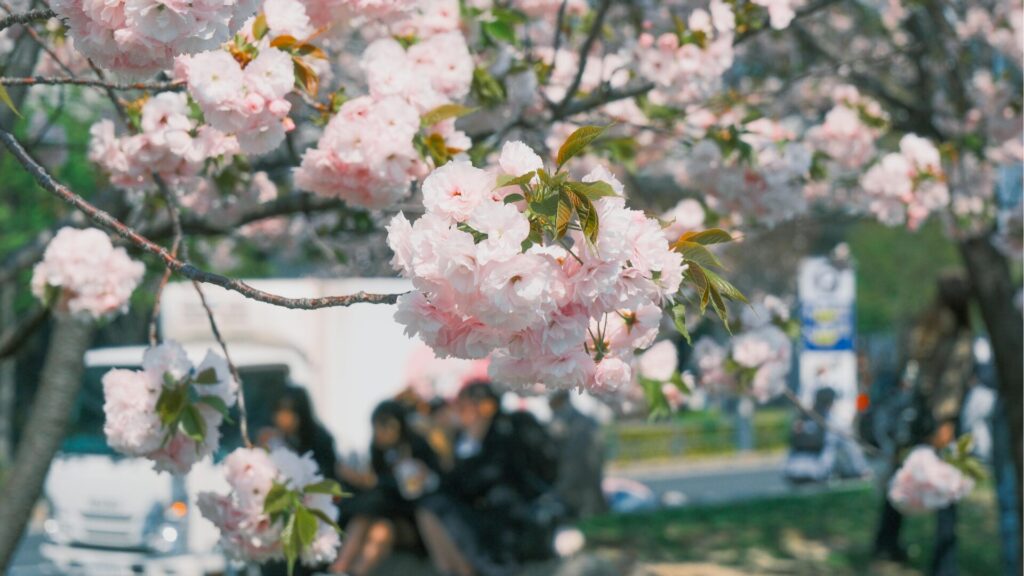
If you searched for a Tokyo Japan cherry blossom festival, you’re probably trying to do two things at once: catch peak sakura and make the most of your limited days in the city. Tokyo’s “festival” isn’t one single ticketed event—it's a season of park festivals, evening illuminations (yozakura), riverside lanterns, food stalls, and local picnics (hanami) spread across multiple neighborhoods.
This guide gives you a high-efficiency plan for sakura season in Tokyo—when to go in 2026, where the best festivals happen, how to avoid common mistakes, and how to finish your day with Tokyo’s other world-famous scene: the JDM car meet at Daikoku PA.
-

-
Cherry Blossom Tokyo: The Best Sakura Spots, Night Views, and a Perfect Finish at Daikoku PA
Tokyo’s cherry blossom season (sakura) is one of the most iconic travel moments in the world—parks turning pastel pink, rivers lined with blossoms, and nighttime illuminations that feel unreal. If you’re planning cherry blossom Tokyo as the centerpiece of your trip, you can make it even more memorable by pairing classic hanami (flower viewing) with a side of Tokyo’s world-famous car culture. This guide covers the best places to see cherry blossoms in Tokyo, how to time your visit, where to enjoy yozakura (night blossoms), and how to plan a smooth itinerary that ends with an unforgettable night at Daikoku ...
続きを見る
When is cherry blossom season in Tokyo in 2026?
Cherry blossom timing changes every year, but Tokyo’s 2026 forecast (for the main Somei Yoshino variety) points to:
- First bloom (kaika): around March 22, 2026
- Full bloom (mankai): around March 29, 2026
In reality, you should plan for a wider “high-probability” viewing window:
- Late March (best chance for peak)
- Early April (still excellent, and often slightly less crowded)
Also, Tokyo has many varieties beyond Somei Yoshino. Parks with multiple cultivars (notably large gardens) can extend your viewing opportunities into mid-April.
What is the Tokyo cherry blossom festival?
In Tokyo, “cherry blossom festival” usually means a cluster of seasonal events rather than one official citywide festival. Depending on the location, that can include:
- Lantern-lit walkways and evening illuminations
- Temporary food stalls (yatai) and pop-up snacks
- Boat rides in blossom-lined moats or rivers
- Weekend performances and seasonal markets
- Picnic-friendly parks where locals reserve spaces early
The atmosphere differs by spot:
- Festival style (busy, lively): Ueno Park, parts of Sumida Park
- Scenic stroll (romantic, photogenic): Meguro River / Nakameguro
- Iconic “Tokyo postcard” views: Chidorigafuchi moat near the Imperial Palace
Top Tokyo cherry blossom festivals and events
Below are the most searched and most reliable “festival-style” sakura experiences in Tokyo.
Ueno Sakura Matsuri (Ueno Park)
Ueno is one of Tokyo’s biggest and most classic cherry blossom festival areas, with a long sakura avenue and a dense concentration of trees.
What to expect
- Peak-season crowds (very busy at full bloom)
- A quintessential hanami atmosphere
- Lantern lighting at night in festival periods
Best for: first-time visitors who want the iconic “sakura tunnel” feeling.
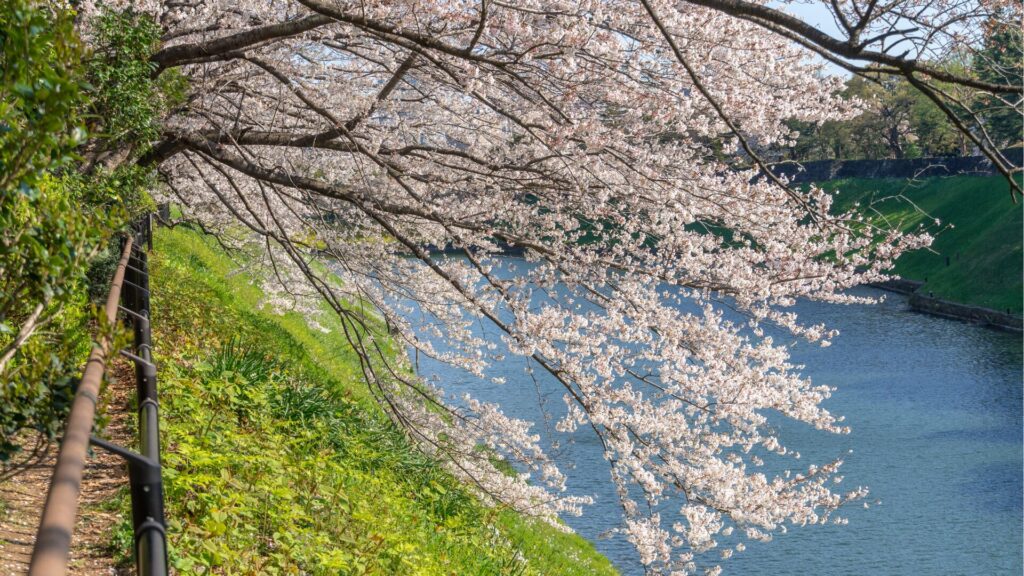
Chiyoda Sakura Festival (Chidorigafuchi / Kitanomaru Park area)
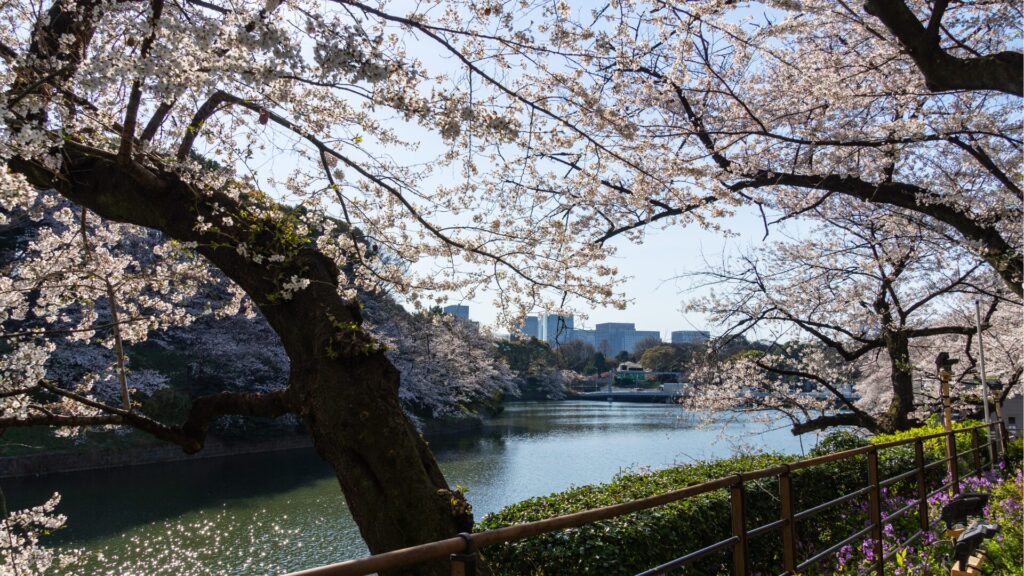
Chidorigafuchi is famous for the moat-side blossoms and one of Tokyo’s most photogenic views.
What to expect
- Evening illuminations in many years
- Boat rides (often requiring waiting or timed entry)
- Excellent twilight photography
Best for: couples, photographers, and anyone prioritizing “Tokyo’s most cinematic sakura.”
Meguro River (Nakameguro area)
If you’ve seen Tokyo cherry blossoms on social media, there’s a strong chance it was Meguro River: blossoms arching over a canal-like river, reflecting lights at night.
What to expect
- Dense foot traffic on peak evenings
- Pop-up drinks, snacks, and seasonal sweets
- Strong “yozakura” night-viewing vibe
Best for: visitors who want a night-focused cherry blossom experience.
Sumida Park (Asakusa / Tokyo Skytree area)
Sumida Park offers a classic riverside walk with views that can include Tokyo Skytree depending on your route.
What to expect
- A long riverside promenade
- A mix of locals and visitors
- Easy pairing with Asakusa sightseeing
Best for: people who want cherry blossoms plus traditional Tokyo landmarks.
Best places to see cherry blossoms in Tokyo (quick comparison)
Use this table to choose the right viewing spot for your travel style.
| Spot | Best for | Vibe | Pro tip |
|---|---|---|---|
| Ueno Park | “festival” feeling, big crowds | Lively, classic | Go early morning on a weekday for the cleanest photos. |
| Chidorigafuchi | iconic photos, evening views | Scenic, romantic | Aim for late afternoon into twilight for the best light. |
| Meguro River (Nakameguro) | night sakura (yozakura) | Trendy, crowded | Weeknights are noticeably easier than weekends. |
| Shinjuku Gyoen | variety of cherry species | Calm, spacious | A strong backup when peak dates shift. |
| Yoyogi Park | casual local hanami | Relaxed | Great for a picnic after visiting Harajuku/Omotesando. |
| Sumida Park | sakura + city landmarks | Stroll-friendly | Pair with Asakusa and an evening skyline view. |
How to plan a cherry blossom day in Tokyo
Cherry blossom season rewards planning. The right schedule reduces crowd stress and increases your chance of seeing peak blossoms.
A high-success half-day plan (for tight itineraries)
- Morning: Shinjuku Gyoen (more breathing room, multiple varieties)
- Lunch: nearby Shinjuku or Harajuku
- Afternoon: Chidorigafuchi for classic “Tokyo” scenery
A full-day “festival + night sakura” plan
- Morning: Ueno Park (arrive early)
- Midday: museums/coffee break around Ueno or Yanaka
- Late afternoon: Chidorigafuchi (golden hour)
- Evening: Meguro River (yozakura)
A 2-day plan (best balance)
- Day 1: Ueno + Sumida/Asakusa (festival + sightseeing)
- Day 2: Shinjuku Gyoen + Chidorigafuchi + Meguro River (garden + iconic + night)
Timing tip: If you want both day and night blossom viewing, avoid doing three “A-list” spots back-to-back on a weekend night. Pick two major spots and add one quieter park.
Hanami etiquette and local rules
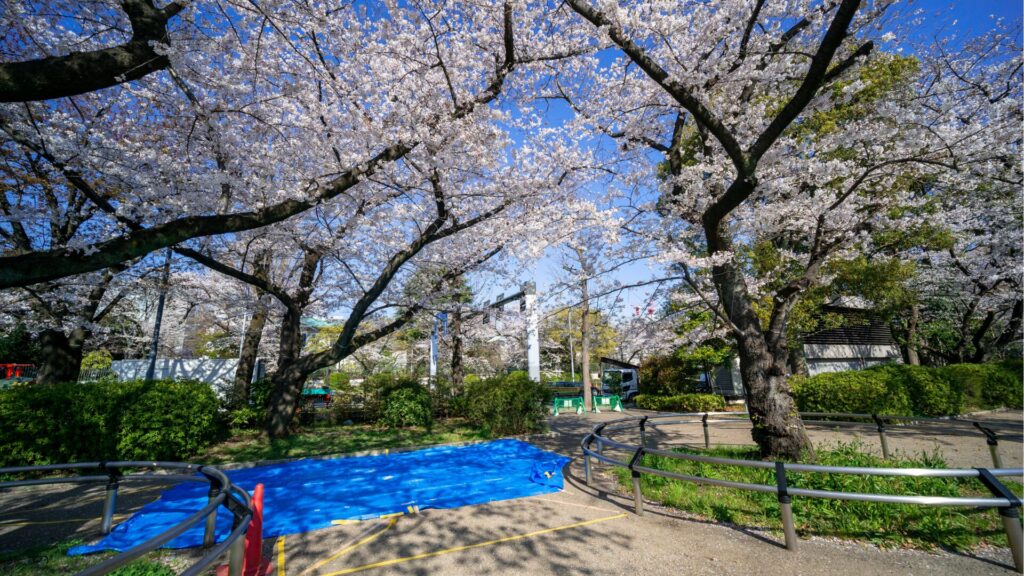
Tokyo’s cherry blossom season is beautiful because people treat it with care. Following local etiquette also keeps you out of trouble.
- Don’t damage branches (even for “better photos”).
- Keep walkways moving at crowded spots—stop to the side when taking pictures.
- Dispose of trash properly (many areas have limited bins; carry a small bag).
- Picnic rules vary by park. Some spots restrict alcohol, loud music, or staking out spaces too aggressively.
- Respect event staff and police directions. Some areas control flow at peak times.
If you’re unsure, assume the strict version: quiet, clean, and considerate.
What to wear, what to bring, and photography tips
Weather and clothing
Late March to early April can feel mild in the afternoon but noticeably cooler after sunset.
- Bring a light jacket (especially for riverside and night viewing)
- Pack a compact umbrella or rain shell
- Wear shoes you can stand in for long periods (crowds move slowly)
What to bring for hanami
- A small picnic sheet (if you plan to sit)
- Hand wipes / sanitizer
- A small trash bag
- Portable battery (you’ll take more photos than you expect)
Photography tips that actually matter
- Best light: late afternoon and twilight
- Best crowd control: weekday mornings
- For night sakura, use stabilization (tripod if allowed; otherwise lean on railings and use night mode)
Add a JDM night after cherry blossoms: Daikoku PA
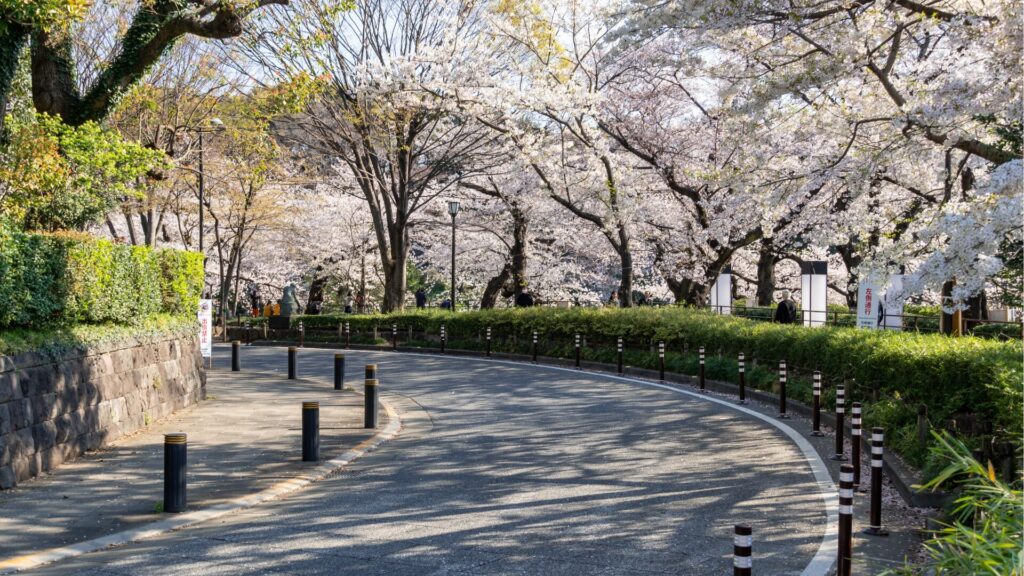
Many visitors treat cherry blossom season as a daytime-only activity. But Tokyo in spring has a second signature experience that pairs perfectly with sakura: a nighttime JDM tour to Daikoku Parking Area (Daikoku PA).
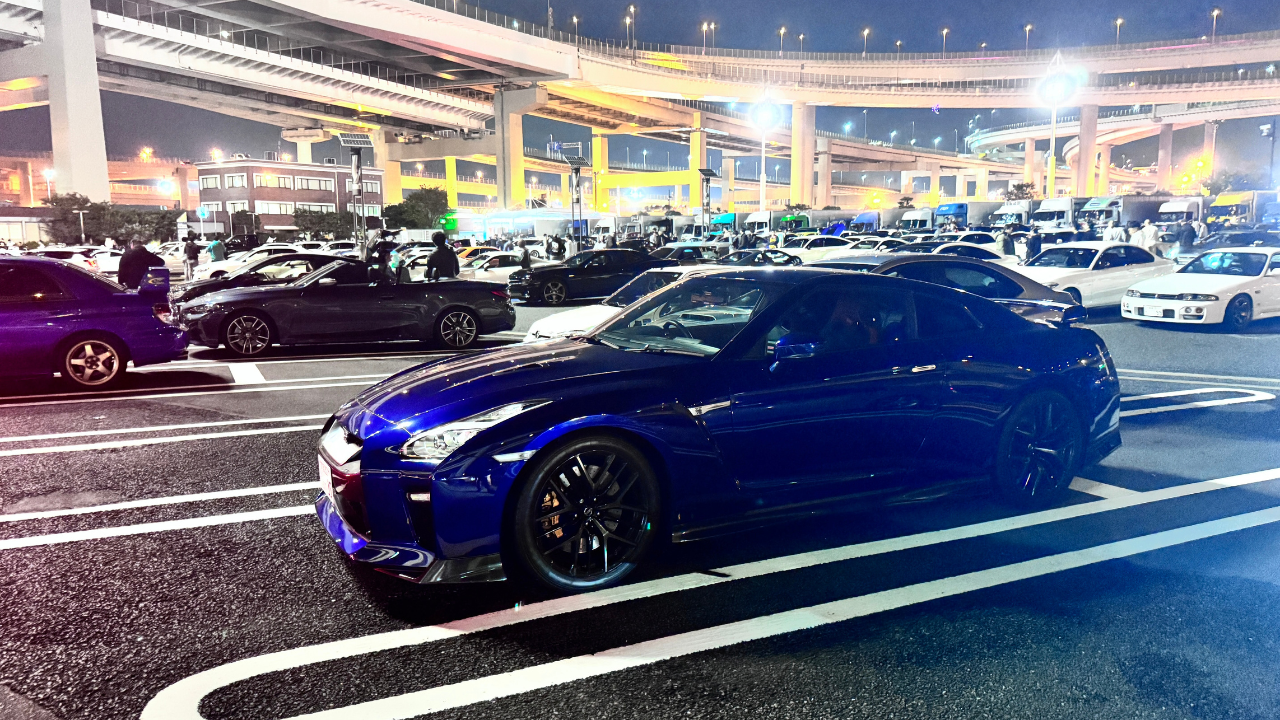
Daikoku PA is a highway parking area in the Tokyo–Yokohama bay zone that becomes the most famous gathering spot for enthusiasts of:
- JDM icons (Skylines, Supras, RX-7s, Silvias)
- Tuned street cars and VIP builds
- Supercars and exotics (depending on the night)
- The wider “Tokyo car culture” scene
Why Daikoku PA is not a simple DIY visit
Daikoku PA isn’t like a city park you can walk into.
- You can’t access it on foot (no pedestrian entry)
- There’s no practical public transit route that gets you inside legally
- Conditions can change quickly due to traffic controls, capacity, and enforcement
That’s why a legal, guided car-based visit is the standard choice for travelers who want the experience without risking a wasted night.
-

-
Daikoku Car Meet (Daikoku PA) Guide: How to Visit Japan’s Most Famous JDM Meet
Daikoku Parking Area (Daikoku PA) is the most iconic place in the Tokyo–Yokohama region to see Japanese performance cars, tuned builds, and rare classics gathering in one spot. If you’re searching for the Daikoku car meet, this guide explains what it is, what to expect, how to visit responsibly, and why a guided JDM tour is the most reliable way to experience it—especially if you don’t have your own car. What is Daikoku PA? Daikoku PA is a highway parking area on the Shuto Expressway network in Yokohama (Kanagawa), near Tokyo. Unlike a typical roadside rest area, Daikoku PA has ...
続きを見る
-

-
How to Get to Daikoku PA Without a Car (Legal Options, Taxi Costs, and Tours)
Daikoku Parking Area (Daikoku PA) is Japan’s most famous informal car meet—but it’s also one of the hardest spots for travelers to reach without a vehicle. The reason is simple: Daikoku PA sits on the Shuto Expressway and is designed for cars only. There’s no train station, no public bus stop inside the PA, and pedestrians are not allowed. This guide explains exactly how to get to Daikoku PA without driving yourself, the legal options that actually work, typical taxi pricing and pitfalls, what to do when the police close the lot, and the best “Plan B” places for JDM ...
続きを見る

-

-
Daikoku Parking Area Rules (Daikoku Futo PA): How to Visit Legally, Respectfully, and Avoid Closures (2026)
Visiting Daikoku Parking Area (大黒PA)—often searched as Daikoku PA, Daikoku Parking Area (PA), or Daikoku Futo Parking Area—is a bucket-list moment for JDM fans. But Daikoku is not a theme park or an “event venue.” It’s a working expressway rest area on the Shuto Expressway network, and the rules are enforced. This guide covers the practical rules that matter most: legal access, what behavior gets people removed, and how to reduce the risk of sudden entry restrictions—so visitors can enjoy the scene without becoming the reason it gets shut down. The Golden Rule: You Can’t Walk to Daikoku Parking Area ...
続きを見る
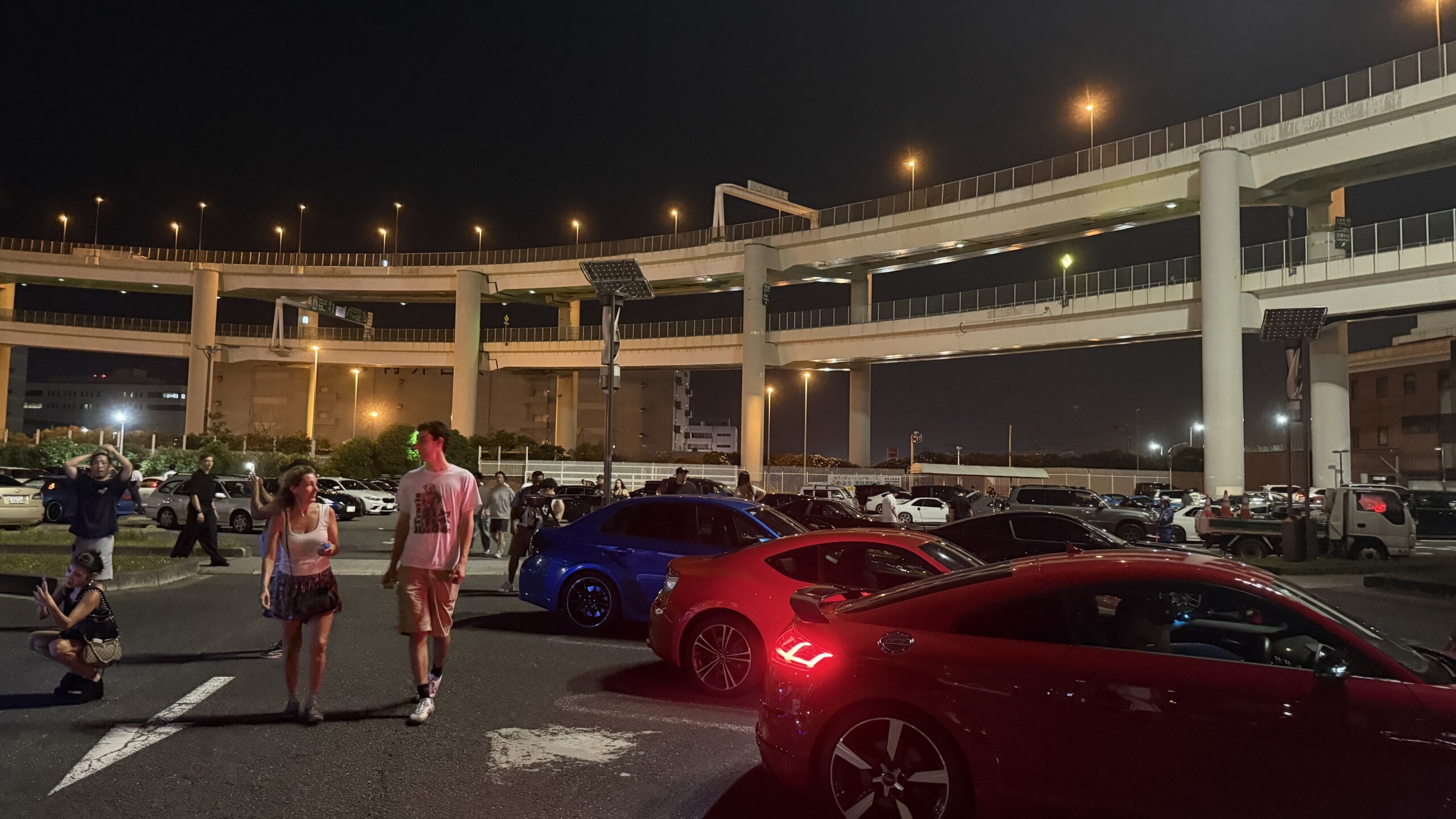
How to fit Daikoku PA into your Tokyo cherry blossom festival itinerary
The most efficient way to do both experiences is:
- Do your hanami during daylight and early evening
- Take a short rest at your hotel (sakura days involve more walking than people expect)
- Go to Daikoku PA at night with a guide who handles the routing and timing
A realistic “Sakura + Daikoku” day template
- Late afternoon: Chidorigafuchi (best light)
- Early evening: Meguro River (yozakura stroll)
- Night: Daikoku PA JDM tour (finish the day with Tokyo’s car culture)
This works especially well because:
- Night sakura is mostly walking and photos
- Daikoku is mostly experience, watching, and conversation
- You avoid the common mistake of trying to drive yourself after a packed, exhausting day
What a guided Daikoku PA tour solves during peak season
Spring is busy across Tokyo. A good tour makes Daikoku simpler, safer, and more consistent by:
- Providing a legal vehicle route to the PA
- Managing timing based on real-world conditions (not just a map pin)
- Keeping the experience smooth even if the atmosphere changes
- Helping you understand what you’re seeing (mods, builds, culture)
-
-
Things to Do in Shibuya at Night: Tokyo’s Best Neon Streets, Late-Night Food, and a Real JDM Car Meet
Shibuya is Tokyo after dark in its most iconic form: neon canyons, packed backstreets, rooftop views, and the kind of late-night energy that lasts long after the last department store closes. If you’re choosing one neighborhood to experience Tokyo nightlife for the first time, Shibuya is the safest bet—because it’s not one scene, it’s many scenes stacked within a few walkable blocks. This guide focuses on the best things to do in Shibuya at night, from classic landmarks to hidden alleys, plus one experience most travelers miss: pairing Shibuya nightlife with Tokyo’s JDM car culture at Daikoku PA. Why Shibuya ...
続きを見る
If you’re going to Daikoku PA, leave it to us
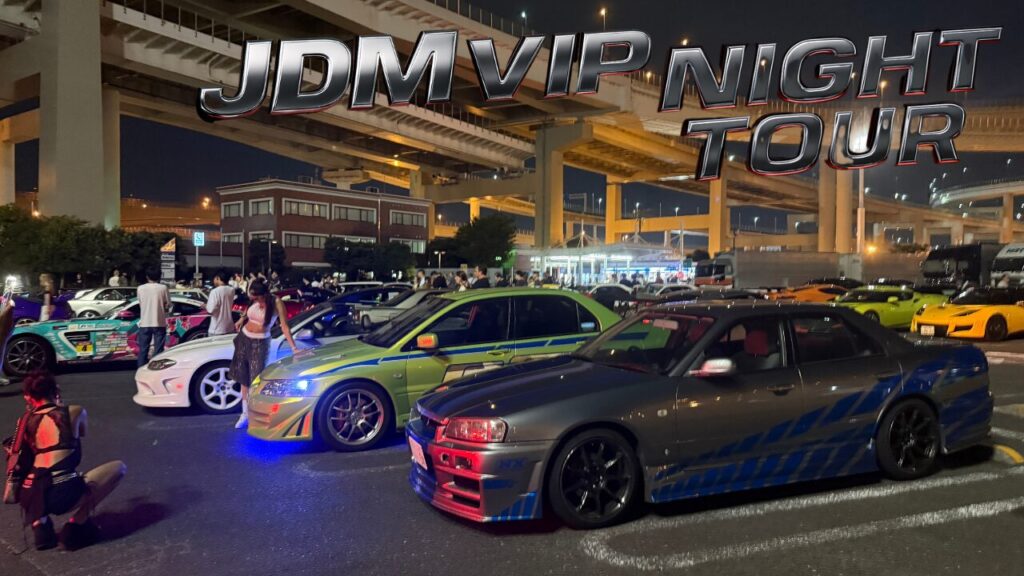
Experience an unforgettable JDM tour — ride in a legendary Japanese sports car and drive from Tokyo to Daikoku Parking Area, cruising Tokyo’s iconic roads along the way. Choose from favorites like the GT-R (R35 / R34 / R32), RX-7, Supra, and more.
We offer one of the highest-quality JDM driving experiences in the industry, at a fair and reasonable price.
Want to know more details or check availability?
Message us on WhatsApp for quick replies and easy booking.
Spots often sell out, so we recommend booking early.
Duration: about 3 hours
Meeting Point: Shibuya Station
Language: Beginner-level English & Japanese
Customer Reviews
Daikoku PA Video: What It’s Really Like
Important Information
- This is a drive tour where you drive your rental car, and our guide navigates from the seat.
- This is a self-drive tour where you drive your rental car, and our guide navigates from the passenger seat.
- The tour begins and ends at the same location (Shibuya).
- If the Daikoku Parking Area is closed, we will instead guide you to another car meet further away.
- The consultant is a cultural expert and navigator, not a taxi service.
