Understanding Fuji Speedway Parking in 2026
Whether you are attending a Super GT race, a WEC endurance event, or a casual track day, finding the right parking lot at Fuji Speedway is one of the most practical concerns you will face. The circuit sprawls across a hillside in Oyama, Shizuoka Prefecture, and its parking infrastructure reflects that terrain — multiple lots are scattered across different elevations and gates, each with varying proximity to grandstands, paddocks, and amenities.
This guide covers every essential detail about Fuji Speedway parking in 2026: the different lots available, typical fees, how parking changes between regular days and major events, and strategies to make your visit as smooth as possible.
-

-
Fuji Speedway: The Complete 2026 Guide to Japan's Legendary Racing Circuit
What Is Fuji Speedway? Fuji Speedway is one of Japan's most iconic motorsport circuits, located at t ...
続きを見る

Main Parking Areas at Fuji Speedway
Fuji Speedway has several designated parking areas that serve different gates and sections of the circuit. Understanding the layout before you arrive will save significant time, especially on event days when traffic management routes you to specific lots.
East Gate Parking (P1–P7)
The East Gate is the primary entrance for most visitors. Parking lots P1 through P7 are accessible from this gate and offer the most convenient access to the main grandstand, pit building, and event plaza. P1 and P2 are the closest to the grandstand area and tend to fill up first during major races. P7, located further uphill, is generally the last to fill and requires a longer walk but is still within reasonable distance of the main facilities.
West Gate Parking (P11–P14)
The West Gate serves visitors heading to the 300R and Dunlop corner grandstands. These lots — P11 through P14 — are ideal if you have tickets for the western side of the circuit. They also tend to be less congested than East Gate lots during peak events, making them a smart choice for those who want to avoid the heaviest traffic.
-
-
Fuji Speedway West Gate: Access, Parking, and Everything You Need to Know in 2026
What Is the Fuji Speedway West Gate? Fuji Speedway West Gate is one of the primary entry points to J ...
続きを見る

Paddock Parking
A limited number of paddock parking passes are available for certain events, typically bundled with premium ticket packages. These spaces place you directly behind the pit lane area and are highly sought after. Paddock parking passes are usually sold separately and well in advance — they are rarely available on the day of the event.
Overflow and Temporary Lots
During the largest events — such as the WEC 6 Hours of Fuji, Super GT finals, or the Initial D 30th Anniversary festival — Fuji Speedway opens overflow parking in grassy and unpaved areas surrounding the main lots. Shuttle buses typically connect these remote lots to the main gate area. Expect to be directed to overflow parking if you arrive after mid-morning on major race days.
Fuji Speedway Parking Fees
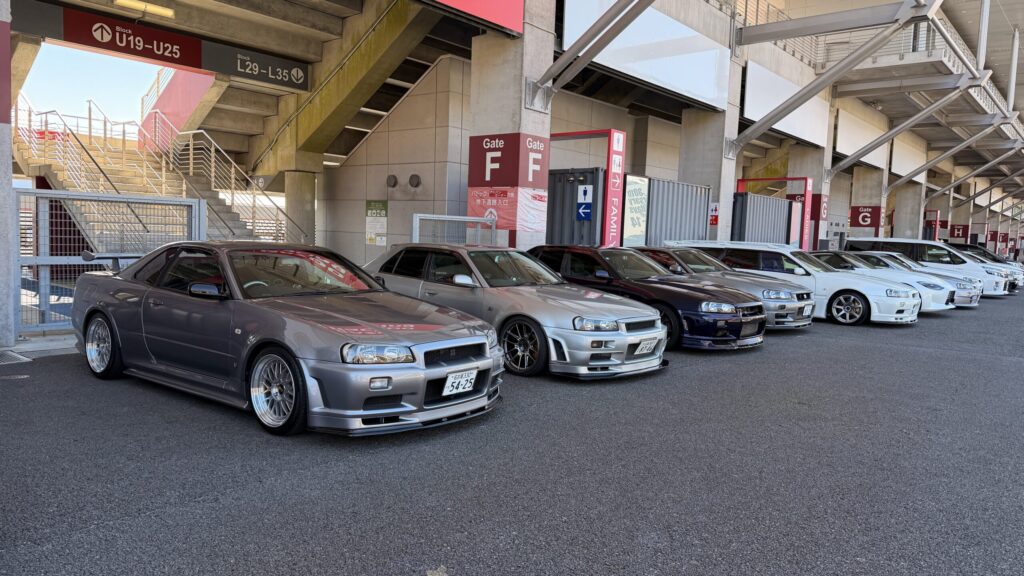
Parking fees at Fuji Speedway vary considerably depending on the type of event and the lot you use. Here is a general breakdown of what to expect in 2026:
- Regular track days and minor events: Free to ¥1,000 per vehicle
- Mid-level events (Super Formula, regional races): ¥1,000–¥2,000 per vehicle
- Major events (Super GT, WEC, large festivals): ¥2,000–¥4,000 per vehicle
- Premium/paddock parking: ¥5,000–¥10,000+ (sold as separate ticket)
- Motorcycles: Typically ¥500–¥1,000 (designated motorcycle parking areas)
Payment is usually collected at the gate upon entry. Cash is the most reliable payment method, though some events have begun accepting IC cards. It is wise to carry sufficient yen in cash just in case electronic payment is unavailable at the specific gate you use.
Event Day Parking Strategy
Parking at Fuji Speedway on a regular weekday or non-event weekend is straightforward — you drive in, park, and walk to the facilities. Event days, however, require more planning. Here are the key strategies seasoned attendees rely on.
Arrive Early
For major races, gates typically open between 6:00 AM and 7:00 AM. Arriving within the first hour of gate opening secures you a spot in the prime lots closest to the grandstands. By 9:00 AM on a Super GT race day, the best East Gate lots are often full, and you may be directed to P6, P7, or overflow areas.
Choose Your Gate Based on Your Seat
This is a commonly overlooked tip. If your grandstand ticket is for the main straight or first corner, enter through the East Gate. If your seat is at 300R, Dunlop, or the hairpin viewing areas, the West Gate lots will save you a significant walk. Check the track map ahead of time to match your ticket location to the nearest gate.
-
-
Fuji Speedway Track Map: Every Corner, Straight, and Section Explained
Understanding the Fuji Speedway Track Map Fuji Speedway is one of the most iconic motorsport circuit ...
続きを見る

Be Prepared for One-Way Traffic Flow
On major event days, the roads surrounding Fuji Speedway are often converted to one-way traffic flow managed by police and event staff. This means you cannot freely choose your gate once you are in the traffic stream — you will be directed along a fixed route. Pay attention to advance signage and follow the flow. Attempting to navigate against the directed traffic pattern will cause delays and frustration.
Consider Arriving the Night Before
For multi-day events like the WEC weekend, some visitors arrive the evening before and camp in designated areas or park overnight in permitted lots. Fuji Speedway sometimes allows overnight parking for multi-day ticket holders in specific lots. Check the event-specific regulations posted on the Fuji Speedway official website before planning an overnight stay in your vehicle.
Exiting After the Event
Leaving Fuji Speedway after a major event can take considerably longer than arriving. The narrow mountain roads around the circuit create bottlenecks, and it is not uncommon for the exit process to take 60 to 90 minutes during peak events. Here are some ways to mitigate the wait:
- Leave before the final race ends: If you are willing to miss the last few laps, departing 20–30 minutes early can cut your exit time dramatically.
- Stay and explore: Many experienced attendees visit the pit walk, event booths, or the Fuji Speedway Museum after the race ends, waiting for the initial rush of traffic to clear. Departing 60–90 minutes after the checkered flag often results in a much smoother exit.
- West Gate advantage: The West Gate typically has lighter exit traffic compared to the East Gate. If you parked on the west side, your departure will generally be faster.
Parking for Non-Driving Visitors
If you are arriving by shuttle bus from Gotemba Station or by organized tour, you will not need to worry about parking at all. Shuttle buses have dedicated drop-off and pick-up zones within the circuit grounds. However, if a friend or taxi drops you off, be aware that there is no dedicated short-term drop-off zone at the gates — the driver will likely need to enter the parking area and pay the standard fee or drop you on the roadside before the gate, which may not always be permitted during events.
-
-
How to Get to Fuji Speedway From Tokyo: Every Transport Option Explained (2026)
Overview: Tokyo to Fuji Speedway Distance and Travel Time Fuji Speedway is located in Oyama, Shizuok ...
続きを見る
Driving to Fuji Speedway: Road Access and Navigation Tips
Fuji Speedway is located off the Tomei Expressway, with the Gotemba IC being the closest interchange. From the Gotemba IC exit, the circuit is approximately 15 minutes by car under normal traffic conditions. During event days, this drive can stretch to 30–45 minutes due to congestion on Route 246 and the local roads leading to the circuit gates.
If you are driving from Tokyo, the total journey takes roughly 90 minutes without traffic via the Tomei Expressway. Toll fees from central Tokyo to Gotemba IC are approximately ¥2,500–¥3,200 one way for a standard vehicle, depending on your starting point and whether you use any toll discount programs. An ETC card is highly recommended for smoother toll booth passage.
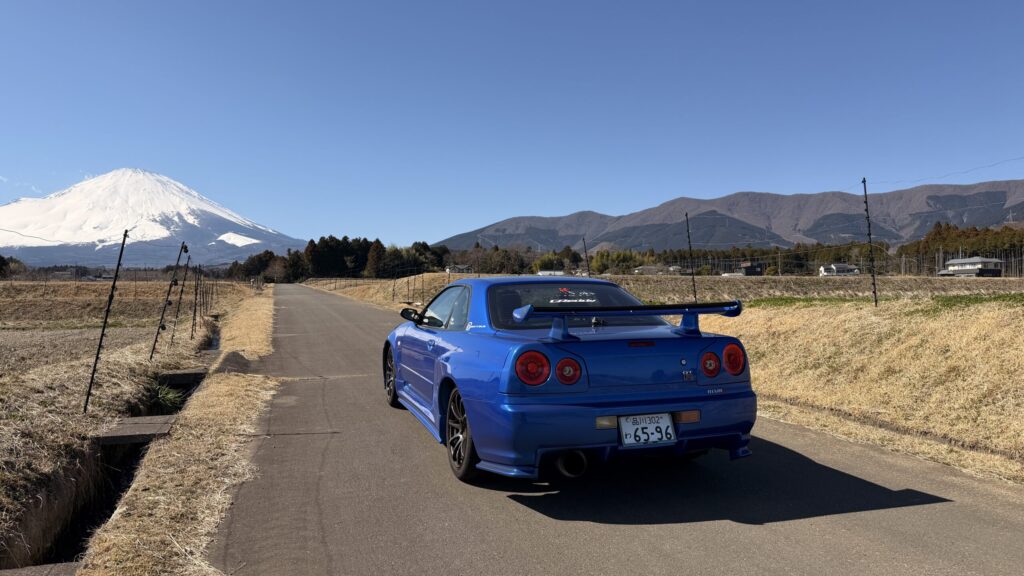
For car enthusiasts visiting Japan, driving to Fuji Speedway in a JDM rental car — such as an R34 Skyline GT-R or a Toyota Supra — adds an entirely different dimension to the experience. The Tomei Expressway and the mountain roads around Gotemba are some of the most scenic driving routes in the Kanto region, with views of Mount Fuji on clear days.
-
-
Fuji Speedway Car Rental: How to Rent a Car and Drive to Japan's Legendary Circuit in 2026
Why You Need a Car Rental to Visit Fuji Speedway Fuji Speedway sits at the base of Mount Fuji in Oya ...
続きを見る

Accessibility and Facilities in Parking Areas
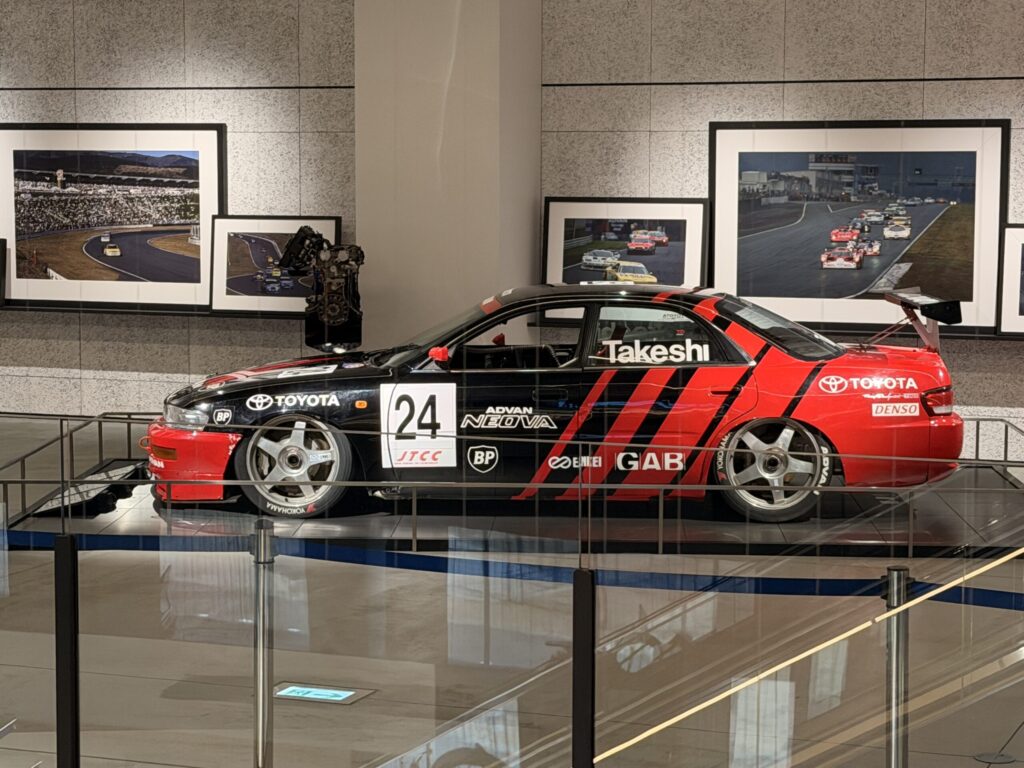
Fuji Speedway's main parking lots (P1, P2, and P11) include designated accessible parking spaces for visitors with disabilities. These spaces are located closest to paved walkways leading to the grandstand areas. If you require accessible parking, it is advisable to arrive early and inform the gate staff upon entry.
Restroom facilities are available near the main parking areas, though they can become crowded during peak events. Portable restrooms are typically added near overflow lots during major races. Vending machines are scattered throughout the parking zones, but food and drink options are more abundant inside the circuit grounds — bring water and snacks for the wait if you arrive very early.
Key Reminders for Fuji Speedway Parking in 2026
- Carry cash (yen) for parking fees — electronic payment is not guaranteed at all gates.
- Check the official Fuji Speedway website for event-specific parking maps and gate opening times.
- Match your parking gate (East or West) to your grandstand ticket location.
- For major events, arrive before 8:00 AM to secure a favorable lot.
- Plan extra time for both arrival and departure — mountain road traffic is unpredictable on event days.
- Weather in the Gotemba area can change rapidly. Rain gear and appropriate footwear are recommended, as some lots are unpaved.
Experience Japan’s Finest JDM Adventures
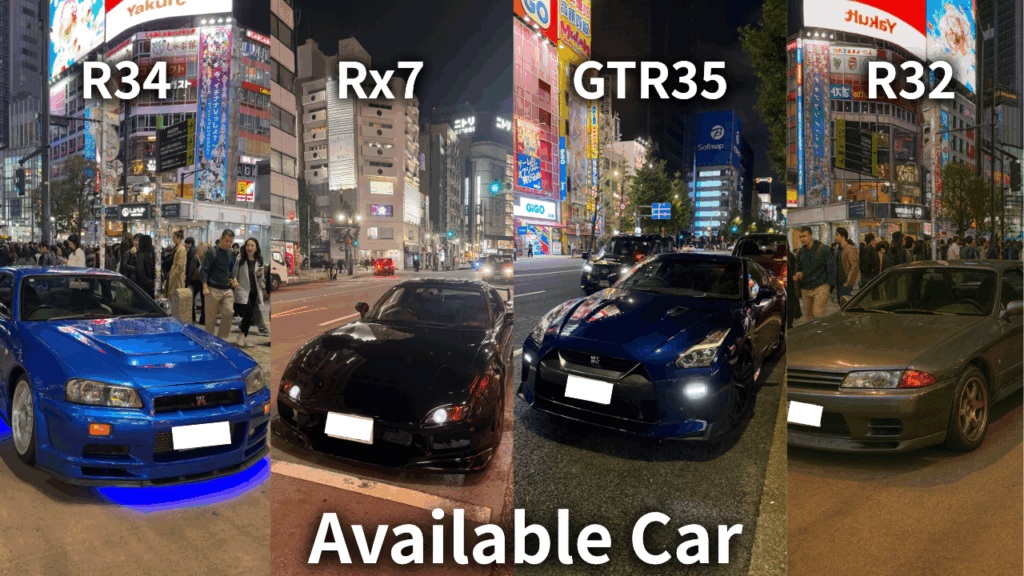
From Daikoku PA tours to JDM sports car rentals and drift experiences, we offer premium driving adventures for visitors who want more than ordinary sightseeing.
Get behind the wheel of iconic machines such as the GT-R, RX-7, and Supra, and experience Japan’s legendary car culture in the most unforgettable way. Whether you want a scenic Tokyo car experience or something more thrilling and immersive, we can guide you to the right plan.
Not sure which experience suits you best? No problem. Message us on WhatsApp and we’ll help you choose the ideal option based on your travel plans, interests, and driving experience.
Popular dates sell out quickly, so we recommend contacting us early.
Customer Reviews
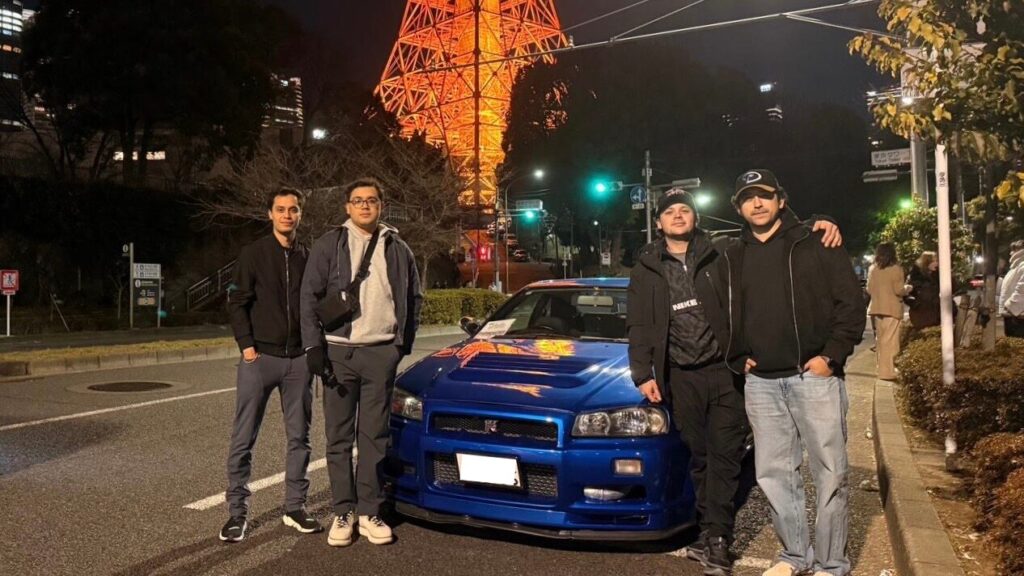
Important Information
- This is a drive tour where you drive your rental car, and our guide navigates from the seat.
- This is a self-drive tour where you drive your rental car, and our guide navigates from the passenger seat.
- The tour begins and ends at the same location (Shibuya).
- If the Daikoku Parking Area is closed, we will instead guide you to another car meet further away.
- The consultant is a cultural expert and navigator, not a taxi service.
