Mount Haruna Is the Real Mount Akina from Initial D
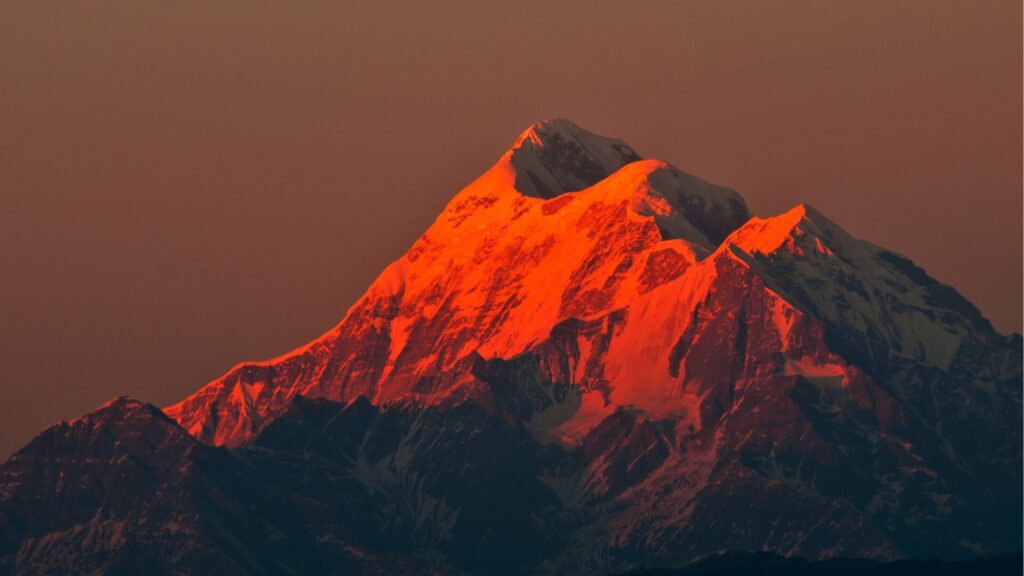
For fans of Initial D, the name "Mount Akina" evokes images of a white Toyota AE86 Trueno hurtling through hairpin corners at impossible speeds, tofu in the back seat, eurobeat blasting in the background. What many fans don't realize until they start planning a pilgrimage is that Mount Akina is a fictional name. The real mountain that inspired Shuichi Shigeno's legendary manga and anime series is Mount Haruna — a volcanic peak located in Gunma Prefecture, roughly two hours northwest of Tokyo by car.
Mount Haruna's winding mountain roads, dramatic elevation changes, and iconic hairpin turns were the direct inspiration for the touge battles that define Initial D. Today, this mountain draws thousands of anime fans, JDM enthusiasts, and motorsport lovers from around the world who want to drive, walk, or simply experience the roads where Takumi Fujiwara became a legend.
-

-
Mount Haruna Japan: The Real Initial D Mountain and Ultimate Touge Driving Guide
What Is Mount Haruna in Japan? Mount Haruna (榛名山, Haruna-san) is a dormant stratovolcano located in ...
続きを見る
How Mount Haruna Became the Blueprint for Initial D
Shuichi Shigeno, the creator of Initial D, grew up in Gunma Prefecture and was intimately familiar with the local touge culture that thrived there during the 1980s and 1990s. Gunma's mountainous terrain naturally attracted street racers and driving enthusiasts, and Mount Haruna was one of the most famous — and most feared — routes in the region.
When Shigeno began serializing Initial D in 1995, he modeled the fictional Mount Akina directly on Mount Haruna. The route, the hairpin corners, the gas station at the base, and even the surrounding landscape were all drawn from real locations on and around the mountain. The "five consecutive hairpins" that play such a crucial role in early Initial D battles correspond to actual turns on the Haruna route, which you can still identify when you drive or walk the road today.
Key Locations That Match the Anime
- The downhill route: The road from Lake Haruna down to the town of Ikaho features the tight, technical corners that define Takumi's home course.
- The five hairpins: A series of consecutive switchbacks partway down the mountain that are almost frame-for-frame identical to their anime counterparts.
- The gas station: There is a real gas station near the base of Mount Haruna that fans identify as the inspiration for the Esso station where Takumi and his friends gather.
- Lake Haruna: The caldera lake at the summit corresponds to "Lake Akina" referenced in the series.
The level of geographic accuracy Shigeno employed is remarkable. Fans who have studied both the manga panels and the actual road can match individual corners, guardrails, and even drainage gutters to their fictional equivalents.
Driving Mount Haruna: What to Expect on the Real Touge
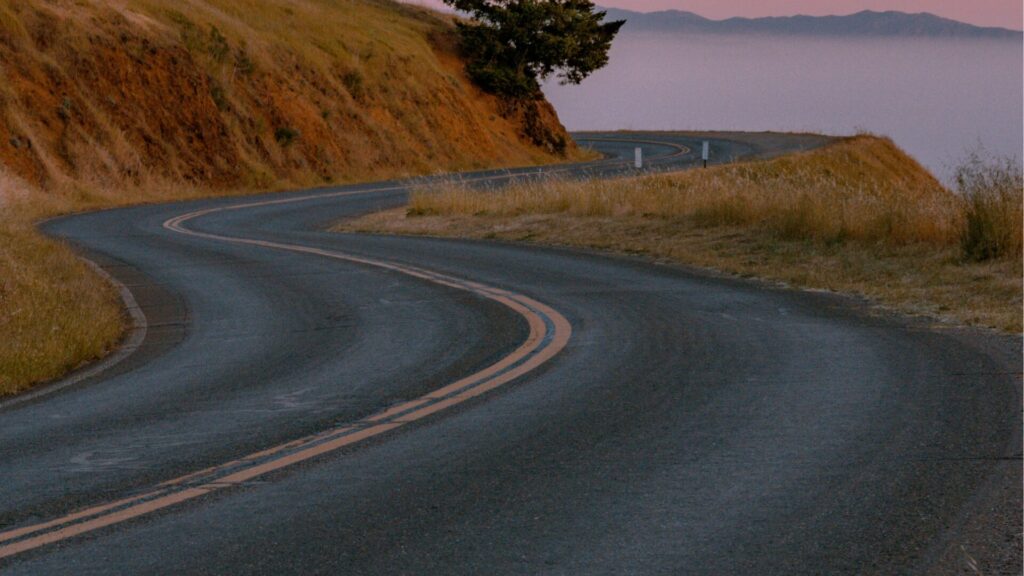
The main Initial D route runs along Prefectural Route 33, connecting the Ikaho Onsen area at the base to Lake Haruna at the summit. The road climbs approximately 700 meters in elevation over roughly 10 kilometers, featuring dozens of tight corners, limited visibility sections, and dramatic gradient changes.
Unlike what you see in the anime, you should absolutely not attempt to drift or race on this public road. Local police enforce traffic laws strictly, particularly given the mountain's association with Initial D and the history of street racing incidents. The road has guardrails, but many sections feature steep drops with limited protection. Drive responsibly and enjoy the scenery.
Road Conditions and Tips
- Surface quality: The road surface is generally well-maintained asphalt, though some sections show wear and minor cracks.
- Width: The road is two lanes but narrow by Western standards. Oncoming traffic, including tour buses, requires careful attention.
- Best driving season: Late April through November offers the most pleasant conditions. The mountain is especially beautiful during autumn foliage season (October–November).
- Winter caution: From December through March, the road can be icy or snow-covered. Winter tires or chains are mandatory during this period.
- Traffic: Weekends and holidays bring tourist traffic, especially during foliage season. Weekday mornings offer the quietest driving experience.
-
-
Mount Haruna Car Rental: How to Drive the Initial D Touge Roads Yourself
Why Rent a Car to Drive Mount Haruna? Mount Haruna — known worldwide as the real-life inspiration fo ...
続きを見る
The Five Consecutive Hairpins: Initial D's Most Iconic Section
No discussion of Mount Haruna and Initial D is complete without focusing on the five consecutive hairpins. In the anime and manga, this section is where Takumi Fujiwara demonstrates his supernatural car control, using techniques like the "gutter run" (dropping one wheel into the roadside drainage gutter to tighten his line and maintain speed through corners).
On the real Mount Haruna, these hairpins are located on the lower-to-middle section of the descent toward Ikaho. They are tight, technical, and considerably more intimidating in person than they appear on screen. The gradient is steep, and each hairpin requires significant deceleration. Standing at one of these corners and looking down the mountain, you immediately understand why this road earned its fearsome reputation among Japanese touge drivers.
The drainage gutters that Takumi uses in the anime are real and visible at the edges of many corners. However, actually attempting a gutter run would be extremely dangerous and would almost certainly result in a damaged wheel, suspension failure, or worse. These gutters are narrow, uneven, and not designed for vehicle contact at any speed.
Mount Haruna Initial D Pilgrimage: Must-Visit Spots
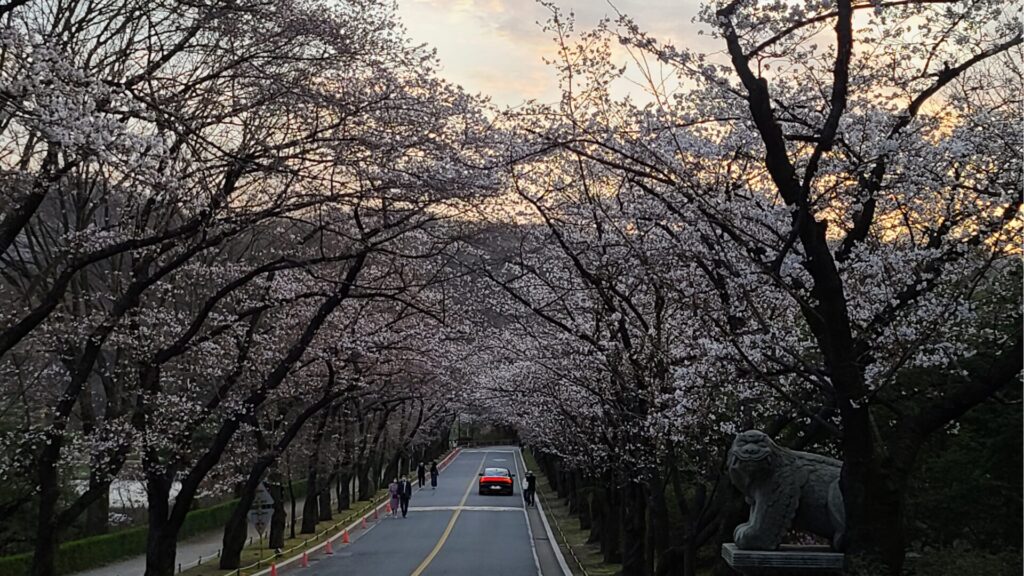
A proper Initial D pilgrimage to Mount Haruna should include more than just driving the road. The surrounding area offers several locations that deepen the connection between the real world and the anime.
Ikaho Onsen Town
At the base of Mount Haruna lies Ikaho Onsen, one of Gunma Prefecture's most famous hot spring towns. Ikaho serves as the rough equivalent of the town where Takumi lives and works in Initial D. The stone-step street (Ikaho Stone Steps) that runs through the center of town is a beloved tourist attraction, and the onsen baths are the perfect way to relax after a day of touge exploration. Many visitors combine their Initial D pilgrimage with an overnight stay at an Ikaho ryokan (traditional Japanese inn).
-
-
Tokyo to Ikaho Onsen by Car — Complete Self‑Drive Guide (2025)
Ikaho Onsen in Gunma Prefecture is one of the easiest hot spring towns to reach from Tokyo by car. T ...
続きを見る
Lake Haruna
At the summit of Mount Haruna sits Lake Haruna, a caldera lake surrounded by volcanic peaks. The lake area offers walking trails, boat rentals, and restaurants. In the context of Initial D, this is the "top of Mount Akina" where races begin or end depending on whether the battle is uphill or downhill. The parking area near the lake makes an excellent starting point for your drive down the mountain.
The Tofu Shop and Gas Station Area
Near the base of the mountain, fans can find locations that correspond to the Fujiwara Tofu Shop and the Esso gas station from the series. While the actual businesses have changed over the years, the general locations remain recognizable to dedicated fans who have cross-referenced the manga with real-world geography.
Mount Haruna vs. Mount Akagi: Two Initial D Mountains Compared
Gunma Prefecture is home to not one but two mountains that feature prominently in Initial D. While Mount Haruna is Mount Akina (Takumi's home course), nearby Mount Akagi served as the base for the RedSuns racing team led by Ryosuke and Keisuke Takahashi.
Mount Akagi's roads are broader and faster than Haruna's, with sweeping curves rather than tight hairpins. Where Haruna rewards precision and car control, Akagi rewards power and bravery. Many fans visit both mountains in a single day, as they are only about 30–40 minutes apart by car.
-
-
Mount Akagi in Initial D: The Real-Life Akagi Touge Explained
Mount Akagi and Initial D: Why This Mountain Became a Global Icon Mount Akagi — known as Akagi-yama ...
続きを見る
For the complete Initial D Gunma experience, consider driving Mount Haruna in the morning, stopping for lunch near Lake Haruna or Ikaho, and then heading to Mount Akagi in the afternoon. This itinerary covers the two most important fictional locations in the series and gives you a comprehensive understanding of Gunma's touge culture.
Getting to Mount Haruna from Tokyo
Mount Haruna is located approximately 150 kilometers northwest of central Tokyo. By car, the drive takes roughly two to two and a half hours via the Kanetsu Expressway, exiting at the Shibukawa-Ikaho Interchange. From there, local roads lead directly to the base of the mountain and the beginning of the Initial D route.
Transportation Options
- Rental car (recommended): The most authentic way to experience the Initial D connection. Renting a car gives you the freedom to drive the touge at your own pace and stop at any point for photos. For the ultimate experience, consider renting a JDM sports car.
- Train + bus: Take the JR Shinkansen from Tokyo to Takasaki Station (about 50 minutes), then transfer to the JR Agatsuma Line to Shibukawa Station. From Shibukawa, local buses run to Ikaho Onsen and Lake Haruna, though service is infrequent.
- Guided tour: For international visitors unfamiliar with Japanese mountain roads, a guided driving tour offers the safest and most informative experience.
-
-
JDM Car Rental in Japan: The Complete Guide for Overseas Enthusiasts
Japan is the spiritual home of JDM—where iconic nameplates like Skyline, Supra, RX‑7, and Silvia wer ...
続きを見る
Safety and Etiquette on Mount Haruna
Mount Haruna's association with Initial D unfortunately means that some visitors treat the public road as a racing circuit. This is dangerous, illegal, and deeply disrespectful to local residents who use these roads daily. Japanese authorities have installed speed cameras, rumble strips, and additional guardrails in response to reckless driving incidents over the years.
- Obey all speed limits. The posted speed limit on most of the mountain road is 30–40 km/h. This is not a suggestion.
- Never drift on public roads. Japanese law treats reckless driving severely, with potential arrest and vehicle seizure.
- Pull over safely for photos. There are designated turnouts and parking areas. Do not stop on the road itself.
- Respect local residents. The mountain area is home to people who are not part of the Initial D tourism industry. Keep noise levels reasonable, especially early in the morning and late at night.
- Watch for wildlife. The mountain forests are home to deer, monkeys, and other animals that occasionally cross the road.
Why Every Initial D Fan Should Visit Mount Haruna
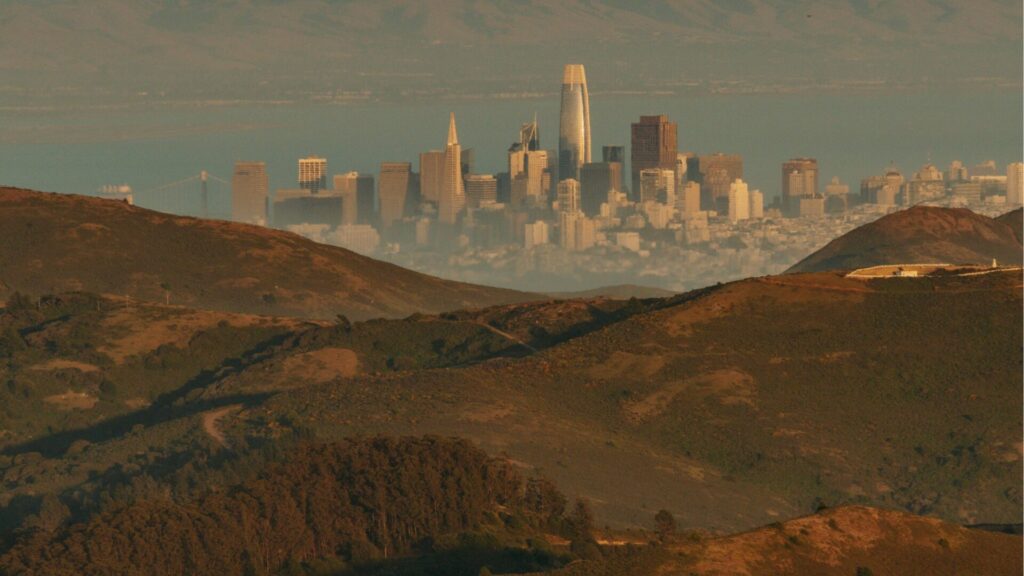
There is something profoundly moving about standing on a hairpin corner of Mount Haruna and realizing that you are standing in the exact spot where one of the most influential automotive anime series was born. The mountain is not a theme park or a recreation — it is the genuine article, the real road that inspired an entire generation of car enthusiasts worldwide.
Whether you are a lifelong Initial D devotee or a casual fan who simply wants to understand what Japanese touge culture is really about, Mount Haruna delivers an experience that no simulator, no video game, and no amount of YouTube videos can replicate. The sound of your engine echoing off the mountain walls, the smell of forest and volcanic earth, the visceral sensation of navigating a real hairpin corner — these are things you can only experience by making the journey yourself.
Combine your Mount Haruna visit with a stop at Ikaho Onsen, a drive over to Mount Akagi, and perhaps a detour to one of Tokyo's legendary car meet spots on your way back to the city. Gunma Prefecture is the spiritual homeland of Initial D, and Mount Haruna is its beating heart.
Experience Japan’s Finest JDM Adventures
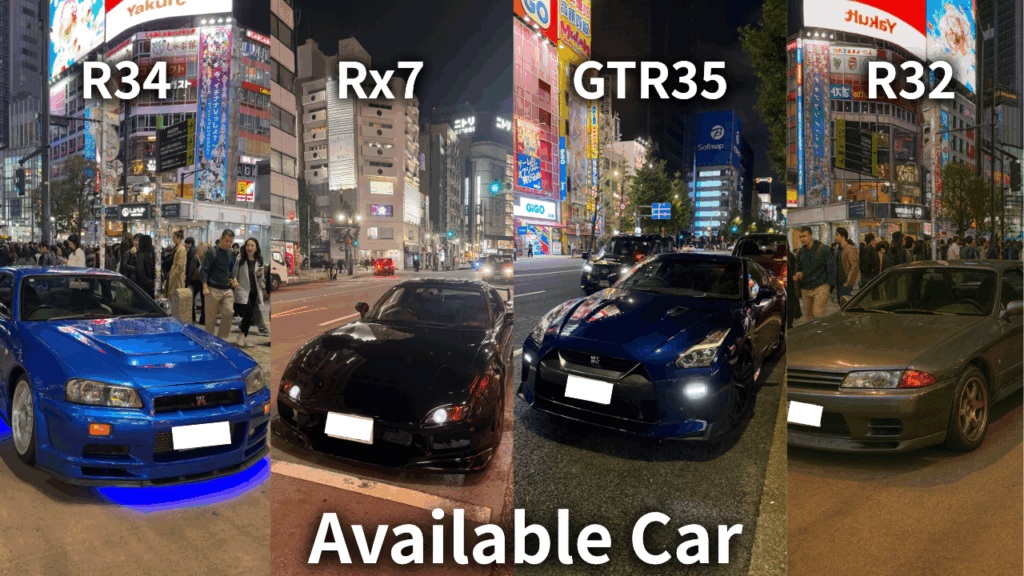
From Daikoku PA tours to JDM sports car rentals and drift experiences, we offer premium driving adventures for visitors who want more than ordinary sightseeing.
Get behind the wheel of iconic machines such as the GT-R, RX-7, and Supra, and experience Japan’s legendary car culture in the most unforgettable way. Whether you want a scenic Tokyo car experience or something more thrilling and immersive, we can guide you to the right plan.
Not sure which experience suits you best? No problem. Message us on WhatsApp and we’ll help you choose the ideal option based on your travel plans, interests, and driving experience.
Popular dates sell out quickly, so we recommend contacting us early.
Customer Reviews
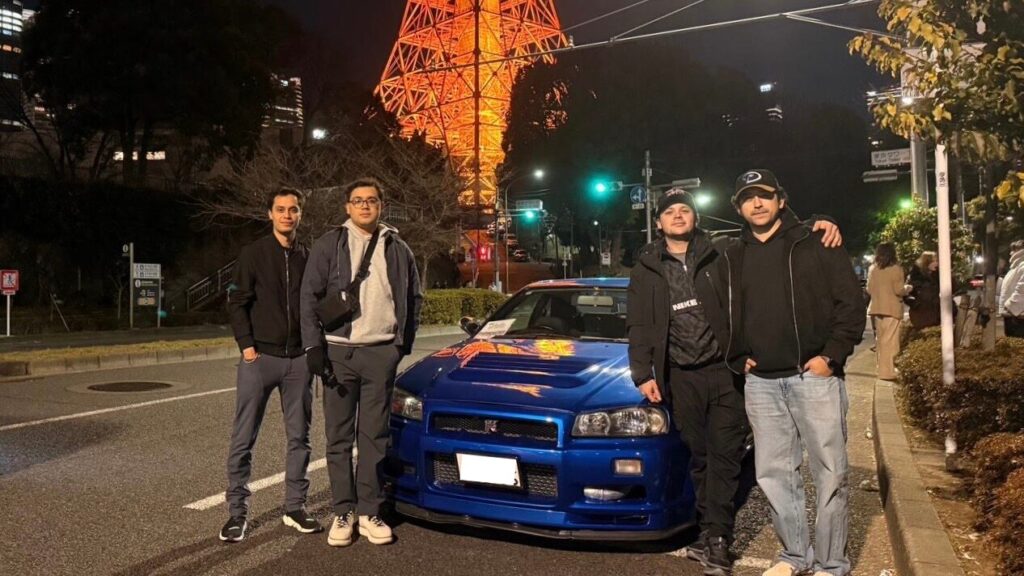
Important Information
- This is a drive tour where you drive your rental car, and our guide navigates from the seat.
- This is a self-drive tour where you drive your rental car, and our guide navigates from the passenger seat.
- The tour begins and ends at the same location (Shibuya).
- If the Daikoku Parking Area is closed, we will instead guide you to another car meet further away.
- The consultant is a cultural expert and navigator, not a taxi service.
