
What Is the Mount Nokogiri Quarry?
The Mount Nokogiri quarry is one of the most visually striking historical sites on Japan's Boso Peninsula. For roughly 300 years — from the Edo period through the early Shōwa era — workers carved high-quality building stone from the slopes of Nokogiriyama (鋸山), literally "Saw Mountain." The mountain earned its serrated name precisely because centuries of quarrying left its ridgeline looking like the teeth of a giant saw blade. Today, the abandoned quarry walls stand as dramatic vertical cliffs covered in moss and vegetation, creating a landscape that feels almost otherworldly.
Unlike many historical quarry sites around the world that have been flooded or fenced off, the Mount Nokogiri quarry is fully accessible to hikers and visitors. Walking among the towering stone walls — some exceeding 30 meters in height — offers a powerful sense of scale that photographs rarely convey. It is this combination of industrial heritage, natural beauty, and accessibility that makes the quarry one of the most compelling day-trip destinations from Tokyo in 2026.
-

-
Mount Nokogiri: Complete Visitor Guide to Chiba's Stunning Sawtooth Mountain in 2026
What Is Mount Nokogiri? Mount Nokogiri (鋸山, Nokogiriyama) is a 329-meter peak located on the souther ...
続きを見る

The History Behind the Quarry
Boshu Stone and Edo-Period Construction
The stone extracted from Mount Nokogiri is known as Boshu-ishi (房州石), a type of tuff — volcanic sedimentary rock — prized for its durability and ease of cutting. During the Edo period (1603–1868), Boshu stone was transported by boat across Tokyo Bay to the rapidly expanding capital of Edo (modern-day Tokyo). It was used to construct foundations, seawalls, and warehouses throughout the city. The proximity of the quarry to the coast made maritime transport efficient, and the stone industry became a pillar of the local economy in what is now Futtsu and Kyonan in Chiba Prefecture.
Industrial Peak and Decline
Quarrying activity peaked during the Meiji and Taishō periods when demand for construction materials surged alongside Japan's modernization. Boshu stone was used in the foundations of Yasukuni Shrine and various government buildings in Tokyo. However, by the mid-20th century, the rise of concrete and reinforced steel as dominant building materials gradually made traditional stone quarrying economically unviable. Operations ceased entirely by around 1985. What the quarrymen left behind was a mountain scarred in the most beautiful way — vertical walls of pale grey stone etched with tool marks, standing as open-air monuments to an era of manual labor.
What to See at the Mount Nokogiri Quarry
The Quarry Walls (石切り場跡)
The main quarry area features towering vertical cliffs where massive blocks of stone were hand-cut using chisels and wedges. The tool marks remain clearly visible on the rock faces, creating geometric patterns that almost look intentional. The walls rise straight up on both sides of narrow pathways, forming canyon-like corridors. On sunny days, light filters down from above, casting dramatic shadows across the stone surfaces. Early morning and late afternoon produce especially photogenic conditions.
Observation Terrace (Jigoku Nozoki Area)
While technically part of the broader Nihonji Temple precinct rather than the quarry itself, the Jigoku Nozoki (地獄のぞき, "Hell Peek") viewpoint sits atop quarried rock and offers a vertiginous perspective over the cliff face. From this protruding rock ledge, visitors look straight down a near-vertical drop of about 100 meters to the forest floor below. On clear days, the view extends across Tokyo Bay to the Miura Peninsula and, on exceptional days, all the way to Mount Fuji.
Moss-Covered Stone Corridors
Some of the older quarry sections have been partially reclaimed by nature. Thick green moss blankets the lower portions of the stone walls, while ferns and small trees sprout from cracks in the rock. These corridors have become among the most photographed spots on Mount Nokogiri, offering an atmosphere reminiscent of ancient ruins. The contrast between the sharp geometry of the cut stone and the organic chaos of the encroaching vegetation is visually arresting in every season.
The Hyaku-Shaku Kannon
Carved directly into one of the quarry walls, the Hyaku-Shaku Kannon (百尺観音) is a 30.3-meter-tall relief sculpture of Kannon, the Buddhist goddess of mercy. The carving was begun in 1966 and completed in 1969 as a memorial for war dead, victims of transportation accidents, and as a prayer for safety. Standing at the base and looking up at this massive figure framed by the quarry walls is one of the defining experiences of a visit to Mount Nokogiri.
-
-
The Giant Buddha of Mount Nokogiri: Japan's Largest Stone Daibutsu in 2026
Introduction to the Mount Nokogiri Buddha Hidden within the ancient quarry walls of Mount Nokogiri i ...
続きを見る

How to Reach the Quarry

By Public Transport
From Tokyo, take the JR Sōbu Line or JR Uchibo Line to Hamakanaya Station. The journey takes approximately two hours from Tokyo Station. From Hamakanaya, the Mount Nokogiri Ropeway base station is about a five-minute walk. The ropeway ascends to the mountain's upper area in roughly four minutes, from which the quarry trails are accessible on foot. Alternatively, the Tokyo Bay Ferry from Kurihama (Kanagawa Prefecture) to Kanaya Port takes about 40 minutes and places you even closer to the trailhead.
-
-
How to Get to Mount Nokogiri from Tokyo: Complete 2026 Access Guide
Why Mount Nokogiri Is One of Tokyo's Best Day Trips Mount Nokogiri (鋸山) sits on the southern tip of ...
続きを見る

By Car
Driving from central Tokyo takes approximately 90 minutes via the Tokyo Bay Aqua-Line (passing through Umihotaru) and then south along the coast on the Tateyama Expressway. There is a parking lot near the ropeway base station and another near the hiking trailhead on the mountain's north side. Having your own vehicle provides the most flexibility, especially if you plan to combine the quarry visit with other Boso Peninsula destinations such as the coastal towns of Tateyama or Kamogawa.
-
-
Mount Nokogiri Ropeway: Tickets, Schedule & Panoramic Views in 2026
What Is the Mount Nokogiri Ropeway? The Mount Nokogiri Ropeway (鋸山ロープウェー) is an aerial tramway that ...
続きを見る

Hiking Trails Through the Quarry
The quarry is integrated into the broader hiking trail network on Mount Nokogiri. Most visitors follow one of two main routes:
- Ropeway Route: Take the ropeway to the top, then walk downhill through Nihonji Temple and the quarry areas. This route is less physically demanding and takes approximately 1.5 to 2 hours to explore the major highlights.
- Hiking Trail from the North (Kanaya Side): Begin at the trailhead near the parking area and ascend through forest before reaching the quarry walls. This route involves stone steps — reportedly more than 1,500 — and takes about 30 to 45 minutes to reach the quarry zone. The full loop including the summit and temple can take 3 to 4 hours.
The trails through the quarry section are generally well-maintained with stone steps and handrails in the steeper areas. However, some portions are uneven and can be slippery when wet. Sturdy footwear with good grip is essential, especially during or after rainfall. The quarry corridors can also become quite narrow in places, so visitors with mobility concerns should assess trail conditions beforehand.
-
-
Mount Nokogiri Trailhead Guide: Access Points, Parking, and Starting Your Hike in 2026
Understanding the Mount Nokogiri Trailhead Options Mount Nokogiri (Nokogiriyama) in Chiba Prefecture ...
続きを見る

Best Time to Visit the Quarry
The Mount Nokogiri quarry is accessible year-round, but each season offers a different experience:
- Spring (March–May): Mild temperatures and cherry blossoms in the surrounding forest make spring one of the most pleasant times to visit. The moss on the quarry walls is vibrant green.
- Summer (June–August): Heat and humidity can make the hike strenuous, but the dense canopy provides some shade along the trails. Early morning visits are recommended.
- Autumn (September–November): Autumn foliage against the grey stone walls creates exceptional photographic conditions. October through mid-November is peak season for color.
- Winter (December–February): Fewer crowds and clear skies often yield the best views across Tokyo Bay. Temperatures are cool but rarely freezing at this low elevation (329 meters).
Weekdays throughout the year are significantly quieter than weekends and public holidays. For photographers seeking the quarry corridors without other visitors in the frame, arriving early on a weekday morning is the strategy.
Photography Tips for the Quarry
The Mount Nokogiri quarry is a dream for photography, but the environment presents specific challenges. The narrow corridors and tall walls create high-contrast lighting conditions — bright sky above and deep shadow below. A camera or phone with good dynamic range will perform best. Consider these practical tips:
- Wide-angle lens: Essential for capturing the scale of the walls. A 16–24mm equivalent focal length works well in the tight corridors.
- Overcast days: While counterintuitive, cloud cover actually produces more even lighting in the quarry, reducing harsh shadows and making the moss colors more saturated.
- Tripod: Useful in the darker corridors where slower shutter speeds may be necessary. Compact travel tripods are easy to carry on the trails.
- Detail shots: Do not overlook the macro potential — chisel marks on stone, moss textures, ferns growing from cracks, and the layered geological patterns in the tuff are all compelling subjects.
Combining the Quarry with Other Boso Attractions

The quarry is just one part of the Mount Nokogiri experience. Most visitors also explore Nihonji Temple (日本寺), which encompasses much of the mountain and contains the Great Buddha (Daibutsu) — the largest pre-modern stone-carved seated Buddha in Japan at 31.05 meters tall. Between the quarry walls, the Hyaku-Shaku Kannon, the Great Buddha, and the Jigoku Nozoki viewpoint, a thorough visit to Mount Nokogiri typically fills an entire half-day.
For those with additional time, the Boso Peninsula offers coastal drives, fresh seafood restaurants near Kanaya Port, and the Hota region's ancient tunnel complexes. Visitors arriving via the Tokyo Bay Aqua-Line can also stop at Umihotaru, the unique parking area built on an artificial island in the middle of Tokyo Bay, for panoramic views and a meal before continuing south.
Practical Information for 2026
- Nihonji Temple admission: ¥700 for adults (as of 2026; subject to change). This covers access to the temple grounds including the quarry areas, Great Buddha, Hyaku-Shaku Kannon, and Jigoku Nozoki.
- Mount Nokogiri Ropeway: Round trip approximately ¥1,200 for adults. One-way tickets are also available for those who prefer to hike one direction.
- Opening hours: Nihonji Temple and the ropeway generally operate from 8:00 AM to 5:00 PM (last admission varies by season). Check current schedules before visiting, especially in winter when hours may be shortened.
- Facilities: Restrooms are available near the ropeway stations and at key points along the temple trails. Vending machines are limited once you enter the mountain paths, so carry sufficient water.
- Accessibility: The quarry trails involve significant stair climbing and uneven terrain. They are not wheelchair accessible. Visitors with knee or joint concerns should consider the ropeway for the ascent and allow extra time for the descent.
Experience Japan’s Finest JDM Adventures
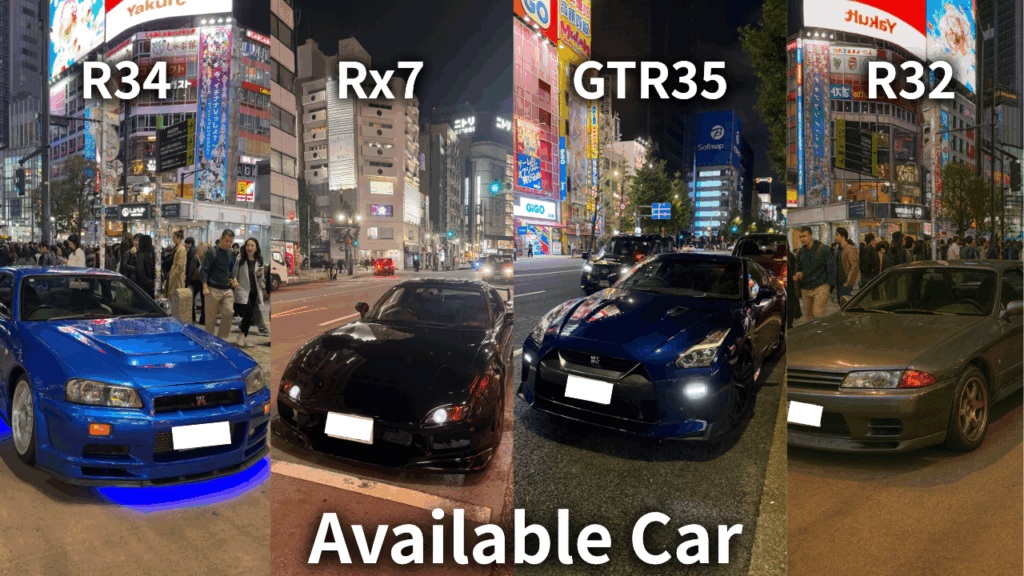
From Daikoku PA tours to JDM sports car rentals and drift experiences, we offer premium driving adventures for visitors who want more than ordinary sightseeing.
Get behind the wheel of iconic machines such as the GT-R, RX-7, and Supra, and experience Japan’s legendary car culture in the most unforgettable way. Whether you want a scenic Tokyo car experience or something more thrilling and immersive, we can guide you to the right plan.
Not sure which experience suits you best? No problem. Message us on WhatsApp and we’ll help you choose the ideal option based on your travel plans, interests, and driving experience.
Popular dates sell out quickly, so we recommend contacting us early.
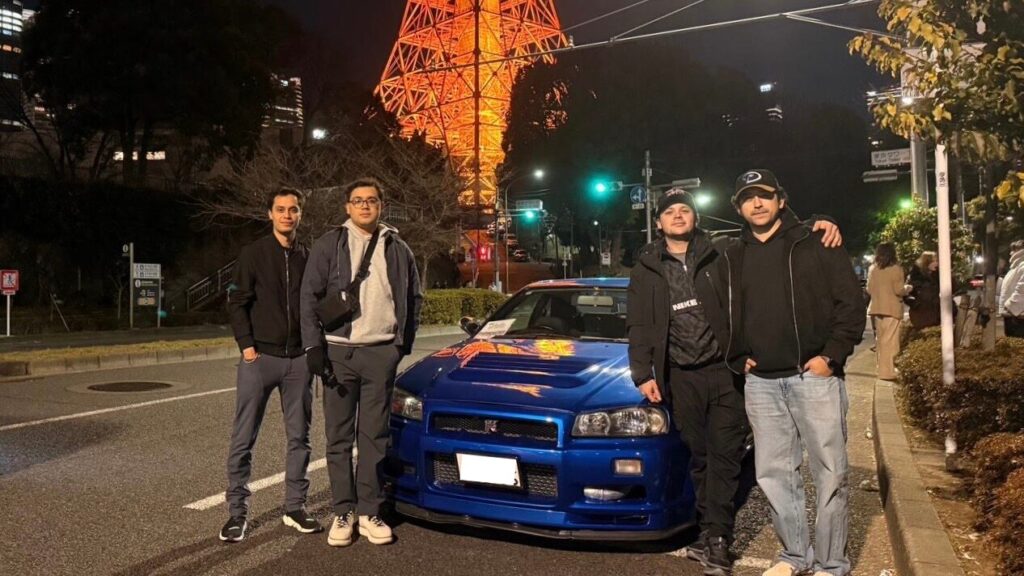
Customer Reviews
Important Information
- This is a drive tour where you drive your rental car, and our guide navigates from the seat.
- This is a self-drive tour where you drive your rental car, and our guide navigates from the passenger seat.
- The tour begins and ends at the same location (Shibuya).
- If the Daikoku Parking Area is closed, we will instead guide you to another car meet further away.
- The consultant is a cultural expert and navigator, not a taxi service.
