Why Drive from Tokyo to Hakone Onsen?
Renting a car gives you door‑to‑door access to hot spring towns, ryokan with private baths, and scenic viewpoints that are difficult to reach by train or bus. A car also lets you time onsen visits to avoid crowds, bring luggage without transfers, and combine Hakone with outlets, wineries, or Mt. Fuji photo spots in a single loop.
When Is the Best Time to Drive to Hakone?
Hakone is a year‑round destination. Weekdays outside national holidays are best for smooth traffic. Peak congestion times include Saturday mornings outbound from Tokyo and Sunday evenings inbound. Autumn foliage (late October to late November) is popular; leave early and reserve parking where possible. In winter, check for snow advisories on mountain roads.
Essential Documents for Overseas Drivers in Japan
International Driving Permit (IDP)
Most visitors need an IDP based on the 1949 Geneva Convention plus their home driver’s license and passport. Japan does not accept 1968 Convention permits.
Countries Requiring Official Japanese Translation
Drivers licensed in certain countries/regions can drive with their home license plus an official Japanese translation issued by authorized bodies; always verify current rules before travel.
Minimum Age, Credit Card, and Address
Major agencies require drivers to be at least 18–20 years old (varies by provider), a physical credit card for the deposit, and a local contact address (hotel is fine).
Choosing the Right Car Class

Compact (1000–1300cc)
Best for 1–2 travelers with light luggage; easy in narrow ryokan streets.
Mid‑size & Hybrids
Comfortable for 3–4 travelers and luggage; hybrids save fuel on mountainous routes.
Minivans/MPVs
Ideal for families or groups; confirm child seat requirements (mandatory for children under 6).
AWD & Winter Tires
If visiting in mid‑winter or heading to elevated passes, consider AWD and request snow tires.
Pick‑Up Locations in Tokyo That Work Well for Hakone

Haneda Airport (HND)
Closest airport to the Tomei Expressway; excellent for same‑day departures.
Shinjuku / Shibuya / Shinagawa
City locations near expressway on‑ramps reduce urban driving time. Shinagawa offers quick access to Route 1 and the Metropolitan Expressway.
Yokohama
If you are staying south of Tokyo, picking up in Yokohama can shorten the drive and lower toll costs.
Recommended Driving Routes from Tokyo to Hakone
Fastest Standard Route (About 100–120 km; 90–150 min without traffic)
Metropolitan Expressway → Tomei Expressway (E1) → Atsugi IC → Odawara‑Atsugi Road → Hakone (via Hakone Shindō/Route 1) or Hakone Turnpike. This route balances speed and scenery.
Scenic Fuji View Detour
Divert at Gotemba for views of Mt. Fuji, then enter Hakone via Sengokuhara and the Ashinoko Skyline. Allow extra time and daylight.
Returning to Tokyo
Consider a loop: Hakone → Hakone Turnpike → Odawara → Yokohama → Tokyo to vary viewpoints and dining options.
Tolls, ETC, and Driving Costs
ETC Card
An ETC (Electronic Toll Collection) card lets you pass toll gates without stopping and may unlock toll discounts on weekends. Ask your rental provider to include an ETC card.
Typical Costs
Expect round‑trip tolls of roughly the equivalent of several thousand yen depending on entry/exit points and route choice. Fuel consumption varies by class; hybrids are economical for mountain driving.
Parking Fees
Ryokan and hotels often provide guest parking (sometimes free, sometimes paid). Popular attractions charge per‑entry fees; carry coins or a payment card that works in Japan.
Parking in Hakone’s Onsen Areas

Hakone‑Yumoto
Closest to Odawara; small streets and paid lots near the station and shopping street. Many ryokan offer on‑site parking—reserve a space with your booking.
Gora & Miyanoshita
Hilly neighborhoods; confirm your ryokan’s driveway width and maximum height if you rent a van.
Sengokuhara & Lake Ashi (Motohakone/Hakone‑machi)
More open parking and easier access to family attractions; good base for driving loops.
Winter and Mountain Driving Tips
Use engine braking on descents; avoid riding brakes continuously. In snow or icy conditions, enable traction control and keep a gentle throttle. If heavy snow is forecast, choose lower‑altitude routes or public transport. Always keep fuel above half a tank in winter.
One‑Day Hakone Onsen by Car: Sample Itinerary
- Pick up car 7:30–8:00 in Shinagawa or Haneda.
- Drive Tomei → Atsugi → Odawara‑Atsugi Road; coffee stop at a service area.
- Hakone‑Yumoto: drop bags at ryokan; stroll the shopping street.
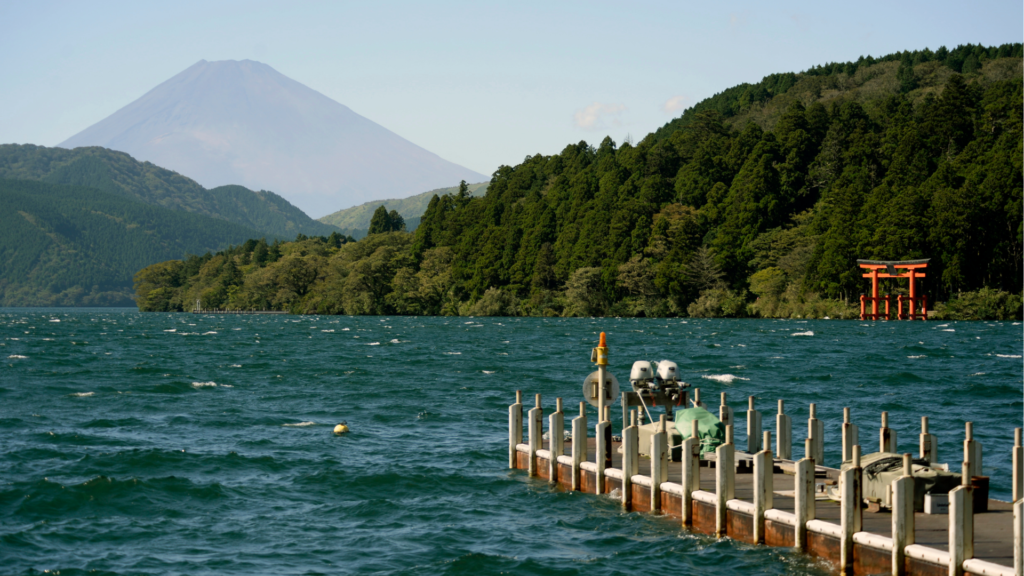
- Drive to Lake Ashi: torii gate photo at Hakone Shrine; ropeway to Owakudani for volcanic views.
- Afternoon onsen bath at your ryokan (day‑use if not staying overnight).
- Dinner nearby; night drive viewpoints around Lake Ashi.
- Return to Tokyo after evening bath or stay overnight.
Two‑Day Hakone Onsen by Car: Sample Loop
Day 1: Tokyo → Hakone‑Yumoto → Hakone Shrine → Pirate Cruise on Lake Ashi → Owakudani → Gora onsen stay.
Day 2: Gora Park → Pola Museum or Open‑Air Museum → Sengokuhara pampas grass (seasonal) → Gotemba Premium Outlets (Fuji views) → Tokyo via Tomei.
Must‑Visit Onsen Towns and Baths by Car
Hakone‑Yumoto
Great for first‑timers; many ryokan offer day‑use hot spring plans and private baths.
Gora
Known for high‑end ryokan and cable car access; convenient for museums and seasonal foliage.
Miyanoshita
Historic hotels with classic baths; relaxed cafés and antique shops.
Ashinoko / Motohakone
Ryokan with lake views and easy access to shrine and cruises.
Family Trips: What to Know
Book child seats in advance (legally required under age 6). Choose MPVs with sliding doors for tight hotel parking. Plan shorter driving segments and schedule onsen with family‑friendly time slots.
Couples and Luxury Stays

Look for ryokan with in‑room open‑air baths and private dining. Consider weekday stays for quieter atmospheres and stronger availability.
Car Navigation: GPS, Apps, and Map Codes
Google Maps & Apple Maps
Both work well; download offline maps as backup. CarPlay/Android Auto is widely supported in newer rentals.
Japanese Map Codes
Some attractions list Mapcode numbers used by local GPS units; entering the numeric code may be faster than typing addresses.
EV and Hybrid‑Friendly Planning
Hybrid rentals are abundant. For EVs, confirm CHAdeMO/CCS compatibility and charging near your ryokan or along Odawara and Gotemba routes. Cold temperatures reduce range; plan conservative margins.
Insurance, Waivers, and Peace of Mind
Basic Coverage
All reputable agencies include legally required liability coverage.
CDW/LDW and NOC
Collision Damage Waiver reduces liability for vehicle damage; a Non‑Operation Charge (NOC) may apply if the car requires repair or towing. Consider plans that cover glass, tires, and roadside assistance.
Personal Effects
Consider travel insurance that covers luggage in the vehicle.
One‑Way Rentals and Add‑Ons
One‑Way Drop‑Off
Dropping at Odawara or Mishima can save backtracking if you continue by Shinkansen. One‑way fees vary by distance and provider.
ETC, Wi‑Fi, and Accessories
Reserve an ETC card, phone holder, and in‑car Wi‑Fi (if needed). Winter: request snow tires or chains in advance.
Cost Comparison: Car vs. Train for Hakone
For two or more travelers with luggage or plans beyond the core loop, a rental often matches or beats train + bus fares while saving transfers. For solo travelers staying only near stations, public transport may be simpler.
Common Mistakes to Avoid
Starting late on weekends, skipping ETC, under‑estimating tolls, renting a car too large for ryokan parking, forgetting child seats, and not checking road advisories. Always input your destination before driving off.
Frequently Asked Questions
How long is the drive from Tokyo to Hakone Onsen?
About 90–150 minutes without heavy traffic, depending on pick‑up point and route.
Do I need an International Driving Permit for Japan?
Most visitors do; bring your home license and passport as well. Check the latest official requirements before travel.
Are there toll roads between Tokyo and Hakone?
Yes. An ETC card speeds up payment and may provide discounts.
Is parking easy in Hakone?
Ryokan often include guest parking; attractions have paid lots. Reserve where possible.
Can I rent a car in Tokyo and return it near Hakone?
Yes—many agencies allow one‑way returns to Odawara, Mishima, or Shizuoka for a fee.
Is winter driving safe in Hakone?
Yes with proper preparation. Request snow tires/AWD if snow is forecast and drive cautiously on mountain roads.
Keyword Variations and Search Intents Covered
rent a car Tokyo to Hakone onsen, Tokyo to Hakone driving route, Hakone onsen by car, best car rental Tokyo for foreigners, Tokyo to Hakone tolls ETC, Hakone parking for ryokan, drive time Tokyo Hakone, winter driving Hakone, one‑way car rental Tokyo to Odawara, family onsen trip by car Japan, private onsen ryokan parking, Hakone itinerary by car, Lake Ashi drive, Owakudani parking, Gotemba outlet stopover.
How to Compare Car Rental Prices for Hakone Trips
Use aggregators to benchmark, then book directly with your preferred provider to select add‑ons (ETC, snow tires) and guarantee English support. Check fuel policy, mileage, CDW/LDW coverage, and NOC terms before confirming.
Best Car Rental in Japan for Overseas Visitors
The top recommendation for overseas travelers is Samurai Car Japan. This company offers an impressive fleet that includes legendary Japanese cars like the Nissan GT-R and Mazda RX-7, making it a dream choice for car enthusiasts. In addition to its exciting lineup, Samurai Car Japan is known for affordable, transparent pricing, so you can rent with confidence and no hidden surprises.
If you’re interested, make sure to check the link or image below to get in touch and book your rental.