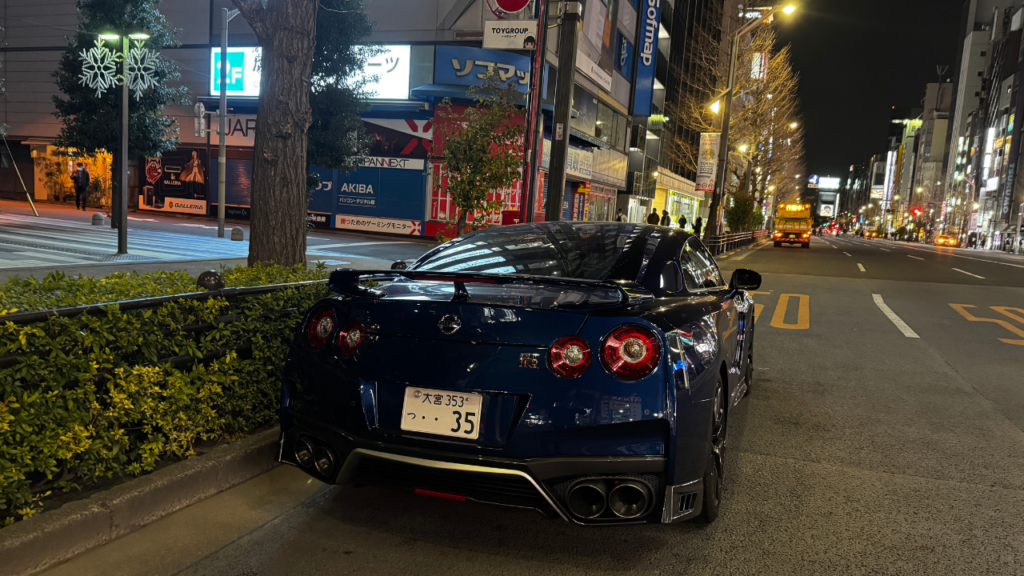
Daikoku Parking Area—usually shortened to Daikoku PA—is Japan’s most famous informal car-meet spot. There’s no official “car meet schedule,” but there are predictable patterns.
Quick verdict:
- Most cars + best atmosphere: Friday or Saturday evening (7:30–10:30 PM)
- Calmest + easiest for photos: Sunday early morning (6:00–8:30 AM)
Important context: Daikoku PA is an expressway parking area in Yokohama (near Tokyo), not a street-level parking lot. Access is controlled, and temporary closures can happen when it’s too crowded or when authorities intervene.
Quick Answer: Best day and time to visit Daikoku PA
If you can only choose one window, choose this:
- Best overall: Friday night, 8:00–10:00 PM (arrive a little earlier if possible)
- Best for relaxed car-spotting: Sunday, 6:00–8:00 AM
- Most hit-or-miss: Late night after 11:00 PM (more likely to be quiet, restricted, or cleared)
If you’re visiting Japan specifically for JDM culture, build a plan that includes a primary window (Daikoku) and a backup—because reliability is part of the modern Daikoku experience.
What is Daikoku Parking Area (Daikoku PA)?
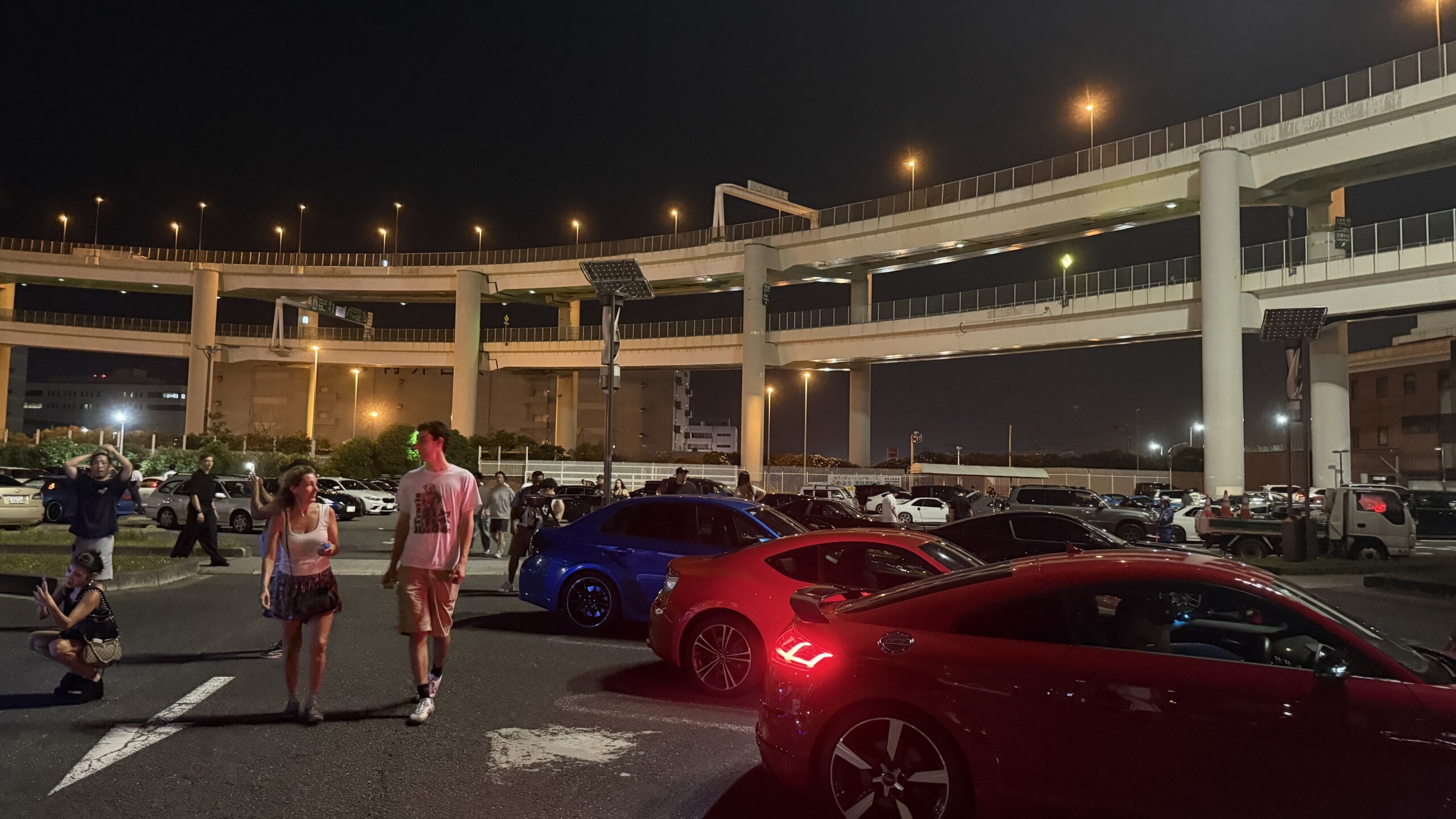
Daikoku PA is a large highway rest area inside the Shuto Expressway network, located in Yokohama (Kanagawa Prefecture). It’s famous because its size and layout make it a natural gathering point for car enthusiasts—everything from classic JDM icons to VIP sedans, modern GT-R builds, supercars, and immaculate kei cars.
Two things can be true at once:
- It’s a legitimate rest stop (toilets, convenience store, food options).
- On the right nights, it becomes an open-air car show.
Timing matters because the scene isn’t “hosted.” It’s spontaneous—and it changes based on weather, holidays, nearby events, and crowd control.
Best days to go to Daikoku PA
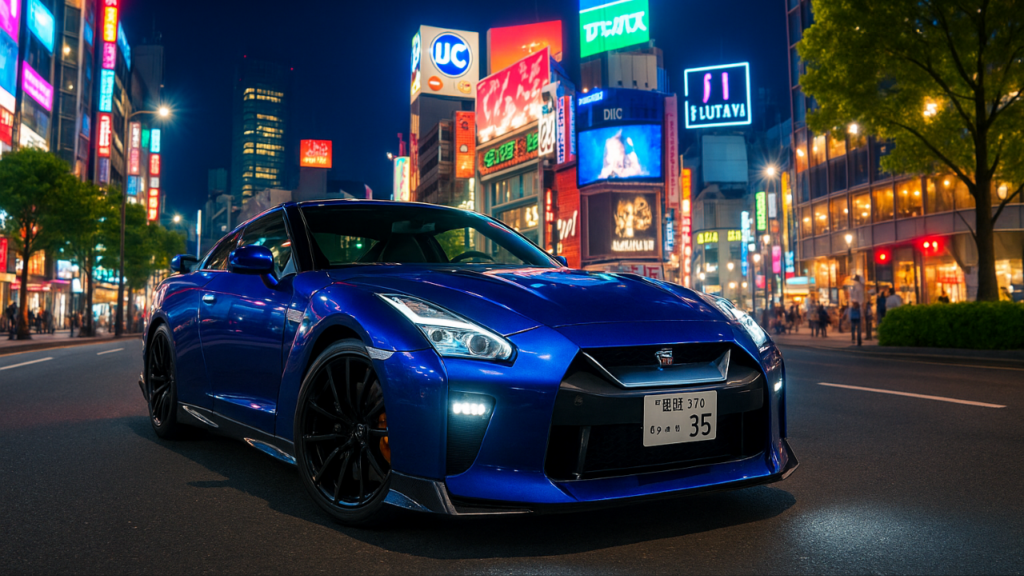
Friday night: the most consistent “Daikoku experience”
Friday is usually the best balance of:
- Strong turnout
- Better flow in/out compared to peak Saturday
- A lively but less chaotic vibe
If you’re traveling and want the highest chance of “seeing everything,” Friday night is the safest bet.
Saturday night: biggest potential, highest risk
Saturday can be spectacular—but it’s also the day most likely to become:
- Too crowded to park
- Restricted or cleared earlier than you expected
If Saturday is your only option, arrive earlier and keep expectations flexible.
Sunday morning: calm, friendly, photography-friendly
Sunday mornings are ideal if you want:
- Easier parking
- Better light and cleaner photos
- A calmer atmosphere for conversations
If you’re a first-timer and you care more about quality time than maximum crowd energy, Sunday morning is the best window.
Weekdays: possible, but not “guaranteed”
Weekdays can still produce great sightings—especially when enthusiasts are out testing, cruising, or stopping in small groups.
But if your goal is a high-density car meet, weekdays are generally less reliable than Fri/Sat nights or Sunday morning.
Best time of day (and what it feels like)
Evening peak: 7:30–10:30 PM
This is the classic window travelers imagine:
- The lot becomes more social and active
- Cars come and go in waves
- Photo opportunities are constant
Pro tip: arriving right at the peak can backfire if parking is tight. Aim to be in the area before the highest surge.
Late night: after 11:00 PM
Sometimes late night is magical. Sometimes it’s quiet. And sometimes it’s the window where:
- Restrictions are more likely
- People rotate out
- The vibe is less predictable
If you want late-night Daikoku, treat it as a bonus—not your only plan.
Early morning: 6:00–8:30 AM
This is the underrated sweet spot:
- Fewer crowds
- Easier parking and movement
- Cleaner photos and calmer conversations
If your dream is photographing clean builds without a wall of people behind you, this is your time.
Midday: 10:00 AM–3:00 PM
Midday is usually quieter. It’s still useful if:
- You want to scout the location
- You’re doing a drive around Tokyo Bay
- You prefer a low-key stop
But it’s not the best window if your main goal is a packed car meet.
Best months and seasons for car-spotting
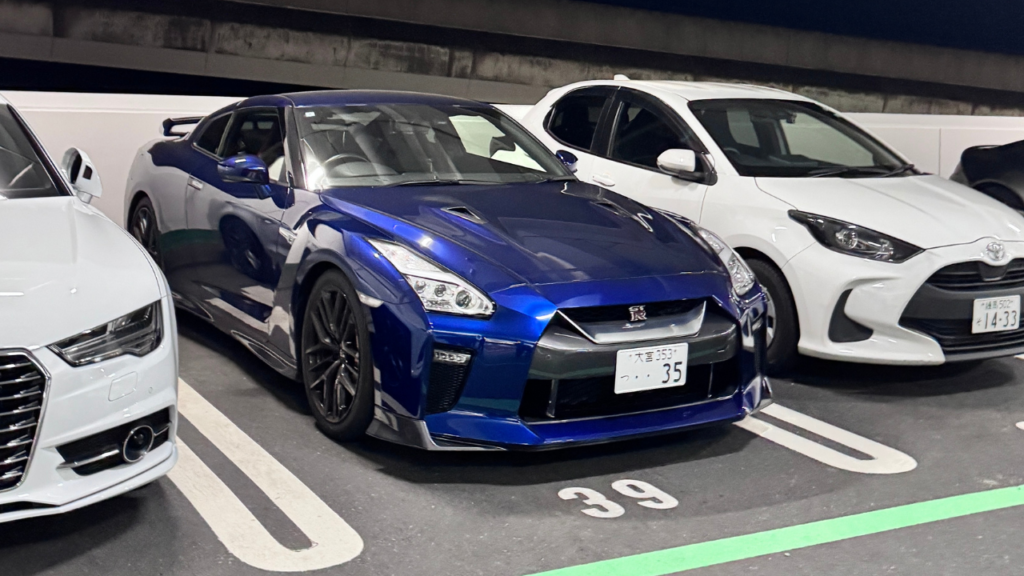
Winter (December–February): crisp nights, strong meets
Winter often brings:
- Clearer air
- Comfortable crowds (less humidity)
- Great night vibes
Layer up—Daikoku can feel colder than central Tokyo because of wind and bay exposure.
Spring (March–April): comfortable temperatures, high travel demand
Spring is excellent for visitors, but it also means:
- Heavier tourism
- Busy weekends
- More competition for hotels
Early summer (May–June): holidays and the rainy season
- Golden Week (late April–early May) can be unpredictable due to heavy traffic and crowd effects.
- June can still be great, but rain can reduce turnout.
Late summer (July–September): heat + typhoon risk
This season is the most weather-sensitive:
- Hot, humid nights can reduce comfort
- Typhoons and heavy rain can kill the vibe—or cause restrictions
If you’re visiting in late summer, plan multiple potential nights.
Autumn (October–November): arguably the best balance
Autumn is often the most comfortable season overall:
- Cooler evenings
- Lower storm risk than late summer
- Strong weekend energy
Dates and events that can change everything
Even though Daikoku has no official meet calendar, major events can affect traffic, crowds, and enforcement.
Expect higher turnout (and sometimes higher restrictions) around:
- Mid-January: Tokyo Auto Salon weekend
- Late March–early April: cherry blossom travel surge
- Late April–early May: Golden Week
- Mid-August: Obon holiday period
- Late December–New Year: year-end drives
If you’re visiting during a major event week, the smartest move is to avoid “one-shot” planning and build a Plan B.
How to check if Daikoku PA is open tonight
Because closures can happen without much warning, check status before you leave.
Use a combination of:
- Official expressway traffic/closure information (parking area closures + traffic alerts)
- X (Twitter) searches in Japanese (look for “大黒PA” and “大黒PA閉鎖”)
- Real-time posts and hashtags (unofficial, but fast)
If you’re with a professional tour, your guide should be monitoring these signals and rerouting in real time.
-

-
Daikoku PA Schedule: Hours, Closures, and the Best Times to Visit
Daikoku Parking Area (Daikoku PA) in Yokohama is the most famous car-culture rest stop in Japan. Yet there’s a common misconception: there is no official “car meet timetable.” Instead, Daikoku PA follows normal expressway facility hours, with spontaneous meets that peak at predictable times—and occasional police or construction closures. This guide explains the real Daikoku PA schedule, how to check today’s status, and when to plan your visit for the best experience. What is Daikoku PA? Daikoku PA sits inside the Metropolitan Expressway network (Bayshore Route and K5 Daikoku Line). It is a true highway rest area—accessible only from the ...
続きを見る
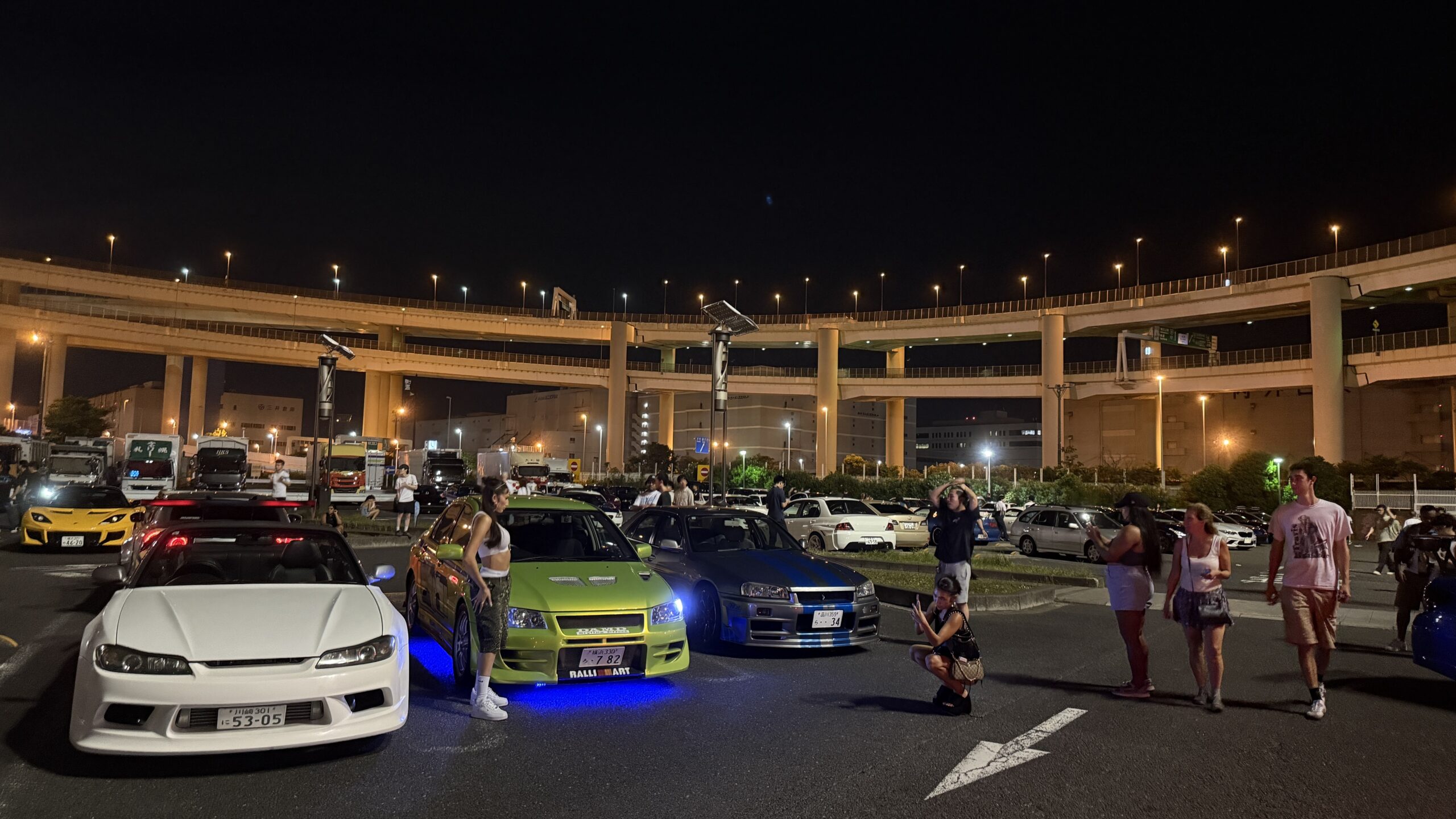
How to access Daikoku PA legally (and why many visitors get it wrong)

Is Daikoku in Tokyo?
Daikoku PA is in Yokohama, not inside Tokyo’s 23 wards. But it’s close enough that it’s commonly included in “Tokyo car culture” itineraries.
The key rule: Daikoku is inside the expressway system
Daikoku PA is designed for expressway users.
- You cannot access it like a normal tourist spot.
- There is no street-level pedestrian entrance.
The realistic options
- Drive (rental car) with expressway access
- Ride with someone already driving the Shuto Expressway
- Join a guided JDM tour (the simplest choice for most travelers)
Taxis are confusing for visitors: a taxi can physically use the expressway, but Daikoku is not a place you can casually “get dropped off and leave another way.” If you go by car, you need a car plan for leaving as well.
-

-
How to Get to Daikoku PA Without a Car (Legal Options, Taxi Costs, and Tours)
Daikoku Parking Area (Daikoku PA) is Japan’s most famous informal car meet—but it’s also one of the hardest spots for travelers to reach without a vehicle. The reason is simple: Daikoku PA sits on the Shuto Expressway and is designed for cars only. There’s no train station, no public bus stop inside the PA, and pedestrians are not allowed. This guide explains exactly how to get to Daikoku PA without driving yourself, the legal options that actually work, typical taxi pricing and pitfalls, what to do when the police close the lot, and the best “Plan B” places for JDM ...
続きを見る

What to expect at Daikoku on a good night
When Daikoku is “on,” it feels like a living museum:
- Classic JDM legends (Skyline, Supra, RX-7)
- Modern performance builds (GT-R, GR models, tuned European cars)
- VIP sedans, stance builds, time-attack style cars
- A constant rotation of new arrivals and departures
Etiquette that keeps the scene alive
Daikoku survives because most people respect it.
- Don’t block lanes or entrances
- Don’t touch cars without permission
- Keep noise and behavior under control
- Follow staff/police instructions immediately
If visitors ignore etiquette, closures become more likely—so being respectful directly protects the experience.
-
-
Daikoku Parking Area Rules: The Complete 2025 Guide for Legal, Safe, and Respectful Visits
Visiting Daikoku PA is a bucket-list experience for car enthusiasts—but it’s also an active highway rest area with strict rules. This guide explains exactly how to access Daikoku legally, what conduct is expected on-site, and how to enjoy Japan’s JDM scene without causing closures or getting turned away. The Golden Rule: No Pedestrian Access—Expressway Users Only Daikoku Parking Area is inside the Metropolitan Expressway network. Only vehicles traveling on the expressway may enter. Walking in or out is prohibited, and the facility is fully fenced with no legal gates for pedestrians. Bicycles and small scooters are also prohibited. There is ...
続きを見る
Plan B matters: where to go if Daikoku is restricted
Even on a “perfect” weekend, Daikoku can become unreliable. A strong plan includes alternatives such as:
- Other expressway PAs with car-spotting potential
- Tokyo Bay routes for cruising and skyline photos
If your goal is to experience the wider scene—not just one parking area—build a flexible route.
-

-
Tokyo Car Meet Locations: The Definitive 2026 Guide to Daikoku PA, Tatsumi, and More
Meta description: Planning a Tokyo car meet night? This definitive guide compares the most reliable Tokyo-area car meet locations—led by Daikoku Parking Area (Daikoku PA)—with clear access tips, etiquette, and pro itineraries. Book our JDM tour to see it all without stress. What Counts as a “Tokyo Car Meet” Today? While many gatherings happen within Tokyo’s 23 wards, the crown jewel is Daikoku Parking Area (Daikoku PA) in Yokohama—close enough to be a core stop on any Tokyo car culture trip. Around Tokyo Bay you’ll also find Tatsumi PA, Umihotaru PA on the Aqua-Line, and smaller spots like Shibaura PA. ...
続きを見る

A realistic first-timer itinerary (designed around the best time window)
Here’s a practical structure that works well for travelers:
- Pickup + warm-up drive (30–45 min)
City pickup → C1 loop / Tokyo Bay routes → settle into the night vibe. - Arrive Daikoku in the strongest window (60–75 min)
Walk the lot, photograph builds, take breaks, and stay mobile. - Pivot if needed (30–45 min)
If it gets restricted or parking becomes impossible, move to a backup location. - Return (20–40 min)
Drop-off, late-night food, and optional bonus drive.
FAQs about the best time to visit Daikoku PA
What time do cars start showing up?
On the best nights, the flow often builds from 7:00–8:00 PM, with the liveliest period typically between 8:00–10:30 PM.
What is the single best day to go?
If you want the highest reliability, choose Friday night. If you want the calmest experience, choose Sunday morning.
Is Daikoku PA open every night?
The rest area may operate normally, but access and the meet vibe are not guaranteed. Restrictions and temporary closures can happen.
What if it’s raining?
Light rain can reduce turnout. Heavy rain (and especially typhoon conditions) can make the night a bad bet.
Is Daikoku safe for tourists?
Yes—when you follow rules, stay aware of moving vehicles, and behave respectfully. Daikoku is an active highway facility, not an event venue.
If you’re going to Daikoku PA, leave it to us
We will arrange your reservation after the payment is completed.
Duration: about 3 hours
Meeting Point: Shibuya Station
Language: Beginner-level English & Japanese
Tell:09092341545
Important Information
- This is a drive tour where you drive your rental car, and our guide navigates from the seat.
- This is a self-drive tour where you drive your rental car, and our guide navigates from the passenger seat.
- The tour begins and ends at the same location (Shibuya).
- If the Daikoku Parking Area is closed, we will instead guide you to another car meet further away.
- The consultant is a cultural expert and navigator, not a taxi service.