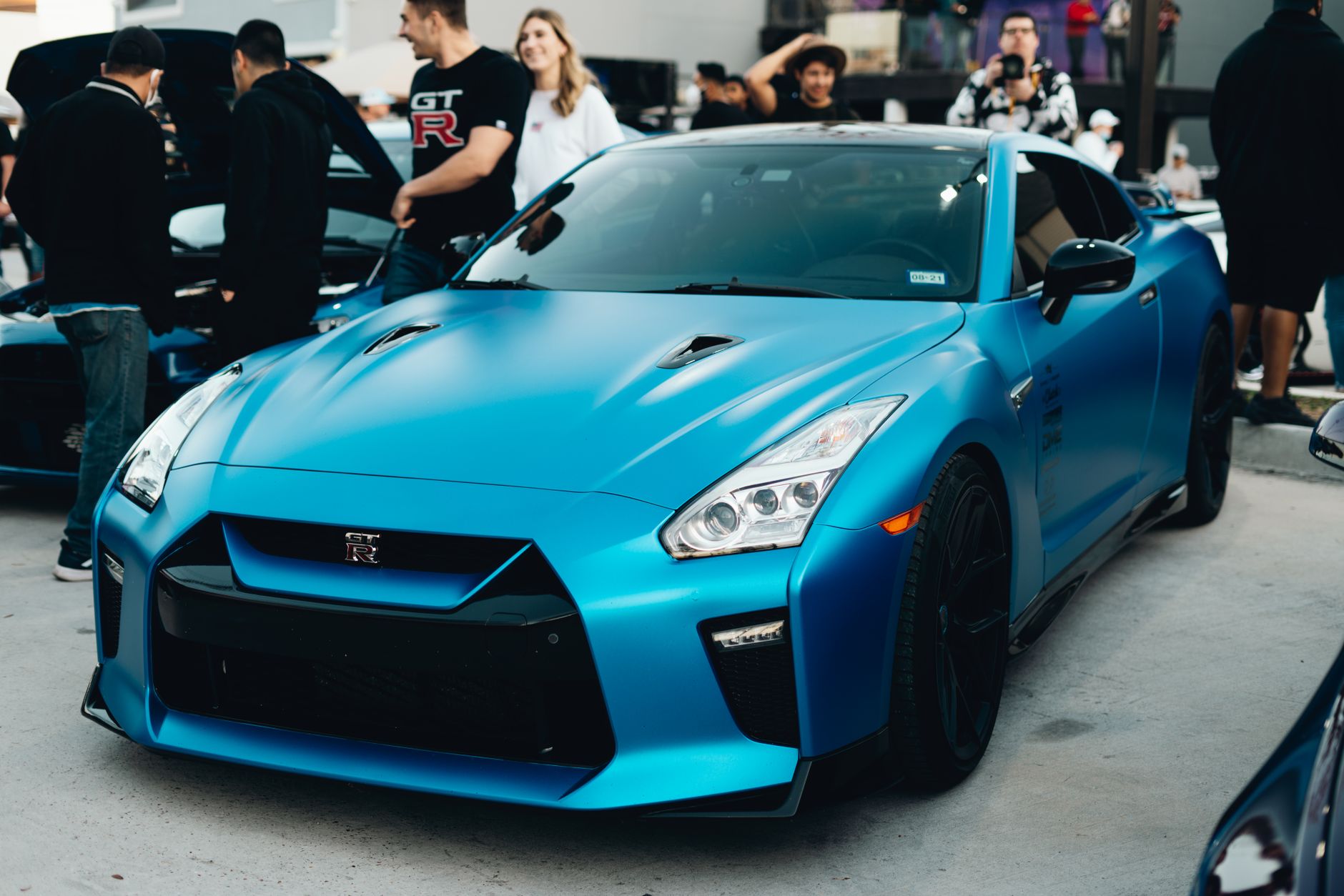
Picture this: it's 11 PM on a Friday, you're behind the wheel of a 545 hp Nissan GT-R R35, the Wangan Expressway is opening up ahead of you, and the Tokyo skyline is glittering in every mirror. That's not a fantasy — that's what it actually feels like to rent a Nissan GT-R in Tokyo as a tourist, and it's an experience I've had the pleasure of sharing with hundreds of international visitors over the years. This guide covers everything you need to know before you book: which GT-R variant to choose, what the routes actually feel like, what it costs, and the practical details that will make or break your trip.
Why the Nissan GT-R Is the Right Car to Rent in Tokyo
Tokyo isn't Monaco. The streets are narrow, traffic lights appear every 200 metres in the city centre, and the expressways have speed cameras at regular intervals. Given all that, you might wonder whether renting a GT-R in Tokyo actually makes sense. It absolutely does — for reasons that have nothing to do with outright speed and everything to do with presence, culture, and engineering theatre.
The R35 GT-R produces 545 hp from its 3.8-litre twin-turbo VR38DETT V6, hits 100 km/h in 2.7 seconds, and generates a sound that turns heads from Shibuya Crossing to Daikoku PA. But what makes it special in a Tokyo context is that it's genuinely Japanese in a way that a Ferrari or Lamborghini simply isn't. When you pull into Daikoku Parking Area on a Friday night in a GT-R and a crowd of local enthusiasts wanders over to look, the reaction is different. There's a recognition, a respect — this car belongs here. I've watched an elderly Japanese man in his 70s spend five minutes walking slowly around our GT-R at Tatsumi PA, just nodding. That doesn't happen with a McLaren.
For tourists who grew up watching Initial D, playing Gran Turismo, or watching the Fast & Furious franchise, the GT-R also carries enormous emotional weight. These aren't just cars — they're cultural landmarks. Renting one in the city where they were born and engineered closes a loop that no rental experience in Europe or the Middle East can replicate.
R35 GT-R vs R34 GT-R: Which Should You Choose?
At Samurai Car Japan, we offer both the modern R35 and the legendary R34 GT-R. The choice depends entirely on what you want from the experience. The R35 is raw, modern, brutally fast, and deeply composed — it makes you feel like a hero on the expressway even if you've never driven a performance car before. The twin-turbo lag hits around 3,500 rpm, and when the ATTESA AWD system digs in, you feel the car rotate slightly before launching forward. It's an experience that's both violent and precise.
The R34, meanwhile, is emotionally charged in a way that transcends horsepower figures. Its quoted 280 hp (via Japan's gentleman's agreement, though most examples make considerably more) from the RB26DETT inline-6 feels entirely different — rawer, more analogue, with a turbo spool that sounds like nothing else on earth. The R34 is the car from the first Fast & Furious, the car that made an entire generation desperate to visit Japan. If you want the cinematic, mythology-soaked experience, the R34 is your answer. If you want the most technically impressive drive, take the R35. Many guests spend weeks agonising over this choice — if budget allows, the VIP Tour option lets you experience both.
- Nissan GT-R R35: 545 hp, 2.7s 0-100 km/h, VR38DETT twin-turbo V6, modern AWD, launch control
- Nissan Skyline R34 GT-R: 280+ hp, RB26DETT inline-6 twin-turbo, iconic Fast & Furious provenance, analogue feel
- Best for first-timers: R35 (easier to drive, more forgiving on Tokyo streets)
- Best for purists: R34 (the car that defined JDM culture internationally)
GT-R Rental Tours in Tokyo: Prices, Options, and What's Included
One of the most common questions we receive via WhatsApp is simply: "How much does it cost to rent a GT-R in Tokyo?" The answer depends on which tour format suits your situation, and each option is structured quite differently from a standard car hire.
Unlike conventional car rental companies where you take the keys and drive off alone, our tours are guided experiences — which is actually the smarter option for international tourists. Japan drives on the left, the expressway toll system requires an ETC card or exact cash, and the most rewarding GT-R routes involve specific knowledge of where to be and when. Having an English-speaking guide who knows that Daikoku PA peaks at around 11:30 PM on Saturdays, or which lane of the Wangan gives you the clearest run, transforms a good drive into an unforgettable one.
Tour Pricing Breakdown
- Shared Tour — ¥25,000 per person: Join a small group of fellow enthusiasts in the GT-R or another JDM car from the fleet. Duration 3-4 hours. Includes Daikoku PA visit, professional photos, and English guide. Perfect for solo travellers or couples on a tighter budget.
- Private Tour — ¥60,000: The entire car and guide are exclusively yours. Fully customisable route — want to go via Rainbow Bridge, stop at Tokyo Tower, then hit the Wangan? Done. Duration is flexible, typically 3-4 hours. Pickup available from central Tokyo hotels.
- VIP Tour — ¥150,000 for 2 people: The full package. Multiple JDM cars, dedicated photographer, extended route covering the best of Tokyo's car culture locations. If you want to ride in both the R35 and the R34, or add a Supra or RX-7 to the mix, this is the tier. This is genuinely one of the most memorable experiences Tokyo offers — I've had guests tell me they've driven at Nürburgring and Spa, and this still sits at the top of their list.
All tours include expressway toll costs, professional photographs sent digitally after the tour, and hotel pickup from central Tokyo. International guests book primarily via WhatsApp (available directly on the website), which makes it easy to discuss specific route preferences, confirm availability, and ask questions in real time before committing.
The Best GT-R Routes in Tokyo: What Each Drive Actually Feels Like
Every route we run has been driven dozens of times in every car in the fleet, in every season and at every hour. The descriptions below aren't marketing copy — they're honest accounts of what you'll experience behind the wheel or in the passenger seat.
Daikoku PA Night Run (Most Popular — 55% of Bookings)
Route: Tokyo → Wangan Expressway → Daikoku PA → Rainbow Bridge → Tokyo. Duration: 2-3 hours. This is the one. More than half our guests choose this route, and almost all of them ask about it before they've even decided which car they want. The Wangan (Metropolitan Expressway Bayshore Route) at night is a completely different animal from daytime Tokyo traffic — wide lanes, gentle curves, spectacular port and bay views, and a flow of modified JDM machinery that makes you feel like you've driven into a video game.
Daikoku Parking Area is located in Tsurumi-ku, Yokohama, on the Wangan Expressway. Entry is free once you're on the toll road (expressway tolls from Tokyo run approximately ¥1,500). On Friday and Saturday nights between 10 PM and 2 AM, you'll find anywhere from 50 to 200+ modified cars: bosozoku, VIP sedans riding on air suspension, drift builds, time attack cars, stance cars, and the occasional completely standard-looking kei car that hides a built engine. Pulling in with a GT-R attracts genuine attention from people who know exactly what they're looking at. The etiquette here is simple — don't rev excessively inside the PA, don't touch other people's cars, and take your time absorbing what is genuinely one of the world's great car culture events.
The return leg via Rainbow Bridge — with Odaiba's lights on one side and central Tokyo on the other — is the perfect coda to the night. The GT-R's exhaust note echoes against the bridge structure in a way that sounds incredible. I've driven this route in the rain, in summer heat, and on clear winter nights, and it delivers every time.
Hakone Mountain Pass (Best for Driving Dynamics)
Route: Tokyo → Tomei Expressway → Hakone Turnpike → Izu Skyline. Duration: 4-5 hours. If you want to actually drive the GT-R rather than experience it in traffic, this is your route. The Hakone Turnpike is a private toll road (approximately ¥820 per vehicle) with a series of sweeping uphill hairpins and long curves that give you the chance to feel the GT-R's ATTESA AWD system work in dynamic driving conditions. The road is technically a toll road with variable speed limits, so we drive it with full respect for the rules — but even at legal speeds, the GT-R's chassis and the scenery combine to produce something genuinely extraordinary.
On clear days from late autumn through to early spring, the views of Mt. Fuji from the upper sections of the Turnpike are stop-you-in-your-tracks spectacular. American guests in particular tend to go very quiet when they see the mountain for the first time from a mountain road in a GT-R. The Izu Skyline extension adds more elevation and more view points. If you're planning a day trip that combines the GT-R experience with Japan's natural scenery, this route is unbeatable. It also pairs naturally with a visit to a traditional onsen in Hakone afterwards — a contrast between 545 hp and total tranquillity that perfectly summarises Japan as a destination.
Tokyo Drift Tour (Best for Sightseeing)
Route: Shibuya → Shinjuku → Rainbow Bridge → Tokyo Tower → Akihabara. Duration: 2-3 hours. This route is designed for guests who want the cultural experience of Tokyo's most iconic districts combined with the GT-R experience. We drive past Shibuya Crossing (the most photographed intersection in the world, and even more dramatic from inside a GT-R at night), through the neon corridors of Shinjuku, across Rainbow Bridge, and around the base of Tokyo Tower before finishing in Akihabara, Japan's electronics and anime district. The photography opportunities on this route are exceptional — the GT-R against the illuminated Tokyo Tower or with Shibuya's scramble crossing in the background produces images that are genuinely gallery-quality.
This route is particularly popular with guests who want to share the experience on social media or with guests who bring partners who aren't necessarily car enthusiasts but want to see Tokyo from a unique perspective. The GT-R adds spectacle to every location on the route.
Practical Requirements: What Tourists Need to Know Before Renting
Japan has specific requirements for foreign nationals driving on public roads, and getting these details wrong before you arrive in Tokyo will mean you can't drive. None of the requirements are complicated, but they all need to be sorted before you board your flight — not after you land at Narita or Haneda.
International Driving Permit (IDP) — The Non-Negotiable
Japan requires an International Driving Permit for foreign nationals who want to drive. The critical point that catches tourists off guard every year: the IDP must be obtained in your home country before you arrive in Japan. It cannot be issued in Japan. The IDP is issued by your national automobile association — AAA in the USA, AA/RAC in the UK, NRMA/RAA/RACQ in Australia, CAA in Canada — and typically costs the equivalent of ¥3,000-4,000. The process takes minutes at a branch office or a few days by post. If you arrive in Tokyo without an IDP, you cannot legally drive our vehicles on public roads, and no legitimate rental or tour company will allow you to do so.
Japan also accepts the Geneva Convention IDP (1949), so confirm your issuing country's format matches Japan's requirements. Most major nations issue the correct format automatically, but it's worth verifying. Guests from South Korea and Germany should note that Japan has specific bilateral agreements that may allow use of a national licence with certified translation — check with the Japan Automobile Federation (JAF) if you're unsure.
Japan's Road Rules for International Drivers
- Drive on the left. This catches drivers from right-hand traffic countries by surprise for the first hour. In our guided tours, the guide handles driving in complex city sections and you take over on expressways or mountain roads where the transition is easier.
- Zero alcohol tolerance. Japan enforces a 0.0% BAC limit. This is not the place to have a beer before your evening tour. Penalties include immediate licence suspension and potential criminal charges.
- Expressway speed limits: 80-100 km/h depending on the route. Urban speed limits are typically 40-60 km/h. Speed cameras are common on expressways.
- Toll roads: Most expressways require payment. Tokyo to Yokohama costs approximately ¥1,500. Our tours include toll costs, so you won't need to handle cash at booths.
- Navigation: Google Maps functions perfectly in Japan and provides accurate real-time traffic data for Tokyo's complex expressway network.
The GT-R Tourist Experience: What Guests Actually Say
We hold a 4.9/5 star average across our reviews, and the GT-R is our most-booked car — 40% of all bookings request it specifically. Reading through guest feedback after hundreds of tours, a few consistent themes emerge: the emotional weight of driving a car you've dreamed about for years, the quality of the specific Tokyo locations on the route, and the difference that having a knowledgeable guide makes.
One Australian guest described the Daikoku PA night run in the R34 GT-R as "the best night of my trip to Japan." A UK visitor who had previously driven in Dubai and Monaco wrote that "nothing compares to cruising through Tokyo in a Supra at midnight" — and that sentiment applies equally to the GT-R. An American couple on the Hakone route told us their guide "knew every corner of the Hakone Turnpike," and that the views of Mt. Fuji from the S2000 were worth the entire trip to Japan. These aren't exceptional outliers — they're representative of what happens when the right car meets the right route with someone who genuinely knows both.
What guests consistently don't expect is how much the cultural context adds to the experience. Seeing a GT-R in a showroom is one thing. Seeing a GT-R at Daikoku PA surrounded by other Japanese-market performance machines, watched by locals who grew up with this car as part of their automotive identity, is something entirely different. Tokyo isn't just a backdrop — it's an active participant in the experience.
When to Visit Tokyo for a GT-R Rental Experience
Tokyo's climate directly affects which route and what kind of experience makes sense, and the Daikoku PA car meet scene also has seasonal rhythms worth knowing before you book your flights.
Season-by-Season Guide
Late March to Early April (Cherry Blossom Season): This is the most visually spectacular time to be in Tokyo, and a GT-R tour during cherry blossom season produces photos that are almost surreal in their beauty — pink blossoms framing a silver GT-R on a quiet Tokyo street at dawn, or along the Meguro River at night. The downside is that Tokyo is at its most crowded, and booking well in advance is essential. Daikoku PA is still active, and the combination of spring weather and car culture is genuinely unbeatable.
October to November (Autumn): The best weather in Japan for mountain pass driving. The Hakone Turnpike and Izu Skyline routes are at their absolute best in autumn — cool, dry air, vivid fall foliage on the approach roads, and consistently clear Mt. Fuji visibility. If you want the GT-R Hakone experience, book for October or November. The Daikoku PA scene is also very active in autumn, with comfortable temperatures that encourage people to stay longer.
December to February (Winter): The coldest months bring the clearest skies and the most dramatic Mt. Fuji views from the expressways. There are fewer international tourists, which means better availability and occasionally better pricing. Night tours are particularly atmospheric in winter — the GT-R's exhaust note hangs in cold air, and the Tokyo skyline looks its sharpest on a clear December night. The Daikoku PA scene continues year-round.
July to August (Summer): Hot and humid, which makes evening and night tours the preferred option. The Wangan Night Run is ideal in summer — you get the full atmospheric experience without the midday heat. Avoid roof-down configurations in the height of August; the GT-R's air conditioning is more than up to the task.
June (Rainy Season): Manageable but not ideal. The GT-R handles wet expressways without drama (the AWD system is genuinely reassuring in rain), but night photography suffers and the Hakone mountain routes are less rewarding in persistent rain. This is a good time to consider adding car culture attractions like the Nissan Heritage Collection in Zama or the Nismo Omori Factory in Omori to your Tokyo itinerary alongside a tour.
Beyond the GT-R: Expanding Your Tokyo JDM Experience
A GT-R rental tour is a peak experience, but Tokyo offers a remarkable depth of car culture that rewards travellers who plan around it. Having spent years guiding guests through the city's automotive landscape, here are the additions that consistently elevate the trip from great to extraordinary.
JDM Attractions Worth Building Your Trip Around
The Nismo Omori Factory in Omori is one of the most significant GT-R pilgrimage sites in the world. This is Nissan's official Nismo workshop — where GT-Rs are tuned, rebuilt, and prepared for competition. The factory is open for visits and the workshop floor, if you time it right, will have GT-Rs in various states of disassembly alongside Nismo-spec parts that you'll recognise from Gran Turismo. For any serious GT-R enthusiast, this is a must-visit on the same day as your rental tour.
The Nissan Heritage Collection in Zama (accessible by appointment) houses over 400 vehicles from Nissan's entire history, including every generation of GT-R. Seeing a pristine Hakosuka GT-R, a Kenmeri, a R32, R33, R34, and R35 lined up in the same collection — cars that span five decades of engineering philosophy — provides context for why the GT-R is what it is. Getting an appointment requires forward planning, but it's worth every effort.
For those who want to experience a real race circuit, a day trip to Fuji Speedway combines naturally with a GT-R tour. The circuit sits at the base of Mt. Fuji, approximately 90 minutes from central Tokyo via the Tomei Expressway, and hosts regular track days alongside the FIA WEC 6 Hours of Fuji. Our Fuji Speedway tour guide covers everything you need to plan a visit, and for those who want to understand the circuit layout before arriving, our guides to Fuji Speedway in Forza Motorsport and Fuji Speedway in Le Mans Ultimate provide useful pre-trip context. If you're planning to drive the circuit itself, our dedicated guide to how to drive Fuji Speedway covers track day options, requirements, and booking in full detail.
The Tatsumi PA, closer to central Tokyo than Daikoku PA, operates as a smaller but more intimate car meet venue — it's a useful alternative on nights when you want to see modified JDM cars without the 30-minute expressway run to Yokohama. The UDX Parking Area in Akihabara is worth a detour for fans of itasha (anime-wrapped cars) — a genuinely unique subset of Japanese car culture that exists nowhere else in the world.
Other Cars in the Fleet: Complementing the GT-R Experience
If you're planning multiple days in Tokyo and want to sample more than one JDM icon, our full fleet gives you options that each represent a completely different philosophy. The Toyota Supra JZA80 (330 hp, 2JZ-GTE twin-turbo) is the GT-R's great rival and arguably its equal in cultural significance. The Mazda RX-7 FD3S (255 hp, 13B-REW twin-rotor) is the most exotic car in the fleet — the rotary engine's high-revving character is unlike anything produced today. The Honda NSX NA1 (290 hp, C30A V6, mid-engine) is what a Japanese supercar looks like when an F1 driver has input into the chassis development. The Honda S2000 AP1, with its 9,000 rpm VTEC and precise chassis, is what driving a great roadster feels like. Each of these cars has its own route that suits it best, and VIP Tour guests often mix and match across an extended evening.
Book Your Nissan GT-R Tokyo Experience
Booking with Samurai Car Japan is deliberately straightforward — we know from experience that international tourists planning complex trips to Japan don't need another complicated booking system. The easiest way to reserve your GT-R tour is via WhatsApp, available directly through the website at samuraicarjapanjdm.jp. Send us your preferred dates, which GT-R variant you're interested in (R35 or R34), your preferred route, and how many people are in your group. We'll confirm availability, discuss route customisation, and answer any questions about the IDP requirement or Tokyo driving conditions in real time.
A few practical booking notes worth knowing:
- Book at least 2-4 weeks in advance for standard dates, and 6-8 weeks ahead if you're travelling during cherry blossom season (late March-early April) or Golden Week (late April-early May)
- Friday and Saturday nights book fastest because they align with peak Daikoku PA activity — if the night run is your priority, these nights are worth securing early
- Hotel pickup is available from central Tokyo — confirm your hotel location when booking so we can plan the most efficient start to your tour
- Confirm your IDP status before booking — we'll ask, because arriving without one means you'll be a passenger rather than a driver, which is still a great experience but not the one most guests came for
- Follow us on Instagram and TikTok at @samurai_car_japan_jdm for real content from actual tours — it's the most honest preview of what you'll experience
The GT-R is Japan's greatest automotive export — faster and more technically sophisticated at launch than anything Ferrari or Porsche had at the same price point, built in a country where automotive engineering is genuinely a matter of national pride. Driving one through Tokyo isn't just a tourist activity. It's the closest most of us will get to understanding why this car, and this country's approach to performance, changed everything. We'll see you at Daikoku.
Ready to Experience JDM Culture in Tokyo?
At Samurai Car Japan, we offer authentic JDM sports car rental experiences in Tokyo — from the legendary Nissan GT-R R35 to the iconic Toyota Supra and Mazda RX-7. Whether you want to cruise the Wangan Expressway at night or visit Daikoku PA with fellow car enthusiasts, we make it happen.
Start a WhatsApp chat with us to plan your perfect JDM adventure. Our English-speaking team will help you choose the right car, route, and experience for your Tokyo trip.