
What is Daikoku PA?
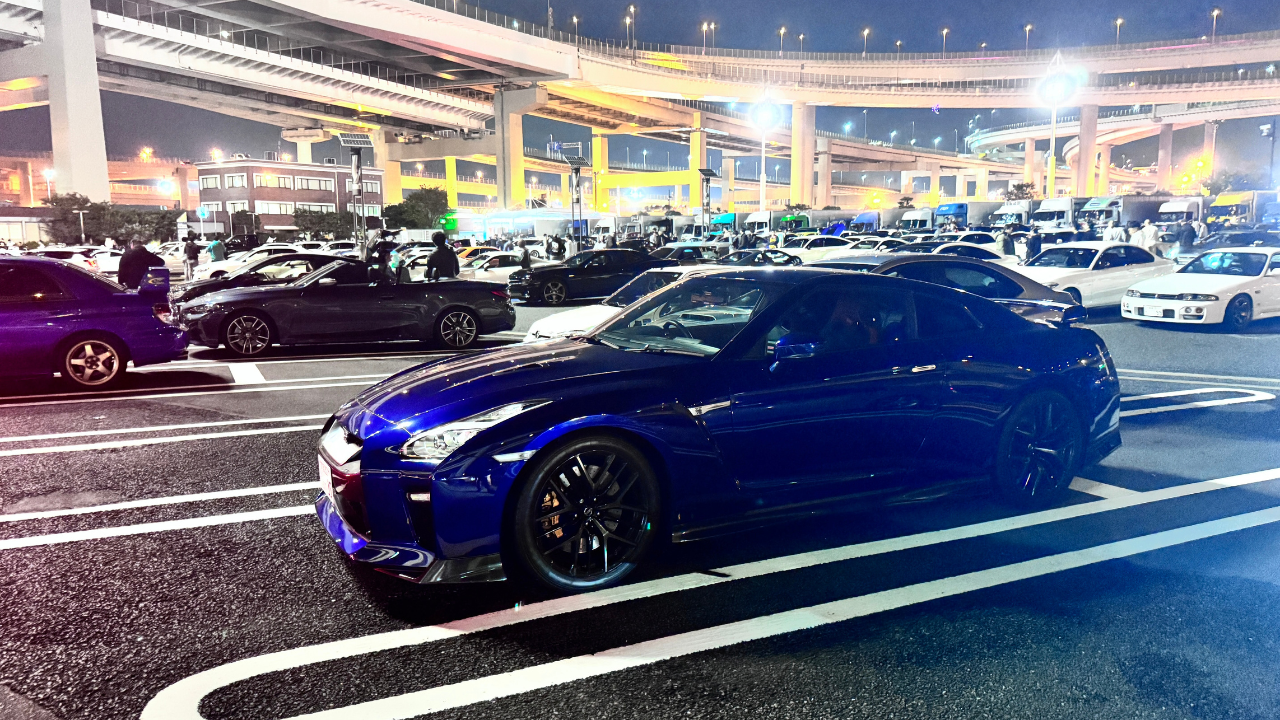
Daikoku Parking Area (often called “Daikoku PA” or “Daikoku Futo”) is the most famous rest stop on the Shuto Expressway network in Yokohama. By night, it becomes Japan’s best‑known informal car gathering spot—JDM icons, supercars, VIP builds, and tuned machines cycle through for photos and quick meets. Because it is a working expressway service area, it isn’t an event venue; activity ebbs and flows by the hour and by day of week.
Can you visit Daikoku PA tomorrow?
Yes—if you arrive legally via the expressway in a vehicle. Tomorrow’s scene depends on day of week, weather, and enforcement. There is no published “meet schedule,” and police may restrict access during heavy traffic, noise complaints, or enforcement operations. Expect the most variety late evenings on Fridays and Saturdays; weekday nights are quieter but better for photography. If the lot fills or is under restrictions, traffic may be routed away temporarily.
How to access Daikoku PA (legally)
Daikoku PA sits inside the Shuto Expressway network. There is no pedestrian access, no bicycle/scooter access, and no on‑site train or bus stop. The legal ways to go are:
- Drive yourself on the Shuto Expressway and enter Daikoku Junction.
- Book a licensed JDM tour/transfer that uses the expressway and handles all routing, tolls, parking, and timing.
Important: Walking in from public roads or being dropped on a shoulder is illegal and dangerous. Avoid ride‑share drop‑offs near ramps; they create enforcement issues and you can be moved on immediately.
Can you take a taxi?

Some taxis will accept an expressway ride to Daikoku PA, but many refuse pickups/returns because it’s off the local road grid. If you do find a taxi willing to go, confirm (1) expressway tolls are covered, and (2) the driver will also return to collect you from inside the PA. Otherwise, you may be stranded. A dedicated tour is far more reliable.
-

-
Daikoku PA by Taxi (2025): Is It Possible, Is It Legal, and What It Really Costs
What is Daikoku PA? Daikoku Parking Area (often shortened to “Daikoku PA”) is a highway service area ...
続きを見る
No car? Your legal options for tomorrow night
If you don’t have a car, join a guided JDM tour that enters via the expressway. This keeps you legal, solves access and timing, and gives you a buffer plan if Daikoku is restricted.
-

-
How to Get to Daikoku PA Without a Car (Legal Options, Taxi Costs, and Tours)
Daikoku Parking Area (Daikoku PA) is Japan’s most famous informal car meet—but it’s also one of the ...
続きを見る

-
-
Daikoku Car Meet (Daikoku PA) Guide: How to Visit Japan’s Most Famous JDM Meet
Daikoku Parking Area (Daikoku PA) is the most iconic place in the Tokyo–Yokohama region to see Japan ...
続きを見る
The best time to go tomorrow
Crowds and cars peak most often on Friday and Saturday nights from around 8:30pm to after midnight; early evenings are family‑friendly but thinner. On weeknights, arrive a bit later (after 9:30pm) for the best odds of interesting cars without gridlock. Rain reduces turnout but can produce dramatic photos. In peak holiday periods, police may meter entry or temporarily close lanes when the lot is full—flexibility helps.
-
-
Best Time to Visit Daikoku Parking Area (Daikoku PA) in 2026: The Real-World Guide
Daikoku Parking Area—usually shortened to Daikoku PA—is Japan’s most famous informal car-meet spot. ...
続きを見る
What happens if Daikoku PA is closed or too crowded?

Closures and metered entry happen. Good operators pivot to alternative expressway PAs like Tatsumi or Umihotaru, or they extend the highway night run and return when conditions improve. Always have a Plan B so your night isn’t wasted.
-
-
Tatsumi Parking Area Car Meet Guide (2025): The Insider Playbook for Tokyo’s Wangan Nights
What Is Tatsumi Parking Area (Tatsumi PA)? Tatsumi PA is a compact expressway rest stop inside Tatsu ...
続きを見る
Etiquette & rules that keep the meets alive
- Don’t rev, burnout, or block lanes. This is a rest area first; aggressive behavior triggers enforcement.
- No touching cars. Ask before you shoot interiors or open doors/bonnets.
- Keep noise and litter down. Use bins; use restrooms and designated areas only.
- Follow staff and police instructions immediately. If an area is being cleared, comply and re‑route.
- Be mindful with drones and tripods. Check local rules; never obstruct traffic or emergency access.
- Respect privacy. Blur plates/faces if owners request it.
Costs & practicalities for a “tomorrow” visit
- Expressway tolls: Vary by route and time; round‑trip from central Tokyo typically adds up to a few thousand yen.
- Parking: Free inside the PA, first‑come first‑served; time limits may be enforced during busy periods.
- Food & restrooms: On‑site convenience dining, vending machines, and restrooms; hours vary late at night.
- Tour pricing: Expect transparent, per‑group pricing that includes vehicle, driver/guide, tolls, fuel, and contingency plans for closures.
-
-
Daikoku Car Meet Tour Price (2026): What You’ll Pay, Why It Varies, and How to Book Smart
Planning to visit the Daikoku Parking Area (Daikoku PA) car meet from Tokyo? Here’s the pricing real ...
続きを見る
A realistic 3‑hour sample plan for tomorrow night
- Pickup (Tokyo/Yokohama) – 20–40 min. Meet your guide/driver; brief on etiquette and safety.
- Expressway night run – 30–50 min. Cruise the Bayshore/Wangan with iconic skyline views.
- Daikoku PA session – 60–90 min. Walk the lot, photo laps, meet owners; grab snacks and a warm drink.
- Contingency pivot – 20–40 min. If Daikoku is saturated or restricted, reroute to Tatsumi/Umihotaru and circle back if conditions ease.
- Return – 20–40 min. Drop‑off where you started.
Photography tips that work any night
- Bring a fast prime (f/1.4–f/2) for low light; add a wide zoom for context.
- Use high‑ISO auto with a minimum shutter of 1/125s for rolling shots in the lot.
- Polarizer is optional at night; a small LED or video light helps for details without flash.
- Shoot from safe, designated areas only; never step into active lanes.
Weather & season considerations
- Cold/windy: The pier is exposed—pack a light jacket even in summer.
- Rain: Expect fewer cars but great reflections; waterproof your shoes and camera.
- Heat: Hydrate; use shade and indoor seating between laps.
Quick FAQs for “tomorrow” plans

Is there public transport to Daikoku PA? No. It’s on the expressway and unreachable by train or foot.
Can I just get dropped nearby and walk in? No—pedestrian access is prohibited and unsafe.
What if police close the lot? Follow directions, pivot to alternative PAs, or wait for conditions to ease under the guidance of your driver/tour.
Are weeknights worth it? Yes—fewer cars, more space, and cleaner photos.
Is a tour worth it if I can drive? If you’re confident with the Shuto network and tolls, self‑drive is fine. If not, a tour optimizes routes, handles contingencies, and keeps everything legal and stress‑free.