What is “Shibuya go kart”?
“Shibuya go kart” refers to guided, street-legal kart tours that cruise past Shibuya Crossing and surrounding districts like Harajuku and Omotesando. These are not Nintendo’s Mario Kart, but custom road-going karts driven in normal Tokyo traffic, led by a guide car with radio instructions. Expect constant attention from pedestrians, frequent photo stops, and a sightseeing route calibrated for first-time visitors.
Is Shibuya go kart legal in 2025?
Yes—when you meet Japan’s road rules and the operator follows local ordinances. Shibuya Ward introduced new rules in mid‑2025 to increase oversight of street-kart outfits (route disclosure, community coordination, etc.). For riders, the key legal requirement is holding the right driver’s license/permit and obeying standard traffic laws (signals, lane discipline, speed limits). Helmets are usually optional, but seatbelts, indicators, and hand signals matter. If you cannot present valid documentation on the day, you won’t be allowed to drive.
Accepted licenses & documents (read carefully)
- Valid Japanese driver’s license (if you live in Japan), or
- International Driving Permit (IDP) based on the 1949 Geneva Convention + your original license + passport.
- Official Japanese translation of your license (instead of an IDP) if your license was issued in Switzerland, Germany, France, Belgium, Monaco, or Taiwan.
- SOFA license (for eligible US Forces personnel) is generally accepted by major operators.
Not accepted: 1968 Vienna Convention IDPs, photocopies, digital/phone images, expired documents, learner’s permits.
Minimum age & physical requirements

- 18+ years old to drive on public roads in Japan.
- Some operators impose height/weight limits (e.g., ~150–185 cm / under ~100 kg) and do not accept pregnant riders. Check the specific shop before booking.
What to bring
- Passport, driver’s license, and the correct IDP/translation.
- Closed‑toe, flat shoes; avoid long, flowy clothing that can snag.
- Weather‑appropriate layers (summer sun, winter wind) and a strap for glasses.
Typical Shibuya go‑kart routes & duration
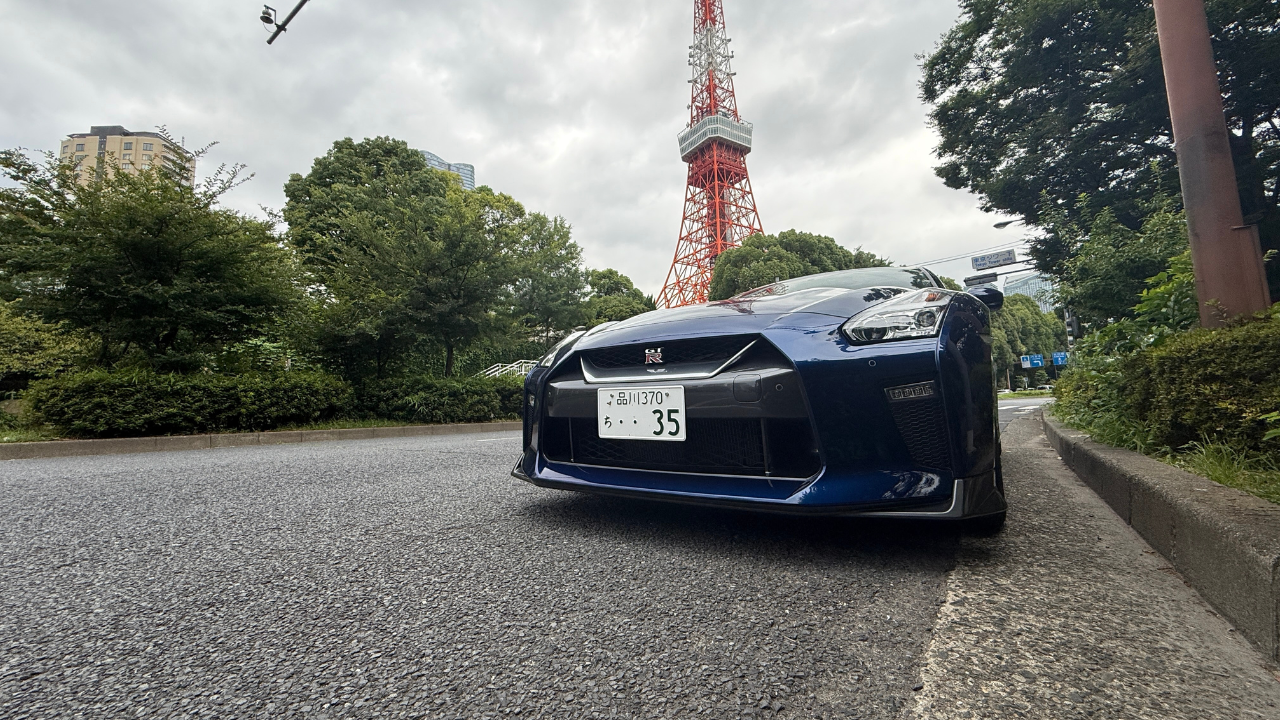
Most tours last 60–90 minutes, looping from Shibuya toward Harajuku/Omotesando and sometimes to Roppongi or Tokyo Tower, then back via Meiji‑dori or Aoyama‑dori. Groups are small (often 4–6 karts) and stay single‑file behind the guide. Photo stops are common at landmark backdrops, but you’re still in live city traffic—defensive driving is essential.
How much does Shibuya go karting cost?
Pricing varies by length, time of day, and provider:
- Short routes (≈60–75 min): typically ¥10,000–¥15,000 per person.
- Longer routes (≈90–120 min): typically ¥17,000–¥22,000 per person.
- Some shops offer “review price”/early‑bird discounts online. Costumes are usually included; optional add‑ons can include photo/video packs or insurance upgrades.
Safety, etiquette & common pitfalls
- Follow the guide’s instructions and keep formation; no weaving or overtakes.
- Expect urban limits (~40 km/h in many city sections) and heavy traffic at peak hours.
- No alcohol before the tour; operators will refuse intoxicated riders.
- Don’t use your phone while driving. Mount action cameras securely before departure.
- Weather & traffic can trigger route/time changes or cancellations—check your email/app.
- Bring the exact documents; “I forgot my IDP” is the #1 reason people are turned away.
Who should skip Shibuya go‑karting (and why)
Street karting is thrilling but not for everyone. Skip it if you:
- Don’t have the 1949‑format IDP or a valid translation for eligible countries.
- Are under 18, pregnant, or uncomfortable navigating dense city traffic at road level.
- Want a deeper dive into real Japanese car culture without the stress of driving.
If any of the above sounds like you, consider an alternative that delivers the automotive scene safely and legally—Daikoku Parking Area (Daikoku PA) at night.
Beyond go‑karts: a safer, more authentic car‑culture fix—Daikoku PA

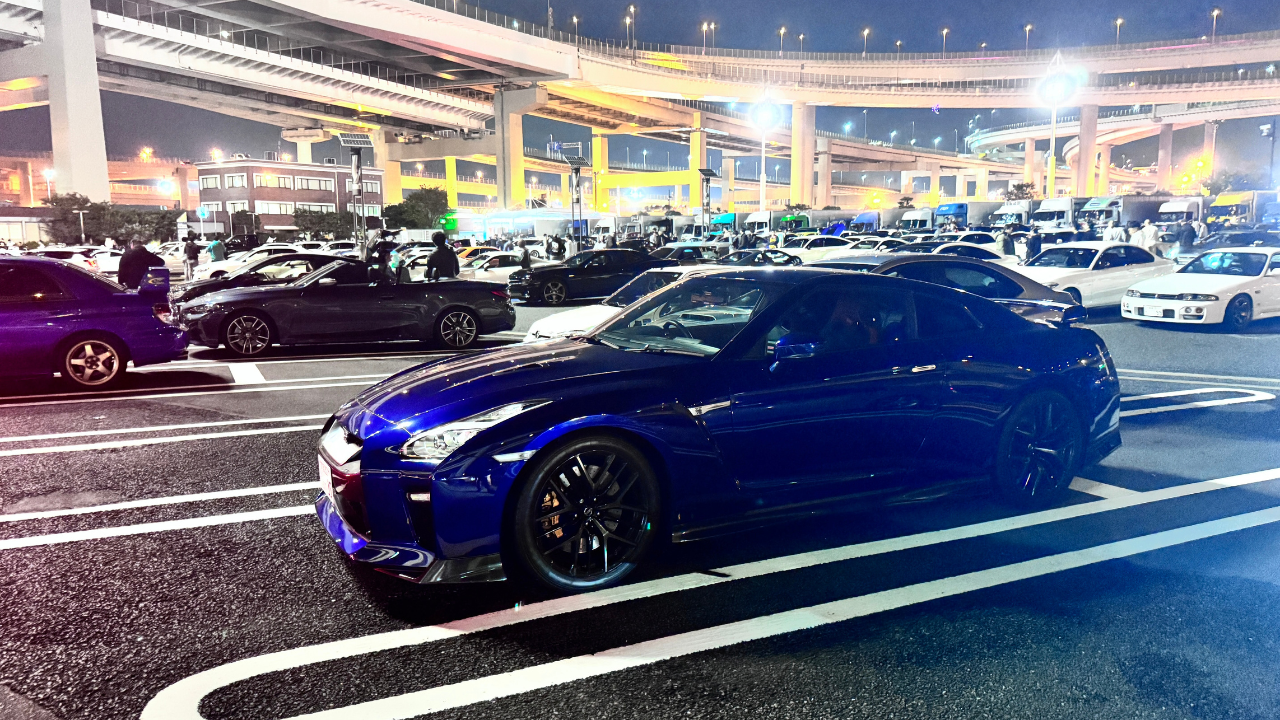
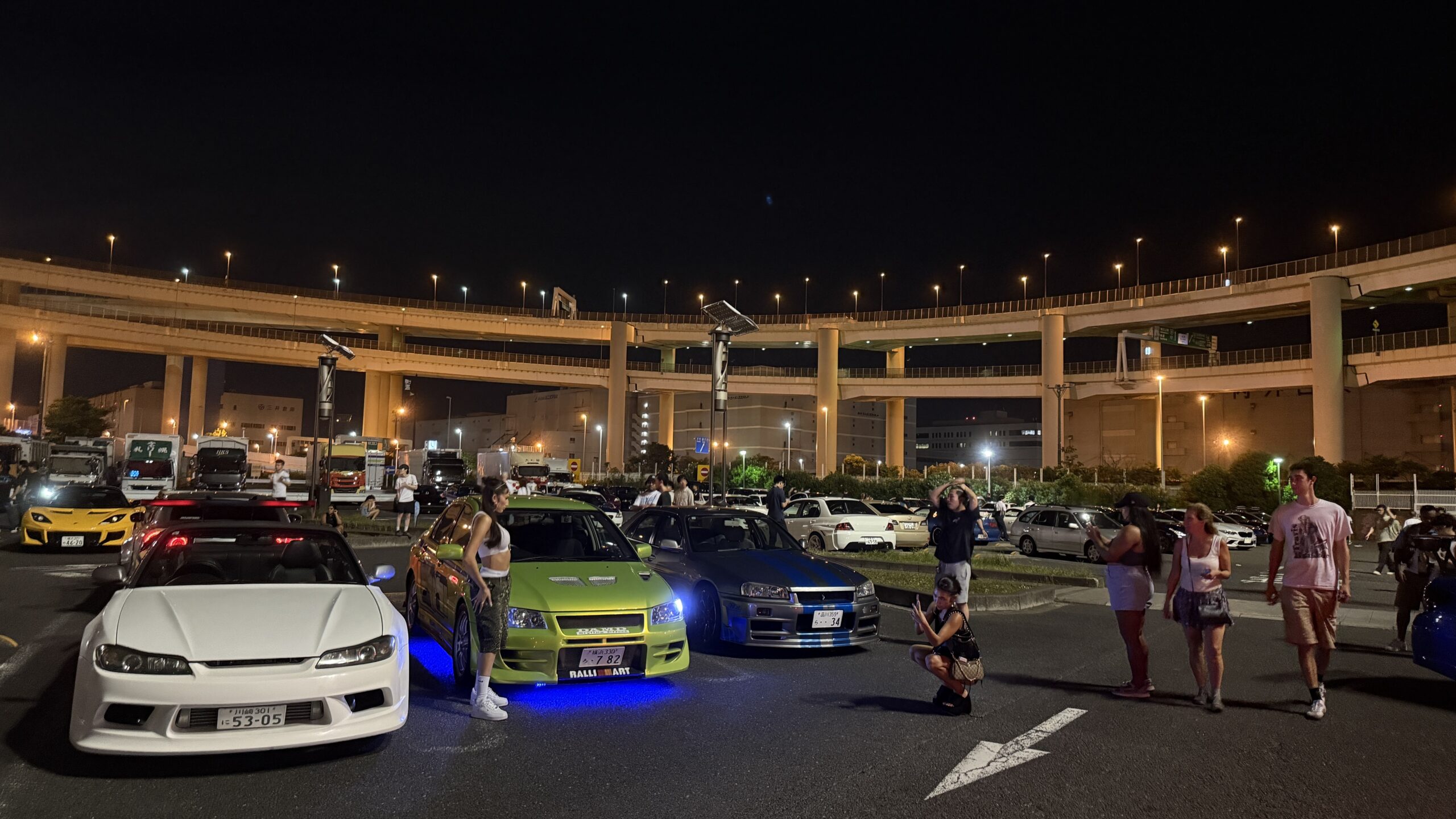
For many enthusiasts, the legendary Daikoku PA is the highlight of Tokyo’s automotive nightlife: a highway rest area that organically fills with JDM icons—from GT‑Rs and Supras to rare VIP builds, drift setups, and exotics. Our guided JDM night tour removes the guesswork: we handle timing, access, and transport so you can focus on the machines, the owners, and the photos.
Why Daikoku PA instead of street karting?
- No license required to join—ride in comfort and arrive right at the action.
- Guaranteed car‑scene immersion: curated nights align with meet patterns and closure updates.
- Photography‑friendly: stable vantage points, respectful etiquette, and time to shoot.
- Stress‑free logistics: we manage tolls, parking closures, and police advisories.
-

-
Daikoku Car Meet (Daikoku PA) Guide: How to Visit Japan’s Most Famous JDM Meet
Daikoku Parking Area (Daikoku PA) is the most iconic place in the Tokyo–Yokohama region to see Japan ...
続きを見る
-
-
Best Time to Visit Daikoku Parking Area (Daikoku PA) in 2026: The Real-World Guide
Daikoku Parking Area—usually shortened to Daikoku PA—is Japan’s most famous informal car-meet spot. ...
続きを見る
-

-
Daikoku PA Schedule: Hours, Closures, and the Best Times to Visit
Daikoku Parking Area (Daikoku PA) in Yokohama is the most famous car-culture rest stop in Japan. Yet ...
続きを見る
-

-
How to Get to Daikoku PA Without a Car (Legal Options, Taxi Costs, and Tours)
Daikoku Parking Area (Daikoku PA) is Japan’s most famous informal car meet—but it’s also one of the ...
続きを見る

-
-
Tatsumi Parking Area Car Meet Guide (2025): The Insider Playbook for Tokyo’s Wangan Nights
What Is Tatsumi Parking Area (Tatsumi PA)? Tatsumi PA is a compact expressway rest stop inside Tatsu ...
続きを見る
-
-
Daikoku Car Meet Tour Price (2026): What You’ll Pay, Why It Varies, and How to Book Smart
Planning to visit the Daikoku Parking Area (Daikoku PA) car meet from Tokyo? Here’s the pricing real ...
続きを見る